In a watershed moment reverberating across the landscape of reproductive rights, the federal court’s decision to strike down Mississippi’s 15-week abortion ban serves not only as a legal triumph but as a powerful reaffirmation of feminist values that prioritize autonomy, equality, and most crucially, the agency of those who can conceive. This ruling obliterates the veil of paternalistic control that seeks to dictate the choices of women and undermines their essential human rights. Feminism, in all its multifaceted glory, finds both an echo and a rallying cry within this pivotal judicial reversal.
The implications of this ruling extend beyond the mere legality of abortion; they redefine the very contours of freedom and the rights that women and individuals with the capacity for pregnancy possess. The right to choose is not merely a chapter in the legal diary of women’s rights; it is the crux of feminist philosophy, intertwining bodily autonomy with social equality. The Mississippi case propels the long-standing discourse on reproductive justice into a new dimension, necessitating an examination of the intricacies embedded within this fight for rights.
As we navigate the labyrinthine structure of this ruling, it becomes imperative to understand what it signifies for feminism and progressive social movements. Herein lies an exploration of the aforementioned themes, segmented into salient discussions surrounding autonomy, social stigma, and the socio-political ramifications wrought by this landmark decision.
The Triumph of Autonomy: A Win for Self-Determination
Autonomy, the cornerstone of feminist thought, has historically been pillaged by societal standards and institutional oppression that dictate what women can and cannot do with their own bodies. Mississippi’s 15-week abortion ban was an insidious attempt to impose an arbitrary limit on a woman’s right to choose, curtailing her agency in matters of personal health and motherhood. The federal court’s decision to strike it down festers an environment where autonomy is celebrated, and self-determination is recognized as a fundamental human right.
It declares, unequivocally, that women are not mere vessels for procreation, nor subjects of state control. Within the framework of reproductive rights, the ruling emphasizes that the state has no dominion over the personal and intimate choices that reside at the intersection of morality, health, and individual circumstance. This ruling dismantles the dictatorial narrative that defines women solely through the lens of motherhood, expanding the dialog around identities and emphasizing the necessity to view women as whole and complex individuals.
Furthermore, the ruling encourages a more inclusive dialogue that encompasses marginalized voices—those who often face systemic barriers in accessing reproductive healthcare. It opens the door for discussions surrounding structural inequities, particularly how socio-economic status, race, and geography intersect with reproductive healthcare access. When autonomy is granted its rightful place at the heart of feminist discourse, it creates space for less privileged communities to advocate for their rights—thereby fortifying the feminist movement’s resolve in striking down oppressive structures.
Addressing the Social Stigma: Changing Conversations Around Abortion
The social stigma surrounding abortion has long thrived in the shadows, perpetuated by myths, misinformation, and moral outrage. The Mississippi ruling serves to illuminate an issue that, for far too long, has been cloaked in shame and judgment. By affirming a woman’s right to make decisions concerning her own body, the federal court enhances the feminist discourse surrounding reproductive rights while simultaneously challenging the stigmatization that keeps many from seeking necessary medical care.
This decision embodies the pivotal opportunity to reshape narratives, to convey that abortion is not a failure, but a legitimate, often necessary, medical procedure. Feminism seeks to dismantle harmful stereotypes, and through this ruling, it gains both ammunition and a platform from which to operate. Campaigns that educate and empower individuals about their reproductive health must flourish, ensuring women understand that the right to access abortion services is intrinsically intertwined with their dignity and self-respect.
Reproductive justice, at its core, avows that access to safe and legal abortion must be seen through a lens that considers socio-economic status, ethnicity, and education. The ruling against the 15-week abortion ban must be recognized as a springboard—a means to eradicate entrenched stigma, to bolster inclusive education campaigns, and to advocate for women’s rights holistically, ensuring that no one is left behind in the fight for equality.
Socio-Political Ramifications: A Catalyst for Change
The striking down of the Mississippi abortion ban transcends its immediate locality; it waves a banner that ignites progressive energies across the nation. It serves as a reverberation prompting lawmakers to reassess regressive legislation that undermines the rights of women. As a result, this ruling has the potential to bolster movements fighting against restrictive reproductive legislation in other states. A ripple effect may ensue, igniting fierce advocacy, and illuminating the glaring need for legislative reform across the United States.
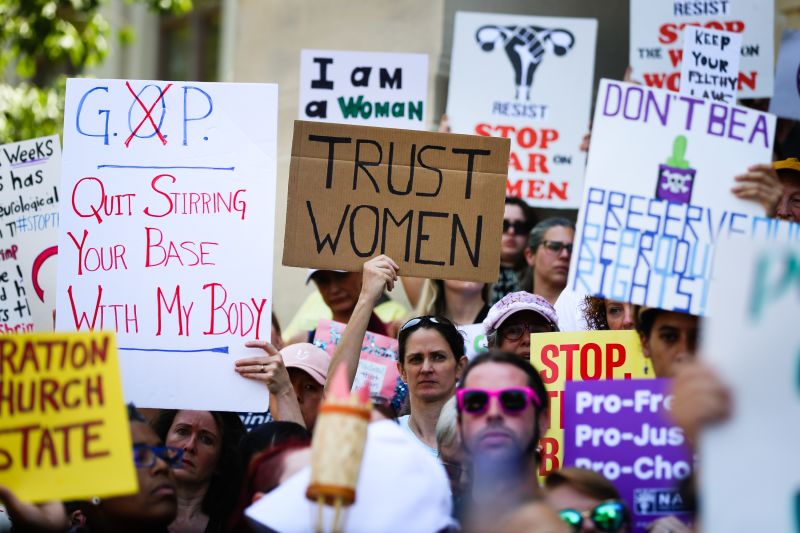
Moreover, the ruling compels individuals to engage in political activism. Those disinterested or apathetic can no longer stand idly by while the state infringes upon personal liberties. Feminism’s call to arms becomes increasingly potent as individuals are mobilized and incited to challenge their own political environments. From protests to policy advocacy, this ruling reignites the spirit of grassroots movements, encouraging collective action and informed voting—both critical for any substantive advancement in women’s rights.
Mississippi’s 15-week abortion ban being struck down by a federal court should be heralded as a pivotal moment in the ongoing fight for reproductive rights and embodied in feminist ideology. It endorses autonomy, challenges stigma, and catalyzes socio-political action, thus fostering a sense of solidarity among individuals committed to advocating for the rights and freedoms of women everywhere. The reverberations from this decision illuminate the path forward, underscoring the continuous need to empower women to reclaim their rights.
The conversation surrounding reproductive rights is far from over, and as history has shown us, progress is often met with backlash. Still, the recent ruling serves as a reminder that the feminist struggle is resilient. As advocates equipped with knowledge and bolstered by solidarity, we must not relent in our pursuit of justice. To echo feminist principles is to understand that until every woman, regardless of her socioeconomic status, race, or geography, can exercise her right to choose, our fight is far from finished.