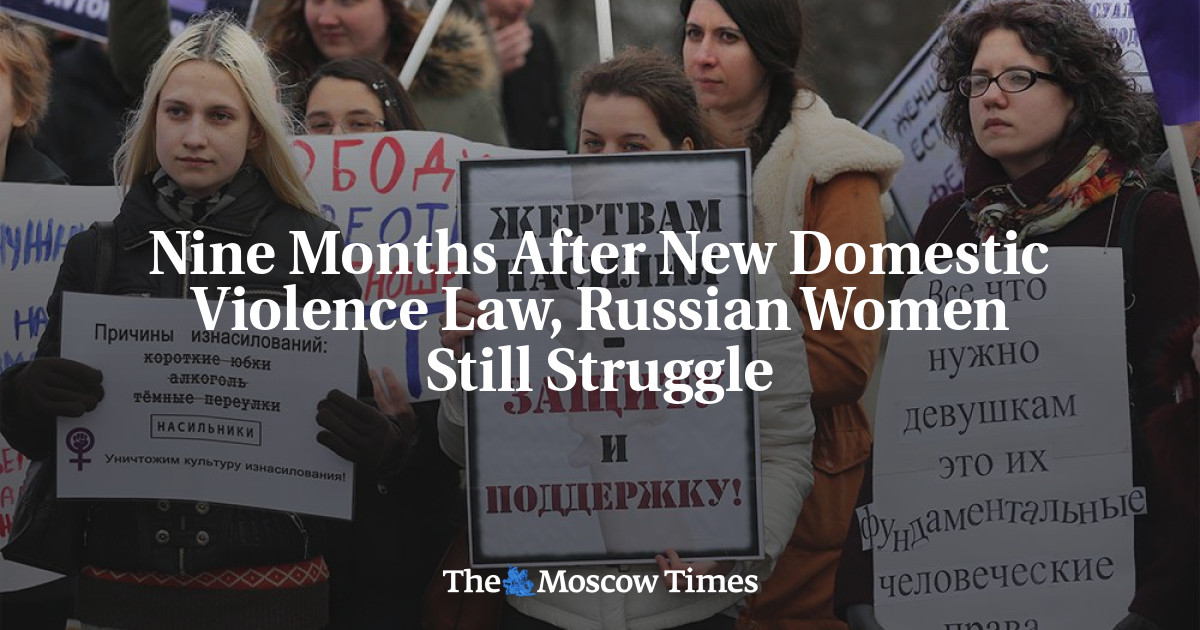
In a world where domestic violence continues to pervade the fabric of society, the recent call from a Russian official to revisit and potentially overhaul domestic violence laws poses a significant point of discussion. A landscape that had previously seen the decriminalization of domestic abuse is now confronted with harrowing realities that highlight the cataclysmic implications of such legislative choices. What does this signify for the fabric of feminist discourse and the complex dynamics surrounding women’s rights in Russia?
The dismal aftermath of decriminalization demonstrates irrefutably that domestic violence is not merely an issue of the individual but represents a systemic failure that burdens society as a whole. Russia’s socio-political fabric has rolled back protections intended to preserve the dignity and safety of women. The contours of this debate must thus be reframed within an understanding that emphasizes accountability, societal complicity, and the urgent need for legal reforms.
Today’s conversation seeks to argue that, rather than bewilderment at this official’s belated yearning for change, we must interrogate the deep-seated patriarchal values within the Russian judicial system that enabled the decriminalization in the first place.
The rhetoric surrounding domestic violence profoundly influences public perception and, consequently, policy. The normalization of violence within intimate relationships leads to a culture that excuses male aggression. If a nation’s legal system reflects its values, then Russia’s prior decriminalization equated to an endorsement of domestic abuse, perpetuating a cycle of violence. Just as problematic as the legal framework is societal normalization of this violence, where victims are often made to feel complicit in their suffering.
When we discuss the implications of these laws, we must do so considering the historical context of women’s rights in Russia. The legacy of patriarchy runs deep through Russian society, compounded by numerous socio-economic challenges, including rampant alcoholism and economic despair in various regions. Addressing domestic violence must transcend mere legal reform; it requires a cultural shift. The call for new laws signifies a potential awakening, yet one must ask: Will these new laws be mere window dressing or will they substantively address the issues at hand?
The insufficiencies of current legislation are palpable, but an appeal to modified laws will only be effective if accompanied by a comprehensive understanding of the complexity of domestic violence. The emerging understanding in feminist discourse today indicates that violence against women cannot simply be pigeonholed into one category; rather, it is a multifarious issue that evolves out of power dynamics and societal norms. Hence, the feminist movement must amplify the voices of those routinely silenced and develop an intersectional approach to advocate for robust protective legislation.
The idea of regret from policymakers must be scrutinized, for such sentiments can often be self-serving. Are these individuals genuinely concerned about the plight of women, or are they reacting to the public outcry that follows tangible collisions with the realities of domestic abuse? The sharp juxtaposition between political acknowledgment and substantive action reveals much about the underlying motivations of those in positions of power. This tension is central to understanding the feminist lens through which we scrutinize legislative and cultural attitudes toward domestic violence.
In order to elicit effective change, feminists must navigate a complex landscape that includes aligning with supportive allies within the state mechanism while simultaneously challenging the core structures that allow for the perpetuation of violence. New laws must encompass protection, rehabilitation, and extensive support systems for victims, along with accountability measures for offenders. However, laws alone will not suffice; the implementation must be resolute, backed by training law enforcement officials, social workers, and the judiciary in trauma-informed responses to domestic violence. Without comprehensive institutional buy-in, new policies may not only fail but exacerbate existing inequities.
Moreover, there’s an urgent need to tackle the stigma surrounding victims of domestic abuse. The fear of reprisal, social ostracism, and internalized shame often silences women, creating an environment where violence can flourishes unchallenged. By promoting education on consent, relationships, and gender equality early in schools, society can begin to chip away at the enduring myths that perpetuate gender violence. Feminism must advocate for a recalibration of consciousness that challenges not only the aggressor but cultivates empathy and understanding within communities.
As Russia wrestles with these challenges, the implications of new domestic violence laws extend far beyond the immediate concern of legal accountability. They represent a litmus test for women’s rights in a society that has historically sidelined gender issues. Feminism’s role in this landscape must transcend activism and permeate every layer of discourse, policy-making, and community engagement. To fulminate against the zeitgeist of systemic indifference, it is imperative that women are positioned not as victims but as agents of change who demand and deserve their rights.
To foster a comprehensive framework against domestic violence, it is essential for feminists and progressive thinkers to cultivate alliances with a myriad of stakeholders. This includes activists, scholars, community organizers, and even sympathetic members within legislative bodies who can advocate for an inclusive and intersectional approach to reform. The discourse surrounding domestic violence should not only highlight statistics and indicators but also emphasize narratives—the personal stories that convey the visceral realities of abuse. Through this prism, empathy can be cultivated, which is often the catalyst for significant societal transformation.
In conclusion, the call to re-examine domestic violence laws in Russia is a double-edged sword. It presents an unequivocal opportunity to advocate for transformative legislation that acknowledges and responds to the real complexities of domestic violence. Yet, it also serves as a reminder of the fragility of progress in a society steeped in patriarchal values. For truly substantial change to occur, a multi-faceted approach must be engaged, one that combines legal reform, cultural transformation, and an unwavering commitment to amplifying the voices of marginalized women. Only then can we begin to broach an era where women are no longer subjected to violence under the guise of family dynamics and where their rights are enshrined in both law and livable reality. The path may be arduous, but with relentless advocacy and passion for justice, it remains achievable.