The Los Angeles teachers’ strike reverberates far beyond the classrooms and hallways of educational institutions; it underscores a pivotal struggle for gender equality and labor rights that remains too often neglected. This movement isn’t simply about teachers advocating for better pay and improved classroom conditions; it extends into the realm of feminist activism firmly grounded in economic equity, social justice, and systemic reform. As tensions mount around the bargaining table, a seismic shift in perspective is illuminated—a reexamining of how society values education and those who provide it, predominantly women.
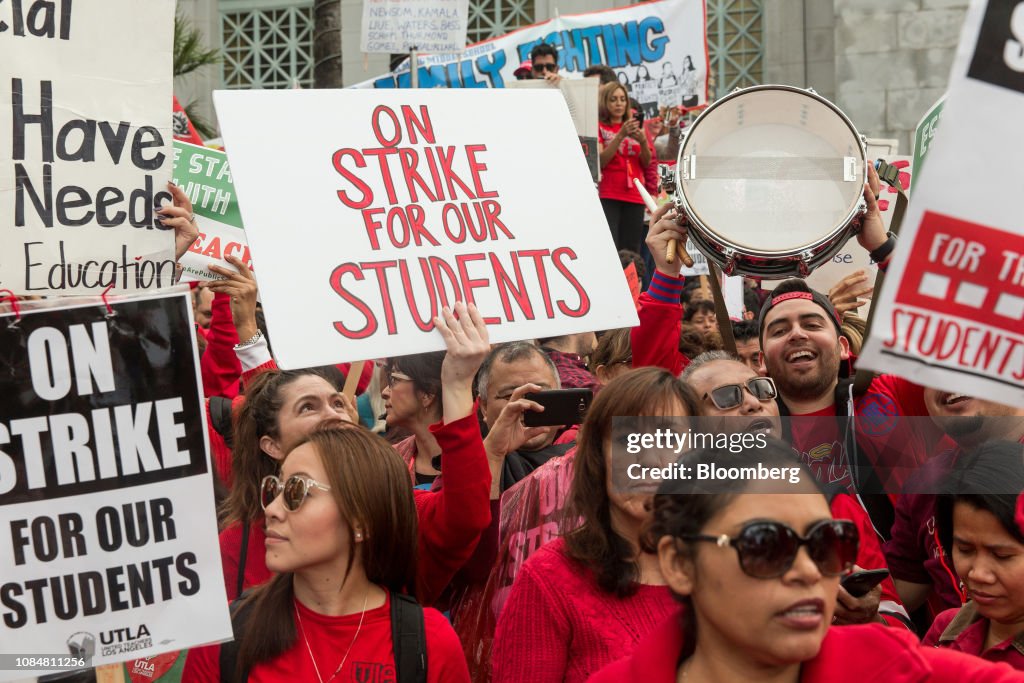
As the backdrop unfolds, we witness a clamor echoing through the streets of Los Angeles. Teachers brandishing placards ricochet with a vibrant mix of determination and indignation, demanding not only better wages but also a structural reevaluation of educational environments that have been long disregarded. Among the strikers are countless women who, in a predominantly female profession, face staggering pay disparities and deteriorating conditions. This is a clarion call that not only announces a strike but also beckons society to confront an uncomfortable truth: the undervaluation of women’s labor in nurturing the future.
In an age where professional fields once deemed feminine continually face scrutiny and wage gaps, how can we allow this to happen in our schools? How can we stand idly when the architects of our children’s education—largely women—are fighting tooth and nail for their intrinsic dignity and undeniable worth? The Los Angeles teachers’ strike provocatively holds a mirror to a society that has long enabled inequity to fester, and, now, it demands that we reckon with the implications.
Let’s delve deeper into this multifaceted phenomenon and explore how these educators are not merely striving for personal gain but are instead leading a collective charge against the systemic patriarchy that has marginalized their contributions.
In the shadow of Hollywood glitz and glamour, a counter-narrative arises—one that starkly contrasts the surface wealth with the underlying realities faced by women educators. The dedication of these teachers to their profession often goes unnoticed, existing against a backdrop marked by rigorous testing, budget cuts, and an increasing demand for excellence amid declining resources. What emerges is a poignant tableau illustrating that the continuing strike is about more than just pay increases; it demands to be seen as part of a larger feminist struggle for recognition and respect.
In a sector where nearly three-quarters of all teachers are women, the patriarchal structures within educational institutions reveal the insidious layers of oppression at play. The fight for equitable pay and better classroom conditions must, therefore, be recognized as a feminist issue. Women teaching our children often find themselves settling for less—less pay, less support, less acknowledgment of their professional contributions to society’s foundational structure. The reverberations of the Los Angeles strike echo loudly in this context, calling upon us to challenge the normalization of gender inequity within the teaching profession.
We cannot ignore the harsh realities: many teachers are forced to supplement their income with second jobs while simultaneously providing for their families, often performing emotional labor that goes unrecognized. Further still, disheartened by a lack of support, many educators are leaving the profession altogether. The feminization of teaching should lead to celebration, yet it engenders a paradox—a diminishment of its perceived value accompanied by rampant underfunding and inadequate resources.
The Los Angeles teachers’ collective voice thus resonates as part of a broader feminist rebellion, asserting that well-compensated educators lead not only to personal economic empowerment but also to healthier, more equitable educational systems. The stakes of this ongoing battle aren’t simply financial; they are rooted in the very essence of how education—often touted as a great equalizer—can be reimagined through a lens of justice and fairness.
In this context, we find ourselves confronting the legacy of systemic inequities deeply embedded within the education system. As women teachers wield their placards and take to the streets, they shine a spotlight on the imperative need to dismantle these structures. Prolonged neglect of educational funding and resources compounds the barriers to effective teaching, leading to a cycle of disempowerment that disproportionately affects women.
Consider for a moment the array of disparities affecting teachers in low-income areas, which are often heavily populated with students of color. The Los Angeles teachers’ strike is not only a fight for better wages; it serves as a clarion call to address issues of racial and economic justice, which are inherently intertwined with educational reform. Feminism must continuously evolve and extend its advocacy to encompass the struggles of all marginalized groups, leading to a cohesive effort for equality in education.
This strike invites us to rethink the narratives we hold about female professionals, challenging us to recognize what happens when society valorizes certain careers over others—predominantly male-driven industries thriving at the expense of women-led sectors. When educators unite in defiance of their subjugation, they ignite a flame that counters decades of institutional neglect. The principles of feminism are entwined with the realities faced by educators, making this strike much more than a simple demand for better pay; it is a fight for dignity, professional respect, and an unequivocal stance against gendered injustice.
Moreover, this movement beckons feminist activists, allies, and advocates to participate in a bold reevaluation of how educational policies can reflect equitable practice. We stand at a crossroads where fighting for equitable pay transcends mere salary negotiations; it becomes a matter of asserting how our society chooses to value the vital labor that shapes future generations. By joining forces in solidarity, we fulfill a moral duty not only to teachers but to students, families, and society as a whole.
The Los Angeles teachers’ strike serves as a potent reminder to interrogate the undercurrents of privilege and power that allow inequity to persist. The oppressive nature of wages that deny financial stability to the educators who pave the paths for tomorrow profoundly impacts mental health, classroom dynamics, and student achievement. With this in mind, every rally cry and every raised fist during this strike is more than an assertion; it embodies the unwavering spirit that feminism can catalyze for broader societal change.
As community members, educators, students, and policy-makers converge around these critical issues, the future of our educational system hangs in the balance. To dismiss the plight of Los Angeles teachers is to turn a blind eye to a broader societal failure—the failure to champion the women whose unwavering commitment has the potential to transform the future. Now is the opportunity to pivot from silence to solidarity, cultivating a newfound appreciation for the tireless labor of educators and the significant role they play not just as teachers, but as powerful agents of change.
As we navigate the complexities of this moment, let us stand resolutely with the Los Angeles teachers on strike. Their battle for better pay and classroom conditions extends a radical invitation: a call to reconstruct societal values surrounding education, equity, and the systemic dismantling of age-old patriarchal structures that have long governed women’s roles in the workforce. This uprising reflects the necessary evolution of feminism—a movement in pursuit of not only better wages for women but a more just and equitable society for all.