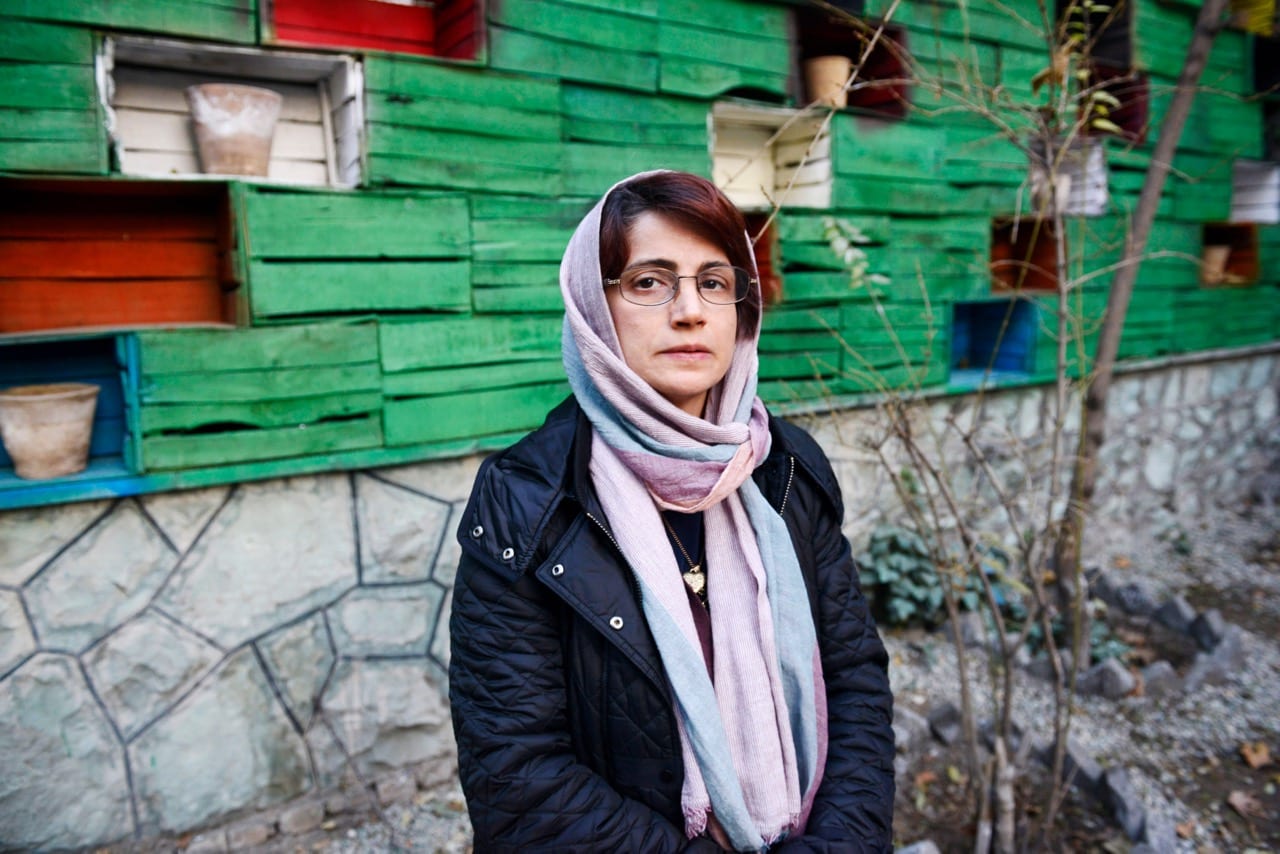
In the landscape of global feminism, few stories are as riveting and troubling as that of Nasrin Sotoudeh, a prominent Iranian human rights lawyer. Facing an astonishing 34-year prison sentence for her unwavering commitment to advocating for women’s rights and human liberties, Sotoudeh embodies the perpetual struggle against oppression. Her sentences serve not only as a punishment but also as a clarion call—a testament to the dire need for collective action against systemic injustices that intertwine gender discrimination with state-sanctioned repression.
Why does her plight matter? In an era where women are still fighting for fundamental rights and freedoms, Sotoudeh’s battle offers a critical lens through which to examine the intersections of gender, law, and power. Her story is not simply one person’s struggle; it encapsulates the myriad challenges faced by countless women across the globe, especially in repressive regimes. But more than that, it’s a spark that could ignite feminist movements worldwide.
As we delve deeper into this multifaceted narrative, we must confront the realities of authoritarianism, patriarchy, and the role of law in perpetuating or dismantling structural inequalities. Prepare to be both inspired and outraged as we navigate the complex web of issues that Sotoudeh’s situation raises.
The Weight of the Law: A Tool for Oppression
Sotoudeh’s sentence, an egregious example of the misuse of legal frameworks, raises fundamental questions about the role of law in feminist movements. Laws should ideally be constructed to foster justice and equality; however, in oppressive regimes, they often act as instruments of control. In Iran, this reality comes sharply into focus. Women are legally forced to comply with draconian dress codes, face harsh penalties for protesting, and are systematically denied agency over their own bodies. This legal entrapment is compounded by societal norms that endorse male authority and subjugate female voices.
For Sotoudeh, advocating for the disenfranchised often translates into battling not just against social norms but against a legal architecture designed to crush dissent. She has represented women who’ve dared to challenge the status quo, risking her life and livelihood in the process. The government’s reaction to her is succinct: silence the voices of resistance, no matter the cost. Her case epitomizes the precariousness of engaging with a legal system that, rather than offering protection, emerges as a formidable adversary.
This perspective on law raises vital questions for feminists globally: Are we complicit in capturing women’s rights within legal frameworks that serve more to contain than free? It is imperative for feminist discourses to interrogate the limitations imposed by laws and explore how these constraints can be dismantled. Feminism must advocate for laws that empower rather than entrap and call for a fundamental reimagining of legislative frameworks that recognize and elevate women’s rights as human rights.
The Feminist Solidarity in the Face of Tyranny
What does it mean to be a feminist ally in the wake of Sotoudeh’s sentencing? Her situation underscores the necessity of global feminist solidarity as an antidote to the isolation faced by women like her. In the digital age, when information can travel across borders within seconds, the plight of one woman can resonate with a chorus of voices, each one a testament to the strength of collective action.
Sotoudeh’s case should galvanize an international feminist movement that pushes back against authoritarianism. Her imprisonment is emblematic of a broader struggle for rights that extend beyond geographical boundaries. It’s a reminder that oppression in one part of the world has implications everywhere. Feminists must unite—not just in protest against injustices targeting women, but in solidarity against the authoritarian regimes that seek to silence them through fear and repression.
This movement must not shy away from confronting uncomfortable truths. It requires an unflinching examination of how privilege operates within feminist spaces. It necessitates a thorough understanding of how different forms of oppression—racial, economic, sexual—intersect and shape individual experiences. We must acknowledge that the fight for justice is not merely about individual freedoms; it is collective liberation that honors and amplifies the voices of those sidelined or silenced.
A Call to Action: Transforming Anger into Advocacy
Sotoudeh’s story should be a catalyst for increased activism. Anger, when harnessed constructively, can be an unfathomable force for change. So how do we channel our outrage into meaningful advocacy? How do we ensure that Sotoudeh does not become a mere footnote in the annals of history, but rather a vital symbol of courage and resilience?
The first step lies in education—understanding the rights that are being contested and the legal structures that oppress. Women’s rights activists must cultivate awareness about the realities faced by women under authoritarian regimes and the implications this has for global feminism. Public forums, workshops, and social media platforms can serve as crucibles for dialogue and action, creating spaces where voices of dissent can be heard and celebrated.
This advocacy does not have to be confined to grand gestures; even the simplest acts of solidarity can have profound impacts. Signing petitions, organizing local protests, and amplifying stories can create ripples of change. Additionally, it is critical for Western feminists to listen to and uplift the narratives of women like Sotoudeh, ensuring that their voices are not drowned out by the louder discourses of privilege.
Moreover, accountability and systemic change must go hand in hand. Local and international activists need to engage with policymakers, pushing for sanctions and interventions that prioritize human rights, especially the rights of women. This overlap between advocacy and policy is paramount; it ensures that angry cries for justice translate into tangible changes that protect and uplift women globally.
In conclusion, Nasrin Sotoudeh’s incarceration should serve as not just a reminder of the injustices faced by women in oppressive regimes, but as a rallying point in the fight for universal human rights. Her story compels us to critically analyze the intersections of law, gender, and power. As feminists, we have a duty to transform our outrage into action, creating a tapestry of solidarity that binds women from all walks of life together in a shared struggle for liberation. Only through this collective fervor can we dismantle the barriers of oppression and forge a future where justice, equality, and human rights reign supreme.