Justice Denied Again: Officer Who Killed Eric Garner Not Prosecuted Through a Feminist Lens
Feminism, at its core, strives for justice and equality for all, but the haunting case of Eric Garner’s death underlines a stark reality: our systems, long upheld as bastions of law and order, are often laced with inequality, particularly when race and gender intersect. Garner’s case elucidates the failures of an ostensibly impartial judicial system that remains eerily silent in the face of brutality, revealing a gendered complexity in its consequences.
Understanding the Context: Eric Garner’s Tragic Death
In July 2014, Eric Garner was killed by a police officer, Daniel Pantaleo, in Staten Island, New York. Garner’s last words—”I can’t breathe”—echoed across the world, illustrating the plight of Black individuals who face the brunt of systemic oppression. The chilling manner in which his life was extinguished underscores not just a question of police accountability but also a profound dissonance within societal structures designed for the protection of citizens.
From a feminist perspective, this incident transcends mere statistics and headlines. It highlights the overlapping influences of race, gender, and socioeconomic status: a reality all too often dismissed by traditional frameworks. Eric Garner was not just a victim of police violence; he was a father, a son, a member of a community. The subsequent failure of the judicial system to hold any officer accountable for his death brings to the fore a broader examination of how marginalized identities are routinely neglected within the context of societal justice.
The Intersection of Race and Gender: A Feminist Analysis
The tragic reality of Eric Garner’s death is compounded by the systemic failures that allowed it to happen, revealing a function of privilege deeply rooted in race and gender paradigms. Feminism has long argued that oppression is not experienced uniformly. The disenfranchisement felt by Black individuals, particularly men, presents a unique vector for analysis when juxtaposed with the feminist fight against patriarchal structures.
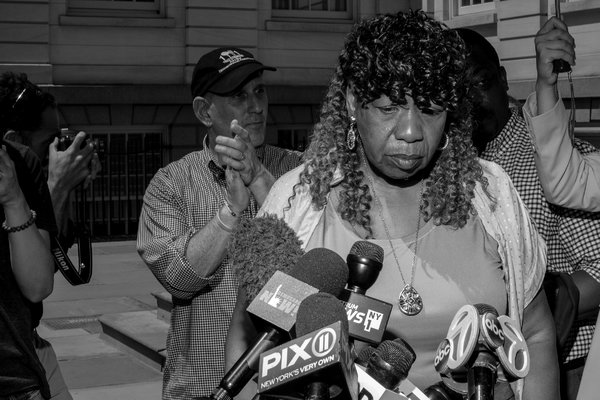
Consider the women of color in our communities: intersecting oppressions create a complex milieu in which their voices are often marginalized when speaking out against violence. The outrage surrounding Garner’s death was not solely about one man’s life lost; it was a harrowing reminder of the collective grief borne by mothers, daughters, and sisters who now must grapple with both systemic racism and a justice system that actively fails to protect their loved ones. The inaction following Garner’s death serves to reinforce a culture of silence where brutalities against marginalized communities occur with little regard from law enforcement or the legal system.
Moreover, it’s essential to question the societal narratives that frame victims of police violence. Often, media portrayals skew perceptions and cast blame on individuals rather than examining institutional culpability. This inclination to scrutinize the character of victims—especially men of color—reflects a disturbing facet of patriarchal narratives that, too often, render these lives expendable. Eric Garner’s identity should not be overshadowed by his alleged misdeeds; rather, it should be illuminated for the entirety of his existence, a complex human being deserving of dignity and respect.
What Justice Looks Like: The Feminist Perspective on Accountability
When justice fails as it has in Garner’s case, it inevitably leads to broader implications about what accountability means within the realm of policing and governance. Feminism challenges the prevailing notion that justice exists through punitive measures. True justice would entail preventative measures, community involvement, and transparency in law enforcement, ensuring that all citizens—particularly those from marginalized backgrounds—are treated with humanity. The notion that the officer involved was never prosecuted creates a gaping void in societal trust, exacerbating tensions between law enforcement and communities of color.
Such failures illustrate how institutionalized violence against Black bodies is an intersectional issue. Hence, a feminist approach calls for not only the termination of officers who engage in brutal misconduct but also the need for systemic changes to dismantle regimes that contribute to poverty, unemployment, and disenfranchisement. These structural inequities must be addressed in tandem with calls for police reform, as the absence of justice only serves to embolden oppressive systems.
Moreover, the ramifications of this failure extend beyond criminal justice. It shapes the societal perception of Black individuals as perpetual suspects, continually reinforcing stereotypes that prevent the advancement of equity. Feminism must be at the forefront of advocacy that seeks to redefine how we conceptualize policing, pushing for restorative justice frameworks that engage both victims and communities rather than perpetuating cycles of violence.
A Collective Responsibility: Engaging Communities in the Fight for Justice
There is a compelling need for solidarity across different movements fighting against systemic injustice. The plight of Eric Garner should galvanize a united front where various factions of civil rights movements, including feminist groups, come together to demand accountability. This collective responsibility is crucial; allyship among movements can be transformative in creating a multi-faceted approach to justice that values every voice, particularly those that have been historically silenced.
Women, especially women of color, have long been the backbone of social justice movements. Their resilience and determination need to be harnessed to ensure that cases like Garner’s are not remiched or forgotten but instead serve as catalysts for profound change. This requires engagement, education, and an unwavering commitment to dismantling the oppressive structures that sustain violence and discrimination.
Moreover, public awareness campaigns and community advocacy can play critical roles in promoting justice and highlighting the flaws within the very systems that failed Eric Garner and countless others. Mobilizing grassroots efforts alongside legal frameworks can produce lasting change and instill hope for a future where accountability is not merely aspirational but an unequivocal reality.
Conclusion: Striving for True Justice in the Wake of Tragedy
The refusal to prosecute the officer responsible for Eric Garner’s death starkly embodies the urgent call for systemic transformation. Feminism, in its intersectional advocacy, seeks not only to amplify the voices of the marginalized but also to confront the very structures that propagate violence and discrimination.
A commitment to justice demands that we do more than mourn; it urges us to act, to galvanize communities, and to advocate for reform. Holding individuals accountable is paramount, but systemic change must follow suit. As we reflect on Eric Garner’s legacy, we must harness collective power to dismantle oppressive systems and demand a world where every life is valued, every voice is heard, and every egregious act is met with accountability. In the pursuit of justice, our work must continue relentlessly, not merely in memory of Eric Garner but for all those who have been denied the justice they deserve.