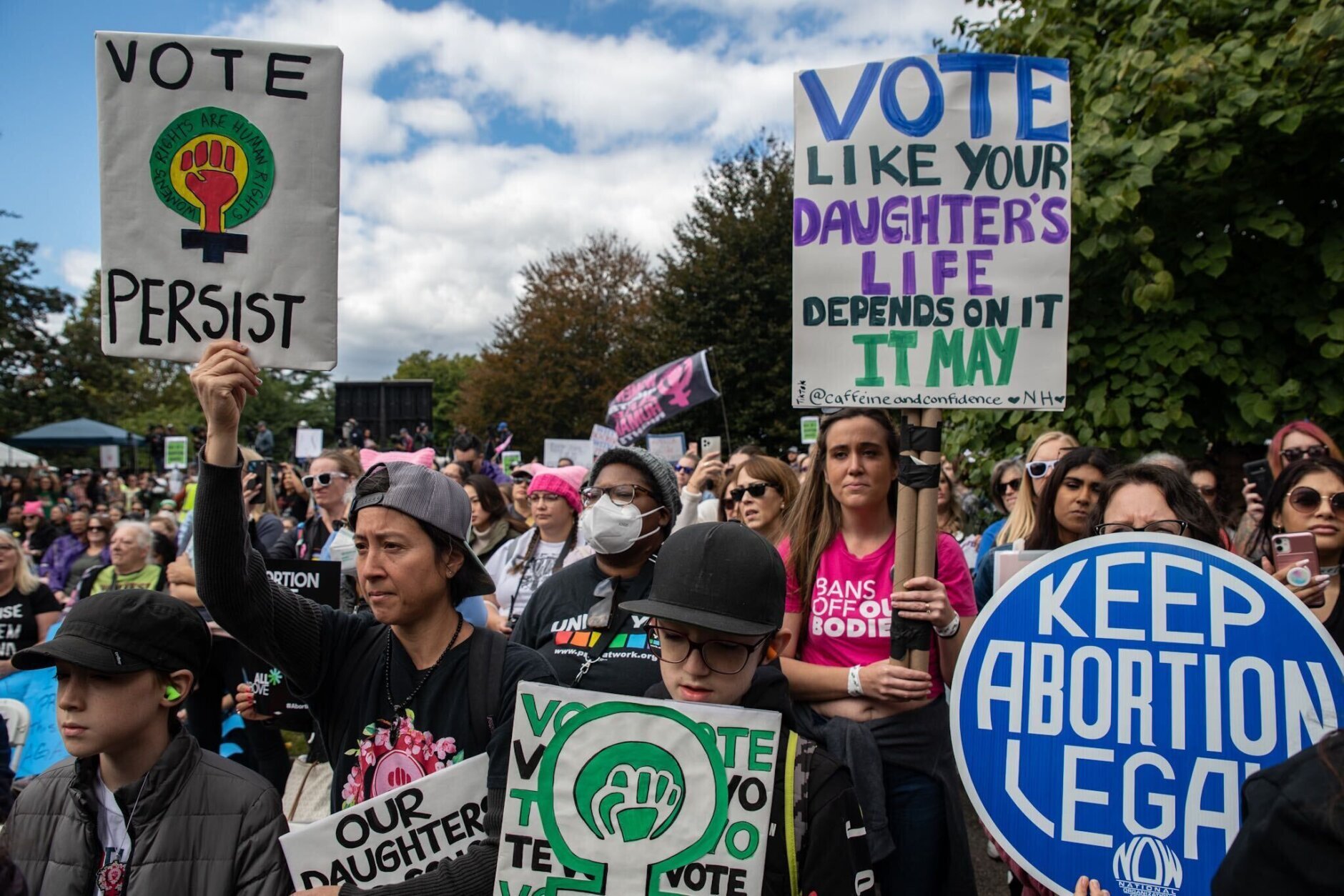
In the heart of Washington, D.C., a multifaceted movement unfurled, enveloping the National Mall in a sea of voices clamoring for justice, rights, and autonomy. The Leadership Alliances Rally, ostensibly a gathering for abortion rights, transcended the mere advocacy for the preservation of reproductive choices. It became a clarion call—a robust assertion of feminism’s unfaltering presence in the ongoing battle against systemic oppression. Time and again, the narrative of women’s rights has been intricately woven into the fabric of feminism; thus, it is imperative to dissect the layers of this rally through an analytical lens steeped in feminist ideology.
Those gathered were not merely supporters; they were architects of a new narrative—one that challenges the conventional portrayal of feminism as a singular narrative. Each voice, each placard, illustrated the kaleidoscopic vision of what reproductive justice might entail in a world overly saturated with patriarchal norms. In that moment, the passion ignited a communal spirit, fueling the fight for autonomy over one’s body and will.
The undercurrents of collective fury and determination became palpable as participants brandished vibrant signs and rallied behind a medley of speakers. They invoked the lived realities of countless women who have faced the harrowing actions of a society unwilling to relinquish its antiquated ideals. From tales of unyielding courage to the visceral echoes of injustice, the rally wasn’t simply about legislation; it was a collective demand for dignity, respect, and the unmitigated right to choose.
At the locus of the event, the primary question emerged: How do these rallies coexist within the broader spectrum of feminist discourse? The answer is complex, fraught with conflicting viewpoints, and ripe for contemplation.
Collective Mobilization Akin to Sorority
At its essence, the Leadership Alliances Rally expressed a radical solidarity. This was not just a gathering of like-minded individuals, but a convergence of various factions of feminism, including intersectional feminists, radical feminists, and liberal feminists, each presenting unique perspectives on reproductive rights. Here lies the paradox: while the pro-choice movement often gravitates towards a unified front against anti-abortion legislation, the debates within feminist ideologies can—at times—be fractious. Feminism isn’t devoid of discord; rather, it thrives on it.
What happens when marginalized voices clamoring for reproductive justice, like those of women of color, LGBTQIA+ individuals, and socioeconomically disadvantaged communities, resonate loudly within this space? The answer reveals a nuanced truth. Dissent is not detrimental; it is transformative. The interplay of different feminist voices at the rally underscored the point that the quest for autonomy does not exist in a vacuum—it must simultaneously address the intersections of race, class, and sexuality, thus crystallizing a comprehensive approach to reproductive justice.
Rallying for Inclusion and Visibility
This leads us to a pivotal component of the rally: the urgency of inclusion. Representation is not a nicety; it is a necessity. How often are the voices of marginalized groups sidelined in the vast legislative machinery? Far too frequently. The spotlight during the rally shone brightly on the imperative for a holistic approach to abortion rights—one that transcends the privilege often associated with mainstream feminism.
Politically charged discussions centered on the reality that legislation affecting abortion rights often overlooks the socio-economic limitations faced by many. Access to reproductive health services is intrinsically tied to socioeconomic status, geographical location, and, shockingly, race. Are we prepared to acknowledge that access to safe abortion procedures is not merely a women’s rights issue but also a poignant socioeconomic dilemma? The rally illuminated that very reality, demanding an explication of the often-shelved conversation on health equity.
Every speaker at the event, every raised fist, and every chant echoed a simple truth: Repudiation of reproductive autonomy cannot be the hallmark achievement of any free society. It is imperative to move beyond the binary lens of “pro-choice” and “pro-life”, delving deeper into issues that profoundly impact people’s lives. By doing so, we cultivate an understanding and appreciation for each strand of the feminist fabric.
Challenging Misconceptions and Confronting Stigmas
However, beneath the surface of camaraderie lies the challenge of countering entrenched stigmas surrounding abortion. Attendees of the rally hailed from diverse backgrounds, yet the dread of judgment hung in the air, often silencing narratives that must be told. Such stigmas wield substantial power—power that keeps people in the shadows, quiet, reeling in fear instead of taking up space in conversations that demand authenticity and vulnerability.
How do we confront these cultural taboos that view abortion and reproductive choice through a lens of shame? Open dialogue is critical. The rally’s atmosphere permitted honest exchanges, pulsating with narratives of individuals who have experienced the multifaceted realities of reproductive choices. It beckoned the question: how do we, as advocates of feminism, ensure that these stories are amplified, not hushed?
The resounding answer lies in fostering an environment rooted in empathy. It requires engaging with discomfort, dismantling long-held beliefs, and embracing the messiness of real-life choices. Feminism, in its most radical form, demands the obliteration of stigma, allowing women and marginalized individuals to reclaim their narratives and validate their experiences without fear of reproach.
An Iteration of Progress and a Call to Action
The Leadership Alliances Rally served as a vivid reminder that the path toward reproductive rights is persistent, wrought with challenges, yet immensely rewarding. It symbolizes a crucial juncture—in which allies rally not just for women but for everyone who has ever faced the wrath of a system intent on erasing their agency. Are you prepared to stand in solidarity?
In embracing the multifaceted nature of this fight, remember this: every small action contributes to a larger movement, one in which steps toward reproductive justice pave the way for broader social change. The responsibility extends beyond the squarely drawn lines of activism; it stretches into everyday conversations, interactions, and decisions. Will you listen to the voices that have long been silenced? Will you illuminate the paths that have become overlooked?
Indeed, the Leadership Alliances Rally in D.C. was not the crescendo but a vital movement within a symphony—a clarion call echoing through the annals of history, stirring a collective consciousness towards an all-embracing feminism. The fight for abortion rights is far from over, and it beckons you to engage in this compelling debate, confront its intricacies, and challenge its limitations.
As the rally concluded, a question lingered in the air: are we willing to embrace the challenge? The evocation of change depends not solely on leaders but on the unwavering commitment of individuals ready to dismantle complacency and usher in a new era where the autonomy of every individual, regardless of gender or socio-economic status, reigns supreme. Every action counts. Will you be part of this metamorphosis?