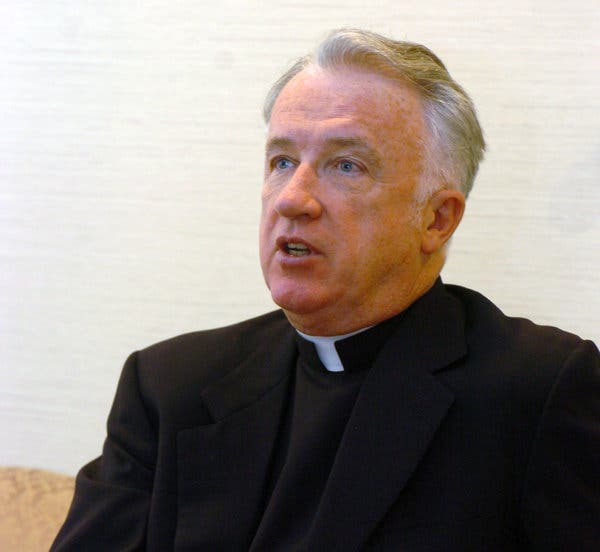
In a world where the moral fiber of institutions is under profound scrutiny, the recent revelations of a bishop admitting his role in reassigning a sexually abusive priest have reverberated through society, igniting a myriad of questions surrounding accountability in religious leadership. This scandal is not merely a clerical issue; it is a glaring testament to the systemic failures within the church, a patriarchal institution that has historically silenced victims and enabled perpetrators. From a feminist perspective, this scandal serves as a critical juncture, urging us to probe deeper into the mechanisms that allow such egregious transgressions to persist and flourish.
When we juxtapose the authority held by church leaders against the backdrop of feminist advocacy for justice and equality, the discord becomes disquietingly clear. The silence and complicity surrounding sexual abuse reflect a nuanced yet insidious form of misogyny, one that surfaces in institutions masquerading as moral beacons. It is imperative for younger generations, often at the forefront of social justice movements, to dismantle these archaic structures that prioritize the church’s reputation over the sanctity of individual lives.
The Bishops’ Cloak of Impunity: A Historical Overview
To comprehend the gravity of the bishop’s admission, we must first unravel the historical tapestry of sexual abuse within the church. It is not merely a contemporary anomaly; it has deep roots—entrenched in a legacy of silence, shame, and denial. The church has often functioned as a microcosm of patriarchy, with male leaders controlling narratives while prioritizing their authority over victim advocacy.
The reallocation of abusive priests is emblematic of a broader systemic issue: a willingness among church leaders to protect abusers. The implications of this male-centric governance extend beyond individual cases; they symbolize a widespread disregard for women’s voices. When victims are forced into the shadows while their abusers ascend to new positions, it engenders a culture of distrust, further disempowering those already marginalized by gender dynamics.
Historically, the church has perpetuated myths that diminish the validity of the victims’ experiences. “They’re just seeking attention,” or “This is a ploy to undermine the church,” are common rebuttals that echo through the corridors of power. Such rhetoric not only delegitimizes survivors but also reinforces a vicious cycle of victim-blaming. A feminist analysis reveals that this mythos serves to uphold patriarchal interests, allowing male leaders to shift focus from accountability to a desperate grasp for preservation of their sacred institution.
The Complicity of Silence: An Examination of Church Culture
When a bishop openly admits to reassigning an abusive priest, it elucidates the pernicious culture of complicity that permeates religious institutions. The church’s hierarchy operates within a fortified bubble of authority that often shields it from external scrutiny. This bubble is sustained not just by a code of silence but by a collective denial that fosters an environment where the predatory behavior of certain individuals is ignored or, worse, tolerated.
Understanding this culture is crucial, especially for younger activists who aspire to interrogate established norms. The church’s refusal to confront its dark underbelly must serve as a rallying cry. There is no room for half-measures; a comprehensive deconstruction of this toxic culture is paramount. It must start with acknowledging the long-standing manipulative practices that prioritize preserving power over protecting the vulnerable.
Younger audiences, often characterized by their passion for social justice, must become adept at recognizing these patterns. The bishop’s admission should not merely act as an isolated incident; it should be contextualized within a broader movement demanding transparency and integrity. The call for justice must be relentless, as it is imperative for future generations to dismantle the apparatus that perpetuates abuse in a space purportedly dedicated to divine peace and moral guidance.
Empowering Survivors: The Responsibility of a New Generation
The crux of this discussion lies in empowerment—of victims, advocates, and the larger community. The unapologetic reallocation of offenders requires an unapologetic response from those affected. It is not enough to offer platitudes of support; action must follow. Survivor stories should occupy the center stage, drawing attention away from ecclesiastical honor and toward the individuals whose lives have been irrevocably altered by acts of abuse.
Younger feminists must cultivate an ethos of solidarity, ensuring that survivors are not merely supported but amplified. This involves fostering spaces where individuals feel safe to share their truths, unearthing experiences that have long been buried beneath layers of institutional shame. It is essential to critically engage with and challenge the narratives that often sideline the voices of women and marginalized groups. The age of silence must yield to an era where truth takes precedence over tradition.
Moreover, activism must extend beyond individuals directly affected by church policies; it should encompass a broader societal call for accountability. When two bishops are accused of harassment and are faced with public outcry, it raises the question: Are we prepared to demand more? Are we willing to reject the notion of blind faith in institutions and instead place our trust in the voices of those advocating for change?
As the new generation steps into the arena, it must wield the power of social media, grassroots organizing, and collective action to unearth the unsettling truths of ecclesiastical abuse. There’s undeniable power that emerges from masses united in a common cause. Such unity is imperative not only for healing but for systemic change that eradicates the cycle of abuse, secrecy, and complicity that defined previous generations.
Conclusion: The Path Forward
The bishop’s admission represents more than a single scandal; it embodies a call for discernment and action. For young activists inspired by feminism and social justice, the imperative is clear: dismantle the structures that have allowed sexual abuse to fester unaddressed behind church walls.
This path forward requires a convergence of voices, a relentless pursuit of justice, and a commitment to heal and uplift those who have suffered in silence. The narratives of survivors must be amplified; their stories are the compass that will guide this momentum toward a future where accountability reigns in place of complacency.
Ultimately, it is not merely about the church’s integrity or reputation; it is about the fundamental human right to safety, dignity, and respect—principles that the church professes to uphold but has often betrayed. In the fight against institutionalized abuse, the stakes are nothing short of life-altering. The time for action is now, and the responsibility lies with the emerging generation to take up this mantle with ferocity and resolve.