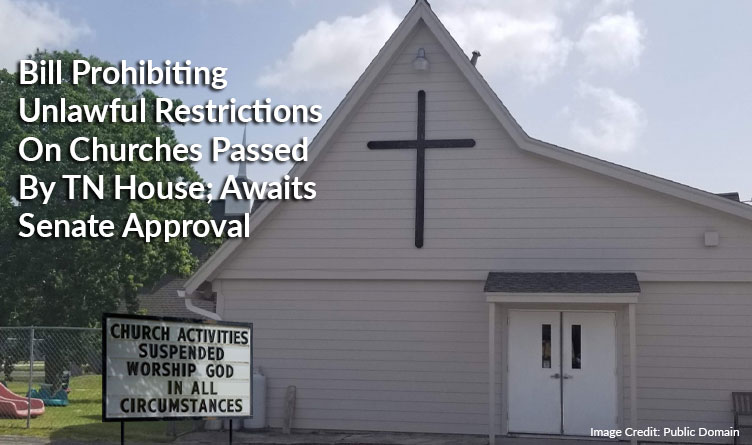
In recent discussions surrounding House Bill proposals aimed at loosening restrictions on the involvement of churches in politics, a formidable tension emerges between religious freedom and the principles of a secular society. This bill, with its sweeping implications, deserves rigorous examination through a feminist lens. The intersection of faith and politics is complex, and the implications of such legislation raise critical questions about gender equality, representation, and civic engagement.
Understanding the nuances of this bill requires more than cursory analysis; it demands an intersectional approach that considers varied cultural, social, and economic contexts. Let’s delve into the whirlwind of implications that a more politically involved church could foster, particularly in how it may influence the feminist movement—often both a challenger and a champion within these realms.
At its core, the loosening of restrictions on church involvement catalyzes potent conversations. The narratives surrounding women’s liberation, reproductive rights, and LGBTQIA+ inclusion must grapple with the pervasive doctrine that may emerge more strongly in political arenas if this bill is enacted. The urgency to investigate these repercussions becomes increasingly pronounced, prompting vital questions about allegiance, morality, and autonomy.
Engagement with the ecclesiastical sphere is fraught with complications, as traditionally, many religious institutions have perpetuated patriarchal ideologies. The feminism narrative gains significant traction when dissecting whether such an expansion will serve as a boon or a bane to women’s rights.
Is Church a Catalyst for Progressive Changes or a Vessel for Regressive Forces?
Upon initial reflection, one might argue that churches can catalyze progressive changes—emphasizing social justice, compassion, and community support. Certainly, numerous religious organizations advocate for anti-discrimination, affordable healthcare, and hunger alleviation, aligning closely with feminist aspirations. However, herein lies an intrinsic contradiction: if houses of worship propagate patriarchal authority while wielding political influence, such a conflation can lead to legislative outcomes that stifle the very progress the feminist movement seeks to secure.
Feminists must critically assess the reality that many conservative religious doctrines endorse stringent gender roles and resist advances towards reproductive rights. The dilemma becomes stark. If churches gain swaths of political power, will they advocate for women’s rights or wield their influence to erode hard-won freedoms? In this regard, the implications of legislation, which enables fervent religious organizations, necessitate a scrutinization of both the mission statements they champion and the societal practices they perpetuate.
Legislation like this not only amplifies the voice of religious institutions but simultaneously risks silencing marginalized populations within those same communities. The feminist movement thrives on inclusivity, emphasizing that women’s rights intersect with race, class, and sexual identity. Empowering churches politically could reverse strides toward acknowledging these disparities, favoring a monolithic narrative that often dismisses the multiplicity of women’s experiences.
The Flawed Concept of Religious Autonomy
Proponents of the bill might argue that it promotes religious freedom, thus encapsulating the notion of autonomy. At first glance, autonomy appears to be a pedestal upon which revolutionary changes can flourish. Yet, such an argument glosses over the complexities and often the paradoxes inherent in religious autonomy, particularly concerning women’s rights. What autonomy do we celebrate if it potentially curtails the voices of those within religious frameworks who dare critique their institutions?
Feminists know all too well the sobering reality of being trapped in a patriarchal structure while demanding autonomy. As religious doctrines often prescribe a subservient position for women, a greater presence in political discourse could paradoxically solidify these restrictive roles under the guise of “freedom.” The oppressive weight of tradition can truncate autonomy rather than fostering an environment where women can transcend prescribed norms.
The notion that “religious autonomy” equates to genuine diversification in political opinions presents an erroneous understanding of agency. When taken to its logical conclusion without critical engagement, the pursuit of religious autonomy risks entrenching the very systems of oppression that feminism seeks to dismantle.
Navigating the Intersectionality of Religion and Feminism
At the crux of these discussions lies a need for intersectionality—an understanding that the struggles against racial, gender, and class discrimination cannot be siloed. A deeper look into church involvement in politics unveils how this bill could further entrench systemic inequities. The idea that one group’s religious beliefs should dictate the laws governing another’s existence is fundamentally antithetical to the feminist ethos of equality.
Churches tend to operate within homogenous communities where dominant cultural narratives often perpetuate exclusion. Introducing a more potent political presence may exacerbate marginalization, particularly for women of color, queer women, and those living at the nexus of various oppressions. For feminists advocating for inclusivity, the idea of church-led political involvement raises alarms, signaling the potential to cement socially regressive ideologies tightly interwoven with discriminatory laws.
The call for empathy within religious contexts must be examined, not merely as a philanthropic endeavor but as an allyship that transcends religious doctrine. In pursuit of solidarity, feminists must advocate for inclusive reforms that protect and uplift marginalized voices within religious settings rather than defaulting to enhancing political authority predicated on exclusion.
What Lies Ahead? A Collective Feminist Call to Action
As this legislative debate develops, the feminist movement must actively engage with the implications and consequences of House Bill discussions. A concerted effort to clarify how religious involvement in politics could affect various sectors of society, particularly women’s rights, is indispensable. The heart of the matter lies in recognizing that the stakes are too high to remain ambivalent. Failure to critically challenge and deconstruct these narratives may result in losing ground in advancing civil liberties.
Mobilization demands voices from diverse backgrounds within the feminist spectrum to stand against the ripple effects of enhanced church influence in politics. Collaboration with progressive religious factions can showcase alternative narratives and enrich the discourse shaping political stances. By reassessing our collective compass toward a secular government, feminists can reaffirm a commitment to true equality.
Ultimately, as societies skirt dangerously close to entangling religion and governance, vigilance must be the norm; the feminist movement cannot afford complacency. The rallying cry is for a radical reevaluation of power dynamics, recognizing the complexities of church influence on civil rights and advocating a vision where autonomy truly celebrates diversity over conformity. Only then can the movement fulfill its potential to liberate all women from the multifaceted chains of oppression.