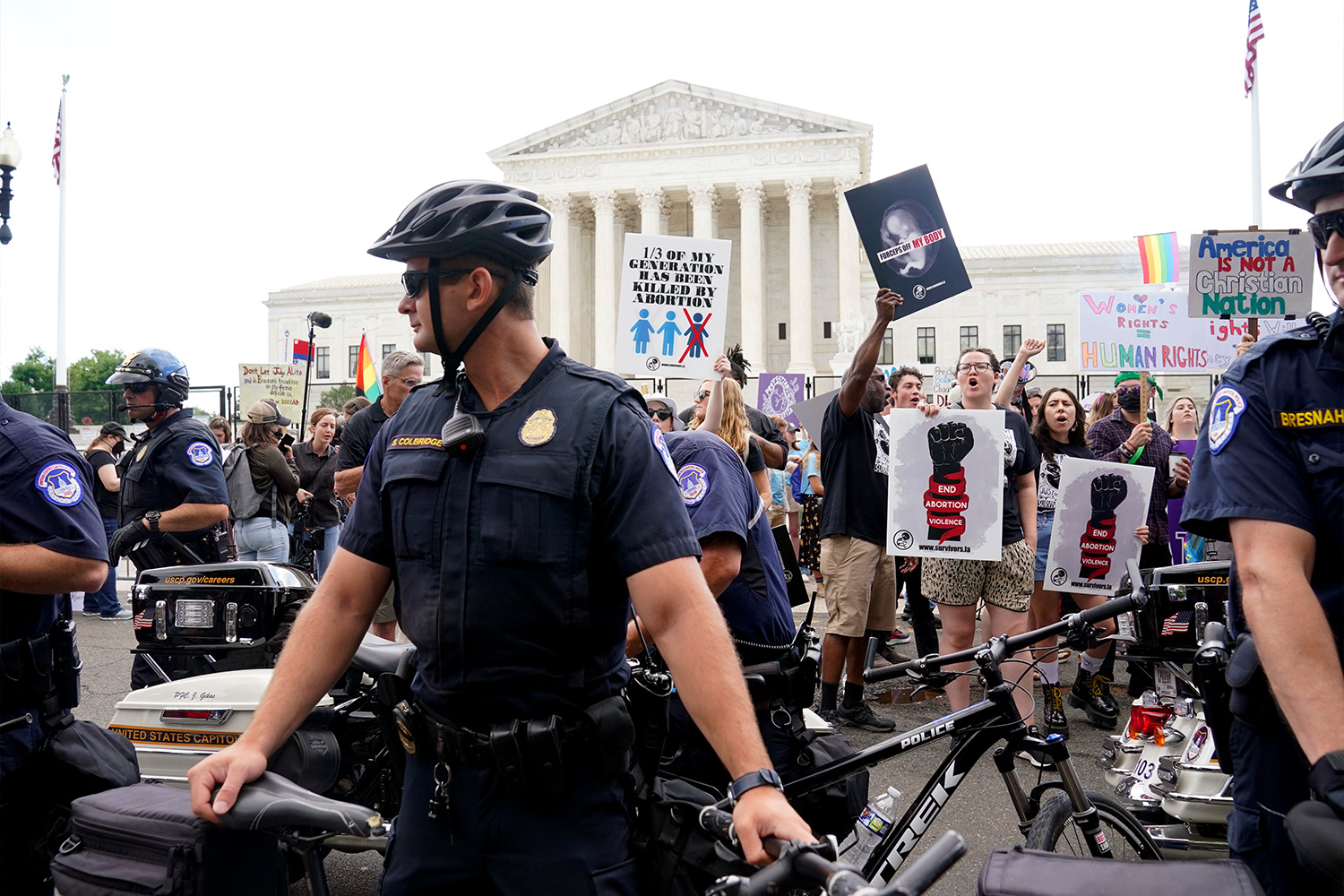
In the escalating maelstrom of reproductive rights, the recent rejection by a federal court to reopen Roe v. Wade exemplifies the precarious state of women’s autonomy in America. This decision reverberates through the halls of justice and into the hearts and minds of individuals who recognize that the fight for bodily integrity is far from over. Feminism, as more than just a rallying cry, demands an interrogation of the structures that foster gender inequity, one of which is the systemic undermining of women’s rights over their own bodies.
What does this judicial repudiation signify in the broader landscape of feminism? Does it represent a capitulation to patriarchal norms, or is it merely a fleeting obstacle in a protracted battle? To dissect the implications of this ruling, we must navigate the labyrinthine interplay between law, society, and the ongoing struggle for women’s rights.
Understanding the Historic Context of Roe v. Wade
Since its inception in 1973, Roe v. Wade has served as a cornerstone for women’s reproductive rights—a landmark decision that sanctified a woman’s right to choose. Echoing the sentiment that autonomy over one’s own body is a fundamental human right, this ruling catalyzed feminist movements across the United States and beyond. However, as we scrutinize the history of this legal framework, it is imperative to acknowledge that the journey towards reproductive autonomy has been riddled with challenges, pushbacks, and a relentless onslaught of societal judgment.
The disavowal of Roe v. Wade by contemporary courts doesn’t emerge in isolation; it is symptomatic of a broader societal reluctance to confront deeply ingrained misogyny. Embedded within the legal decision-making process are biases that overlook the lived realities of women, whose choices and circumstances are often guided by complex socio-economic factors. The rejection to reopen Roe symbolizes an enduring struggle against a patriarchal tapestry that seeks to rein in women’s freedoms under the guise of moral integrity.
Furthermore, the backlash against Roe v. Wade is not merely a legal skirmish; it embodies a profound ideological rift that has emerged in society. As the feminist movement galvanizes to advocate for reproductive rights, the need for intersectionality and inclusivity becomes increasingly evident. This is not a battle fought in vacuums; it intersects with issues such as poverty, race, and access to healthcare, rendering the abortion debate a multifaceted conundrum that cannot be simplified to mere legal arguments.
The Ripple Effects of Judicial Decisions
When courts decide the fates of landmark rulings like Roe v. Wade, they do not operate in a vacuum. Their decisions create ripples that impact every stratum of society—an effect that is felt most acutely by marginalized communities. As these women are often the most vulnerable, the implications of the recent ruling expose the inadequacy of legal frameworks that fail to account for economic, racial, and geographical disparities. For many, the ability to make choices about one’s own body is not just a personal decision but one fraught with systemic barriers that perpetuate cycles of poverty and disenfranchisement.
The rejection to reopen Roe reflects not only judicial ideology but societal attitudes that persistently undermine reproductive justice. Feminism must demand accountability from institutions that perpetuate these inequities. It is insufficient to argue that legal rights should exist without an unswerving commitment to ensuring that such rights are accessible to all women, particularly those who are economically disadvantaged or living in conservative jurisdictions where their choices are severely limited.
Confronting the Dichotomy of ‘Life’ and ‘Choice’
The rhetoric surrounding reproductive rights often teeters dangerously on the edge of a simplistic dichotomy: the sanctity of life versus a woman’s right to choose. This binary juxtaposition ultimately misrepresents the complexity of the issue at hand. Feminists must challenge this reductionist narrative, articulating that the right to choose does not invalidate the value of potential life; rather, it recognizes the intricate tapestry of human experience that underscores every pregnancy and decision surrounding it.
Moreover, the focus on banning abortion frequently disregards the emotional and psychological dimensions of choice. The assumption that women casually opt for abortion neglects the myriad of factors—a range of health issues, socio-economic conditions, and personal circumstances—that inform the choice to terminate a pregnancy. The judicial system’s inclination to render decisions on such profoundly personal matters is both arrogant and reductive, highlighting an alarming detachment from human reality.
Furthermore, as we engage in this conversation, it becomes crucial to amplify the voices of those who have lived through these experiences. Women’s narratives are essential in illuminating the often invisible battles faced in the pursuit of reproductive justice, serving as poignant reminders that choices about one’s body should ultimately reside with the individual rather than be dictated by a judicial gavel or a legislative assembly.
The Feminist Path Forward
Rejecting the recent court’s decision does not entail a rebirth of despair; rather, it ignites a clarion call for action. Feminism necessitates an unwavering commitment to advocacy, education, and empowerment—all critical elements in the fight for reproductive rights. Advocating for policy changes, supporting grassroots organizations, and ensuring that comprehensive reproductive education is accessible for all are paramount actions that can be taken to foster a more equitable society.
The path forward also mandates introspection and dialogue within feminist circles. Feminism has often been criticized for being exclusionary; therefore, empowering marginalized voices and ensuring that their struggles are at the forefront of the movement is vital. The fight for reproductive rights must become synonymous with advocating for social justice. It is essential to dismantle all barriers that inhibit an individual’s right to choose through solidarity, intersectionality, and a collective understanding of the intricacies involved in matters of reproductive health.
In summation, the rejection by the federal court to reopen Roe v. Wade serves as a grim reminder of how precarious women’s rights are and how judicial systems can be complicit in perpetuating gender inequities. Feminism must rise to the occasion, demanding that the fight for reproductive rights be reclaimed as a fundamental human struggle—one that intertwines the right to bodily autonomy with the larger quest for justice, equality, and compassion in a world that often seeks to do otherwise.