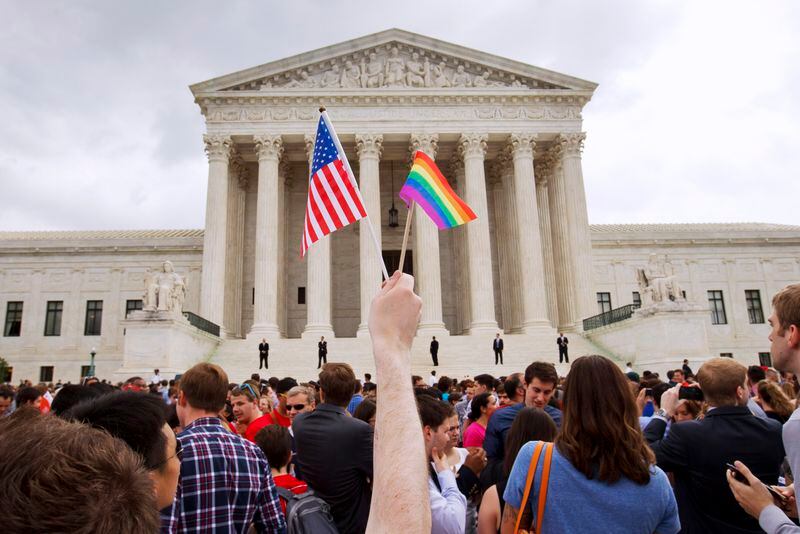
In a landmark decision that echoes the aspirations of countless advocates for equality, the Supreme Court’s affirmation of same-sex marriage in Massachusetts in 2003 signified more than a legislative victory; it symbolized a seismic shift in the fabric of American social norms and an emblem of feminist progress. This ruling not only enshrined the rights of same-sex couples but also fortified the broader feminist narrative concerning autonomy, identity, and the relentless pursuit of equality. To understand the implications of this ruling through a feminist lens, we must dissect the intersecting themes of body autonomy, the redefinition of family structures, and the challenge against oppressive patriarchal paradigms.
Reclaiming Body Autonomy: A Feminist Principle in Action
At the heart of the feminist movement is the demand for autonomy—control over one’s own body and identity. The Supreme Court’s ruling in favor of same-sex marriage can be seen as a reinforcement of this principle, extending the reach of bodily autonomy to same-sex couples who had previously been marginalized under archaic legal definitions of marriage. Marriage, a predominantly heteronormative institution, has been steeped in patriarchal traditions that often restrict individual freedoms. By affirming same-sex marriage, the court acknowledged the rights of individuals to enter into unions of their choosing, thereby empowering them to escape the shackles of heteronormativity.
This decision sharply contrasts with the historical subjugation of LGBTQ+ identities, where love and relationships that deviate from the heteronormative ideal were systematically invalidated. Feminism thrives on dismantling these oppressive structures, advocating for the rights of marginalized individuals to forge their own identities and pursue love in ways that are authentic to them. Upholding same-sex marriage is not merely a legal triumph; it reflects a significant cultural reawakening that acknowledges the complexity and richness of human relationships.
Redefining the Family Structure: A Progressive Paradigm
The affirmation of same-sex marriage invites a reconsideration of what constitutes a family—an essential discourse within feminist thought. Traditionally, the nuclear family has been lauded as the quintessential model, a construct that often sidelines alternative forms of living and loving. By legitimizing same-sex marriage, the Supreme Court dismantled the rigid paradigms upholding this outdated notion and asserted that family is defined not by gender or sexual orientation but by love, commitment, and mutual respect.
This transformation carries profound implications for feminist discourse. It challenges the prescriptive narratives that have historically dictated women’s roles within the domestic sphere, wherein women are often confined to the archetype of caregivers or homemakers. The recognition of diverse family structures encourages women to envision and pursue myriad pathways to fulfillment, empowering them to redefine their identities beyond societal expectations. This newfound flexibility is a catalyst for social change; it broadens the horizons of what is deemed “normal,” thereby fostering an environment where all individuals, regardless of their sexual orientation, can thrive.
Moreover, the acknowledgment of same-sex marriages contributes to an enhanced visibility of non-traditional families, ensuring that discussions surrounding parental rights, custody, and child-rearing extend inclusively rather than exclusively. This is an especially pertinent issue in the context of feminist advocacy; the acknowledgment that same-sex couples can and do create nurturing, loving family environments disrupts the false narrative that only heterosexual families are “fit” for parenting. Herein lies the strength of feminist activism: the ability to center voices that have been historically marginalized while championing an egalitarian vision of community.
The Challenge to Oppressive Patriarchal Paradigms
Feminism intrinsically aims to dismantle patriarchal systems that enforce rigid gender roles and hierarchical maritime structures. By upholding same-sex marriage as a legal right, the Supreme Court effectively challenged the patriarchal underpinnings of marriage itself. Patriarchy, with its long-standing ideals that privilege heterosexuality and demonize nonconformity, has a centuries-old relationship with marriage as an institution. The court’s ruling encouraged a reevaluation of marriage, encouraging society to conceive it as a partnership built on equality rather than a contract solidifying male dominance over women.
This ruling aligns with feminist critiques of marriage that emphasize the need for equality within intimate partnerships. With same-sex couples as visible embodiments of love that defy conventional norms, the patriarchal grip on the institution of marriage is weakened. As society begins to embrace varying expressions of love, the traditional narrative surrounding marriage is challenged, creating space for conversations that interrogate gender roles, power dynamics, and support mutual respect as foundational elements of any relationship.
Furthermore, the endorsement of same-sex marriage imbues the feminist movement with a renewed vigor to confront discrimination—both institutional and societal—that permeates not just the LGBTQ+ community but intersects with race, class, and gender identities. This intersectional approach is critical; feminism cannot afford to sideline the voices of those grappling with overlapping forms of marginalization. The victory for same-sex marriage serves as a rallying cry for broader equality initiatives, compelling feminists to champion causes that resonate with all underrepresented groups.
A Call to Action: Moving Beyond Legal Recognition
While the Supreme Court’s ruling represents a pivotal moment in the struggle for LGBTQ+ rights and feminist principles, it is imperative to recognize that legal recognition is only part of the equation. The real work lies in dismantling the social prejudices that continue to perpetuate discrimination against same-sex couples and the LGBTQ+ community at large. As feminists, it is essential to harness this momentum to advocate for comprehensive policies that protect against discrimination in employment, housing, healthcare, and education.
This extends beyond mere legislation; it requires societal transformation. Educational initiatives that promote inclusivity, empathy, and understanding are crucial in reshaping public perceptions surrounding same-sex relationships. Feminism thrives on solidarity, and this is a clarion call for allies to join forces, cultivating environments that celebrate love in all its forms while actively challenging and dismantling oppressive structures.
The Road Ahead: A Collective Feminist Vision
As we reflect on the significance of the Supreme Court’s ruling, it is essential to envision a future where the principles of equality, love, and justice reign unchallenged. The fight for same-sex marriage is emblematic of the broader struggle against oppression, and by embracing these victories, feminists can continue to forge pathways for liberation that encompass all identities. The narratives we create today will shape generations to come, influencing how love, relationships, and family are perceived and valued.
In conclusion, the Supreme Court’s endorsement of same-sex marriage in Massachusetts is a testament to the resilience of the feminist movement. It is a reminder that the fight for equality is an ongoing journey—one that transcends borders, ideologies, and identities. As feminists, we must remain vigilant advocates for those whose voices have been silenced, recognizing that the liberation of one is intrinsically tied to the liberation of all. The spirit of this ruling demands nothing less than our unwavering commitment to continue the fight, ensuring that love, in all its glorious forms, triumphs over prejudice, oppression, and injustice.