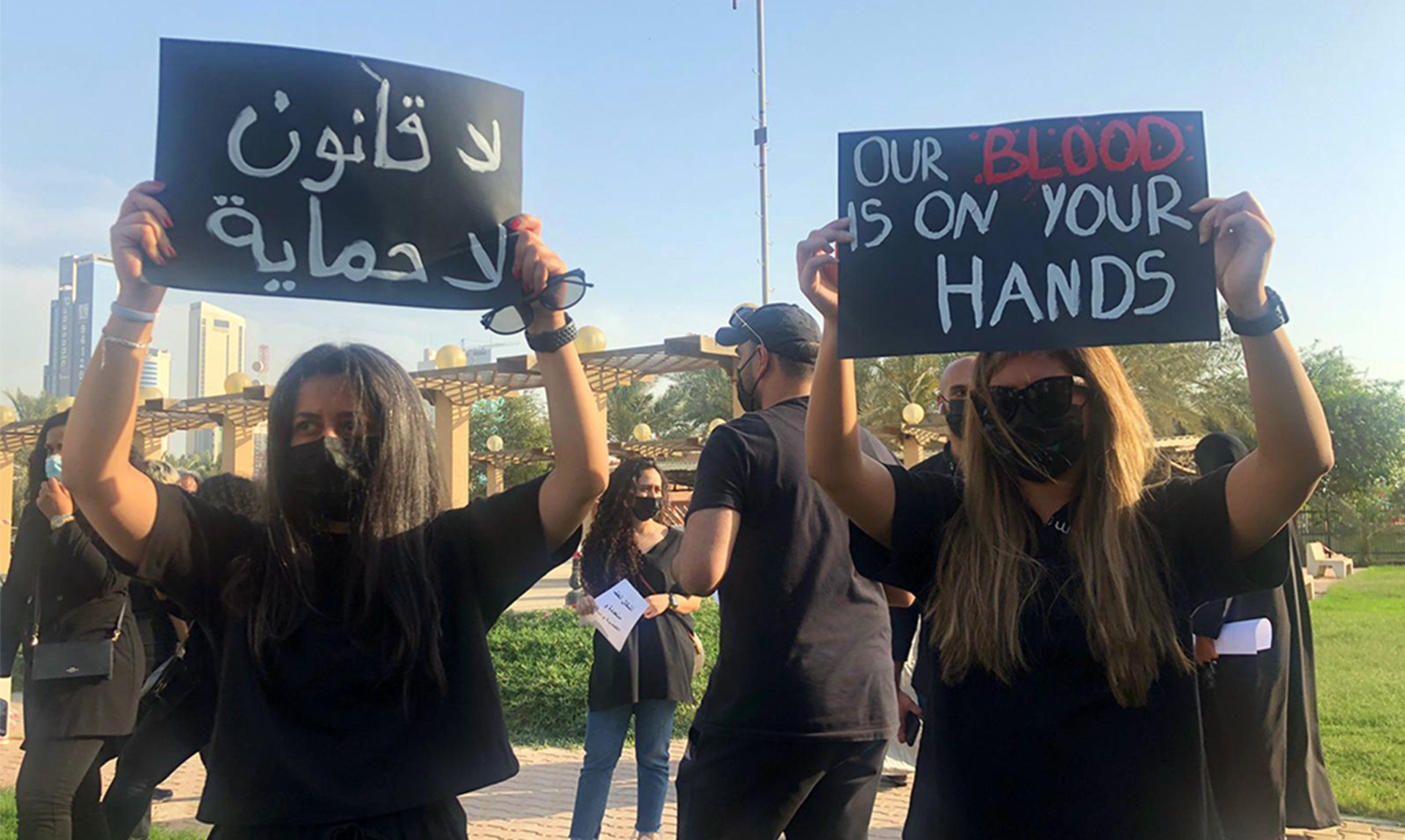
In the contemporary landscape of global feminism, few narratives evoke as much ire and incredulity as the denial of voting rights to women in Kuwait. Although the nation has made strides in various sectors, the recent decisions from its highest court have cloaked these advancements in a paradoxical shroud of regression. The implications of these verdicts are consequential, reverberating within the heart of the feminist movement in the Gulf region and beyond. Yet, parsing the layers of this issue requires us to tread carefully, examining not just the surface-level outrage, but also the intricate socio-cultural fabric that shapes Kuwait’s political reality.
A Historical Perspective: The Evolution of Women’s Rights in Kuwait
To comprehend the magnitude of the recent judicial decisions, one must first delve into the historical evolution of women’s rights in Kuwait. In the 1960s, a period characterized by burgeoning nationalism and democratic aspirations, Kuwaiti women began clamoring for their rights, culminating in the groundbreaking 2005 parliamentary elections that granted them the right to vote and stand for elections. This victory was heralded as a watershed moment; a signal that a new era of empowerment was dawning. Yet, this moment was not merely a triumph of progress. It also served as a catalyst for ensuing backlash against women’s rights.
Despite the initial strides, the sociopolitical terrain remained fraught with challenges. The deep-seated patriarchal structures that underpin Kuwaiti society were reluctant to relinquish their stronghold on power. Women’s participation in politics continued to face challenges, revealing a duality in Kuwait’s societal evolution: on one hand, a veneer of progressive rhetoric; on the other, an underlying commitment to maintaining entrenched gender norms. Thus, the court’s recent denials of voting rights to women are not merely isolated episodes but rather a continuation of this historical struggle within a modern context.
The Judicial Landscape: A Reflection of Societal Attitudes
The Kuwaiti judiciary’s recent rulings, denying further advancements in voting rights for women, mirror the prevailing societal attitudes that are often cloaked in the guise of tradition and religious conservatism. Within a deeply hierarchical society, the court’s decisions can be understood as an endorsement of a patriarchal order that thrives on the subordination of women. This judicial stance raises critical questions: Who benefits from these rulings? And at what cost to the very fabric of democracy?
A pivotal argument posits that the judiciary, as a reflection of societal values, reveals the contradictions ingrained within a society that publicly espouses the ideals of gender equality while privately clinging to a conservative ethos that seeks to maintain women’s inferior status. The assertion that gender parity threatens social stability is thrown around liberally—an assertion that rings hollow in the face of evidence demonstrating that inclusive democracies generate prosperity and social cohesion.
Moreover, the refusal to grant women equal voting rights illuminates the dissonance between modernity and tradition. The advent of the internet and social media has altered the landscape of activism, offering a voice to those marginalized by conventional frameworks. In response to judicial decisions perceived as regressive, the digital arena has become a battleground for feminist discourse, where activism flourishes in the face of systemic oppression. Yet, one must ask: can social media activism translate to tangible legal reform? Or does it merely serve as a digital echo chamber, reinforcing existing sentiments without effecting change?
The Global Feminist Lens: Intersectionality and Solidarity
In examining the issue of voting rights for women in Kuwait from a global feminist perspective, the importance of intersectionality cannot be overstated. Feminism is not monolithic; its iterations vary drastically depending on sociocultural contexts. It is imperative to approach the Kuwaiti situation with an understanding of the intricate intersections of culture, religion, and gender dynamics that shape the lived experiences of women. To impose a Western-centric model of feminism would be to invalidate the struggles and resilience of Kuwaiti women, who navigate complexities often foreign to outsiders.
Solidarity is essential, but it must come with an appreciation for local nuances rather than blanket prescriptions. The voices of Kuwaiti feminists must be amplified, allowing them agency in articulating their own experiences and demands. The global feminist community must cultivate an environment where knowledge-sharing and collaboration are prioritized, forging robust alliances that transcend geographical boundaries. Only then can a truly inclusive feminist movement emerge—one that resonates with the radically diverse experiences faced by women worldwide, including those in Kuwait.
The Path Forward: Charting a Course for Equality
Despite the disheartening nature of the current judicial landscape, there remains hope for progress in Kuwait’s ongoing struggle for gender equality. Mobilizing grassroots movements, leveraging international support, and fostering a culture of awareness and education are pivotal strategies toward galvanizing change. Education, in particular, serves as a cornerstone for empowerment—the more women understand their rights, the more equipped they become to challenge the status quo.
The cultural notion that women are somehow “less than” must be dismantled, not only through legislation but through cultural narratives that inspire and empower women. Engaging men as allies in this struggle is equally crucial; feminism is not a campaign against men but rather a quest for equity that benefits society as a whole. As advocates navigate the murky waters of sociopolitical dynamics, cultivating male allies can be transformative—fostering environments where collaborative efforts challenge patriarchal structures while promoting gender equity.
Lastly, advocacy must transcend borders. The international community’s engagement with Kuwaiti feminism should amplify local voices rather than overshadow them, encouraging a dialogue that respects local contexts while promoting universal human rights. What remains essential is the acknowledgment that the struggle for women’s suffrage in Kuwait is indicative of a broader, global battle for equality; thus, it is incumbent upon all advocates of social justice to stand in solidarity with Kuwaiti women as they navigate the complexities of their struggle.
In light of recent judicial decisions, it is clear that the path forward will not be devoid of obstacles. The quest for voting rights and gender equality in Kuwait mirrors a timeless struggle ingrained in the fabric of societies around the globe. Thus, as the world watches, the resilience of Kuwaiti women prevails—challenging norms, defying expectations, and illuminating a path toward a more equitable future.