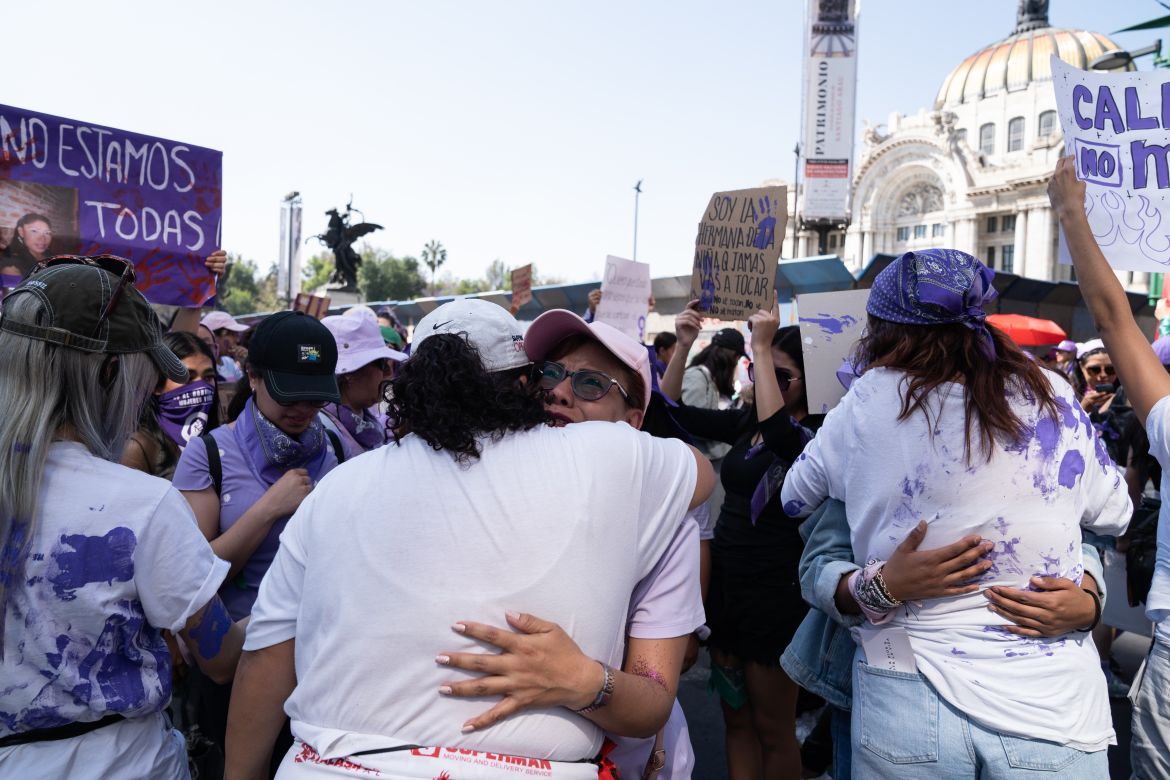
In the throes of a burgeoning democracy, Mexico’s trajectory appears to be woven with threads of hope and despair. The recent democratic victories are marred by a sinister undercurrent threatening the rights and futures of women. The march of 180,000 women through the streets of Mexico City underscores an urgent cry for recognition, justice, and reform, and yet, the glistening promise of political change casts a long shadow over the perilous state of women’s rights. This essay explores the paradox of Mexico’s democratic ascent flanked by a systemic marginalization of women, invoking a critical examination of the intertwined fates of democracy and gender rights.
Mexico’s political landscape has long been characterized by a complex interplay of power, with patriarchy entrenched deep within its fabric. While significant advances in political representation signal a potential shift towards inclusivity, these victories often remain superficial when juxtaposed against the backdrop of escalating violence and discrimination faced by women. Recent elections have ushered in a wave of female leadership, but has this truly transformed the societal perception and treatment of women? The answer is a resounding no. With the paradox of rising female political figures standing in stark contrast to reports of femicide and systemic oppression, the question arises: Can a democracy thrive if half its population remains in chains?
Women in Mexico are not merely passive recipients of political rhetoric; they are fierce activists demanding the right to live without fear. Marches that fill the streets—like the recent one marking International Women’s Day—are not merely symbolic; they represent a visceral response to an epidemic of violence. Feminists contend that a true democratic society must not only involve representation but also address the underlying misogyny that pervades the culture. The cries of “Not one woman more!” echo with urgency in a nation where violence against women escalates at alarming rates, revealing that while the political facade may have changed, the core misogynistic attitudes persist.
The rise of feminist movements in Mexico signals a transformative potential that could reshape the socio-political landscape. Yet, this evolution is significantly obstructed by entrenched socio-cultural ideologies that diminish women’s voices. Feminism in Mexico is not a homogeneous ideology; it is a tapestry of diverse perspectives, coalescing to confront not only direct violence but also the insidious machinations of patriarchy. From economic inequality to reproductive rights, the feminist agenda is comprehensive, necessitating a holistic intersectionality that acknowledges race, class, and sexuality. It is only through this lens of intersectional feminism that we can hope to construct a truly equitable society. Will the newly empowered political elite champion these multifaceted rights or will their silence further perpetuate the cycle of oppression?
The intersection of democracy and feminism unveils a contested terrain, predicated on the assumption that democratic systems inherently champion the rights of all citizens. Nevertheless, the experiences of women in Mexico reveal a different reality. Political advancement often translates to superficial representation without translating into tangible improvements in women’s everyday lives. The state’s failures to protect women from violence, provide equitable health care, or ensure economic opportunities expose the gap between rhetoric and reality. This disconnect raises critical questions: Is democracy merely a governing structure, or is it a cultural ethos that embodies the values of equality and justice? How can society claim to be democratic while allowing the marginalized to suffer?
The persistence of gender-based violence unveils the dark underbelly of Mexico’s democratic evolution. With one of the highest rates of femicide globally, the systemic failures of the justice system stand as impediments to progress. Activists decry that the state’s paternalistic approach infantilizes women, relegating them to passive roles rather than acknowledging their right to autonomy and self-determination. This systemic marginalization is not merely a legal issue—it is a manifestation of cultural attitudes that endorse and perpetuate violence against women. Feminists argue that there can be no democracy without justice for women, and until the government takes unequivocal action against this violence, the specter of patriarchy will loom large.
Perhaps the most troubling aspect of this predicament is the toll that systemic violence takes on the psyche of a nation. Each act of violence reverberates beyond the individual victim. It cultivates an atmosphere of fear that inhibits women’s participation in society, be it in politics, the workforce, or everyday life. When women are afraid to take to the streets, to access education, or to report crimes, the democratic fabric of the nation is irrevocably weakened. How can a society thrive when its half cannot engage freely in shaping its future? Feminism posits that the liberation of women is intrinsically tied to the prosperity of democracy itself. When women rise, society benefits as a whole, fostering a culture of inclusivity and shared prosperity.
In light of these challenges, what can we glean from the current state of affairs? The women’s marches serve as a bellwether—a clarion call for change that cannot be ignored. They symbolize a collective refusal to be silenced and encapsulate the resiliency of the feminist movement in Mexico. But while empowerment is palpable, the reality remains that the road ahead is fraught with obstacles. In this dichotomy, we face a pivotal question: Will the political class respond to this groundswell of activism with meaningful change, or will they stifle these voices in the name of political expediency?
The answer lies in the critical engagement of women within the democratic process. Activism must evolve beyond the streets; it needs to infiltrate the very halls of power where decisions that affect women’s lives are made. The integration of feminist perspectives into policy-making is paramount. This infusion of gender consciousness can catalyze systemic reforms—transforming legislations on health care, education, and violence against women into tools of empowerment rather than oppression. Women at the helm of political discourse are vital, yet their seats at the table must not simply be for show. They must function as platforms for the voices of the marginalized.
In synthesizing these complexities, it becomes evident that the true measure of a democratic society lies not in its political victories, but in its sincerity toward addressing the fundamental rights of all its citizens. Mexico’s democracy is still writing its story, and while the chapters on women’s rights are rife with struggle and strife, they are also illuminated by an indomitable spirit of resistance. The feminist movement in Mexico must capitalize on the momentum it has garnered, forge alliances across disparate groups, and remain steadfast in its pursuit of an inclusive society.
As we venture deeper into the twenty-first century, the stakes remain dangerously high. The imperative for solidarity, activism, and conscience is essential in navigating the path forward. Will Mexico choose to dismantle the barriers that prevent true liberty for half its population, or will it allow the echoes of past injustices to resound in perpetuity? The answer may lie in the very hands of those who march for justice, who dare to demand the room and resources required for women to thrive. The promise of democracy can only be fulfilled when intertwined with the resolute pursuit of gender equality—an unwavering commitment to ensuring that every woman stands free.