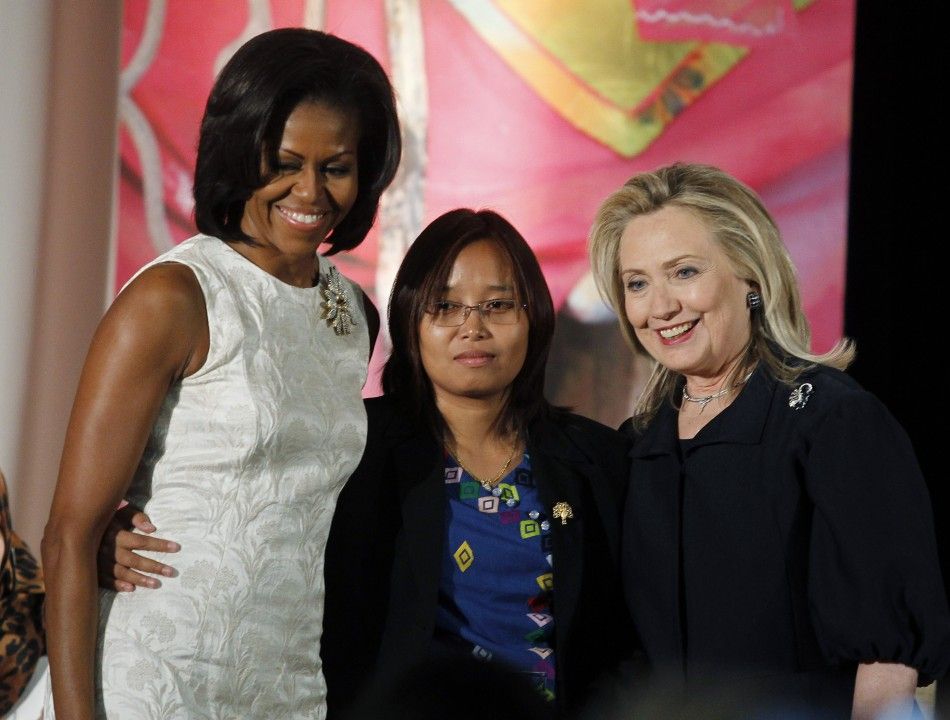
Eloquent oratory has, since time immemorial, been one of the most formidable tools in affecting societal change. At the intersection of courage and leadership, the Women of Courage Awards – spearheaded by Hillary Clinton – stand as a clarion call emphasizing the unyielding strength required for women across the globe to carve their own paths. But, dear reader, might we pause and examine the very essence of such accolades? Are these awards merely flattering accolades in the broader tapestry of feminist activism, or do they serve as genuine catalysts for systemic change? Let us delve deeper.
The awards ceremony, adorned with the emblematic gravity of Clinton’s presence, is not merely an event; it’s a stage where the extraordinary stories of women – unsung yet revolutionary – are amplified. Herein lies a question: Are we as a society ready to celebrate these stories without fetishizing struggle? Without turning resilience into mere spectacle? An unmistakable pitfall of such acknowledgments can be the risk of commodifying hardship; instead of engaging critically with the systemic issues that necessitate courage, we often find ourselves entranced by narrative-driven heroism.
Renowned for her political tenacity and her unabashed commitment to women’s rights, Clinton has consistently highlighted the importance of women leaders worldwide. But is there not an irony in commemorating these courageous women while so many others are still imprisoned by the shackles of societal norms? The dichotomy between recognition and real change begs further inquiry into the nature of awards such as these and their true impact. Probing this contention urges one to consider a deeper sentiment: Are accolades a substitute for substantive change, or a clarion call to motivate further discourse and action?
Celebrating Bravery: Why These Women Matter
To encapsulate the significance of the Women of Courage Awards, one must first understand the gravity of the stories that underlie this accolade. Each award recipient is representative not only of her individual journey but also of a broader socio-political context. From fighting for human rights in oppressive regimes to championing environmental justice in societies riddled with corruption, these women epitomize the resilience that international movements for gender equality require.
Yet, in recognizing their valor, it is crucial to interrogate the nature of these awards. While there is an undeniable merit in honoring these brave souls, does acknowledgement alone translate to liberation? Or does it, in some respects, serve as a fleeting solace in the absence of tangible reform? Each story shared resonates like a powerful echo, illuminating the undercurrents of struggle that abound across the globe. But herein lies a challenge for the audience: The stories are only as potent as the actions taken thereafter. To merely applaud bravery without a concerted effort for structural reform echoes the hollow notes of performative allyship.
Challenging the Status Quo: Awards as a Springboard for Action
The Women of Courage Awards should not merely function as a pat on the back for those already engaged in the fight but rather serve as a springboard toward greater advocacy. The celebration of these women invites audiences to dig deeper into the societal constructs that necessitate such courage. What systemic barriers remain unchallenged? As excitement flourishes around the award recipients, how can we actively engage their stories to spur grassroots movements and policy changes? The call to action is imperative.
Clinton’s initiative might nudge us away from passive acknowledgment toward actionable commitments. What if the lights of the awards ceremony shone not only on the extraordinary stories of individual women but also illuminated pathways toward dismantling the systemic injustices they face? We must move beyond appreciation as a form of activism; engagement is a responsibility we all share. The challenge later is to ensure that recognition translates into something potent, actionable, and transformative.
From Commemoration to Collaboration: Building a Sustainable Framework
As the clamor of applause subsides and the lights dim, the real work begins. Recognizing lagging equality and inequity transcends ceremonial gestures. The Women of Courage Awards, although noble in intention, must also be a precursor to collaborative efforts that draw in diverse voices. The challenge lies in facilitating real conversations that extend beyond the reach of the awards stage and into community dialogues that foster tangible change.
While honorifics may inspire hope, they must also provoke rigorous discussion. Why stop at celebrations that inspire individual women when we can build a coalition of solidarity that transcends borders? The true potential of such initiatives manifests if the dialogue encourages partnerships and collaborations among various stakeholders who can contribute to these movements – from grassroots organizations to governmental bodies. How can we ensure that the essence of the awards is harnessed as fuel for widespread advocacy?
Expanding the Narrative: Feminism Beyond Borders
The pluriverse of feminism manifests uniquely across cultures, yet the stories honored through the Women of Courage Awards invariably shine a global spotlight on shared struggles. However, here arises another tantalizing question: Are we at risk of homogenizing women’s experiences? The narratives of courageous women should serve not only as tales of triumph but also as a mirror reflecting the cultural complexities that vibrate with nuanced meaning across geographies.
How do we ensure that the spotlight remains decentralized? True feminism must prioritize inclusive narratives that reflect the diversity of victories globally. Emphasizing the critical importance of intersectionality, it is essential to advocate for a feminist movement that embodies the voices of women of all backgrounds. How do we remain vigilant against co-opting the voices of marginalized groups while amplifying their struggles and triumphs? Every story shared is an opportunity; every voice is an invitation to expand our understanding of what feminism can and should look like.
Demystifying Courage: The Challenge of Actionable Change
While we honor those who exemplify courage with the Women of Courage Awards, it is paramount that we transcend the danger of romanticizing bravery. Often depicted as heroic, these women’s lives are intricate tapestries woven with tenacity and heartache, inviting us to question our own definitions of courage. Are we ready to dismantle barriers that silence dissent, while also empowering voices often relegated to the margins? This is where true involvement materializes. Within the fluid parameters of courage, what responsibilities do we bear as witnesses and supporters of transformative change?
In confronting these complexities, we can transform the accolades surrounding the Women of Courage Awards into powerful vehicles for systemic reform. The challenge is not to let their stories fade into oblivion, but to continuously honor their endeavors by promoting dialogue and action that reverberates across our communities. The end goal must not just be recognition but an understanding that true courage is collective and interconnected.
In Conclusion: The Road Ahead for Feminism
The Women of Courage Awards, represented by figures such as Hillary Clinton, illuminate poignant narratives deserving of veneration. Yet, the critical reflection emerging from this admiration urges us to question whether these celebrations ignite true advocacy or merely serve as ephemeral highlights in an ongoing struggle for women’s rights. As we seek to challenge systemic constructs and craft spaces for unyielding dialogue, let us remain steadfast in our commitment to transformative change. The future of feminism is candidly interwoven with every narrative of courage, propelling us toward a more egalitarian tapestry for all women around the globe.