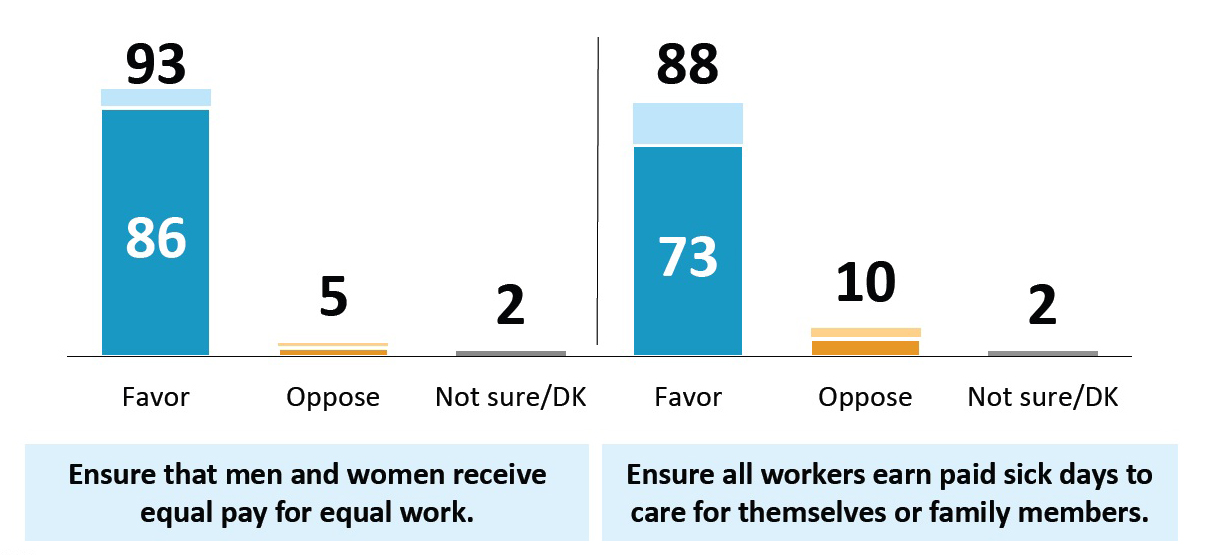
In an era marked by escalating calls for social justice and equality, the recent findings of widespread support for paid sick leave resonate deeply within the feminist discourse. The discourse on paid sick leave is not merely a policy debate; it’s an issue intertwined with the very fabric of gender equality, worker rights, and the societal value we place on caregiving roles disproportionately shouldered by women. When we analyze these developments through a feminist lens, a multifaceted narrative unfolds, one that underscores the imperative of implementing paid sick leave as a critical step toward achieving genuine equity in the workplace.
Before dissecting the implications of this poll, it’s vital to establish the link between paid sick leave and feminist principles. Paid sick leave is fundamentally about dignifying labor and recognizing its inherent value—especially when that labor is frequently performed in the shadows, often by women, people of color, and those working in low-wage sectors. Paid sick leave is not a privilege but a right; it’s an acknowledgment that workers deserve support during times of illness, thereby highlighting and valuing care work, which is predominantly undertaken by women. In this light, the findings of overwhelming public support for paid sick leave serve as a clarion call for systemic change.
The urgency for paid sick leave has never been more pronounced. The COVID-19 pandemic magnified the vulnerabilities faced by workers lacking adequate health protections. Women, particularly, bore the brunt of these challenges as they reverted to traditional caregiving roles during the pandemic. The ripple effects of unpaid leave extend beyond economic consequences; they unravel the very fabric of gender equality, making it impossible to forge a path toward equity when so many are sidelined by illness or caregiving responsibilities. Thus, the push for paid sick leave is not merely a pragmatic policy; it’s a transformative strategy that could rectify systemic inequities.
Moreover, it’s crucial to acknowledge the psychological and societal repercussions stemming from the inability to take sick leave. The stigma surrounding illness, particularly in a work-centric culture, often perpetuates silence and shame. Many employees may choose to forgo necessary medical care, fearing job loss or financial instability. For women, the stakes are even higher. Women often find themselves balancing multiple roles—employees, caregivers, and nurturers—often at great personal sacrifice. In this context, paid sick leave serves not just as a safety net but as a crucial acknowledgment of the complexities surrounding women’s lives. Access to this basic provision not only allows for better health outcomes but also fosters a culture where care is valued, rather than stigmatized.
Societal norms dictate that women disproportionately assume caregiving responsibilities, yet these roles are frequently undervalued and dismissed within professional environments. The fight for paid sick leave can be seen as a continuation of the broader feminist struggle against systemic inequities embedded in societal frameworks. Women often face double bind situations: expected to perform at work while also tending to family obligations, often with little to no support. Implementing paid sick leave is a fundamental way to challenge and change these harmful norms, fostering environments where caregiving is not just a personal burden but a shared societal responsibility.
The connection between paid sick leave and women’s economic empowerment cannot be overlooked. Economically, access to paid sick leave has been shown to positively impact retention rates and productivity, directly aligning with the goals of gender equity in the workplace. When women know they can take time off without financial repercussions, they are more likely to remain in their positions, advance their careers, and contribute to a professional landscape that celebrates diversity and inclusion. Hence, the provision of paid sick leave is not merely a policy recommendation; it is an economic necessity for a robust, thriving economy.
Furthermore, consider the ripple effects of inadequate leave policies on entire families. The lack of paid sick leave can lead to a myriad of adverse health outcomes, not just for individuals but for their families and communities. Children of parents who cannot take time off are often at greater risk of neglecting their health needs, which perpetuates a cycle of disadvantage. By investing in paid sick leave policies, society stands to gain—healthy families contribute to healthy communities, which fuel sustainable economic growth. A feminist perspective encourages us to see that when we support one, we inherently support the collective.
Intertwined in the debate over paid sick leave is the narrative of intersectionality. It’s crucial to recognize that not all women are affected equally. Marginalized communities, particularly women of color and those in low-wage jobs, face additional barriers that complicate their access to necessary health provisions. The feminist analysis must thus adopt an intersectional approach, advocating for policies designed to include and uplift the most vulnerable populations. Envision a future where the voices of those most disproportionately impacted by the lack of paid sick leave are amplified, driving the conversation toward policies that are not just equitable but equitable for all.
To catalyze change, we must harness the momentum generated by this polling data into actionable reforms. Advocacy must not be limited to awareness-raising; it should compel policymakers to implement comprehensive paid sick leave legislation that acknowledges and addresses the unique realities of diverse workers. This includes advocating for policies that extend beyond traditional notions of employment, recognizing gig workers and those in non-standard employment who are often left out of policy discussions. Solidarity among workers, regardless of their employment status, is paramount in this collective quest for justice.
As we navigate the terrain of transformation, it’s imperative to cultivate a culture where paid sick leave is viewed as an essential component of the labor landscape. This shift requires not only legislative changes but also societal attitudes that elevate the importance of health and well-being over productivity. We must foster environments where workers feel empowered to take sick leave without fear of repercussion—those who are ill should feel free to prioritize their health without relegating themselves to the margins of their workplaces.
In conclusion, the poll revealing strong support for paid sick leave should not merely be seen as a positive indicator of public sentiment; it must serve as a foundation from which broader systemic change can spring forth. From a feminist perspective, the fight for paid sick leave is emblematic of a larger struggle for gender equity, worker rights, and societal recognition of care work’s value. As advocates, allies, and engaged citizens, our role extends beyond agreement; we must galvanize our energy toward enshrining this fundamental right into law, fundamentally ensuring that all individuals can thrive—both in health and in their professional lives. The call for paid sick leave is more than policy; it is a declaration of our collective humanity, deserving of unwavering commitment and fervor in the pursuit of justice.