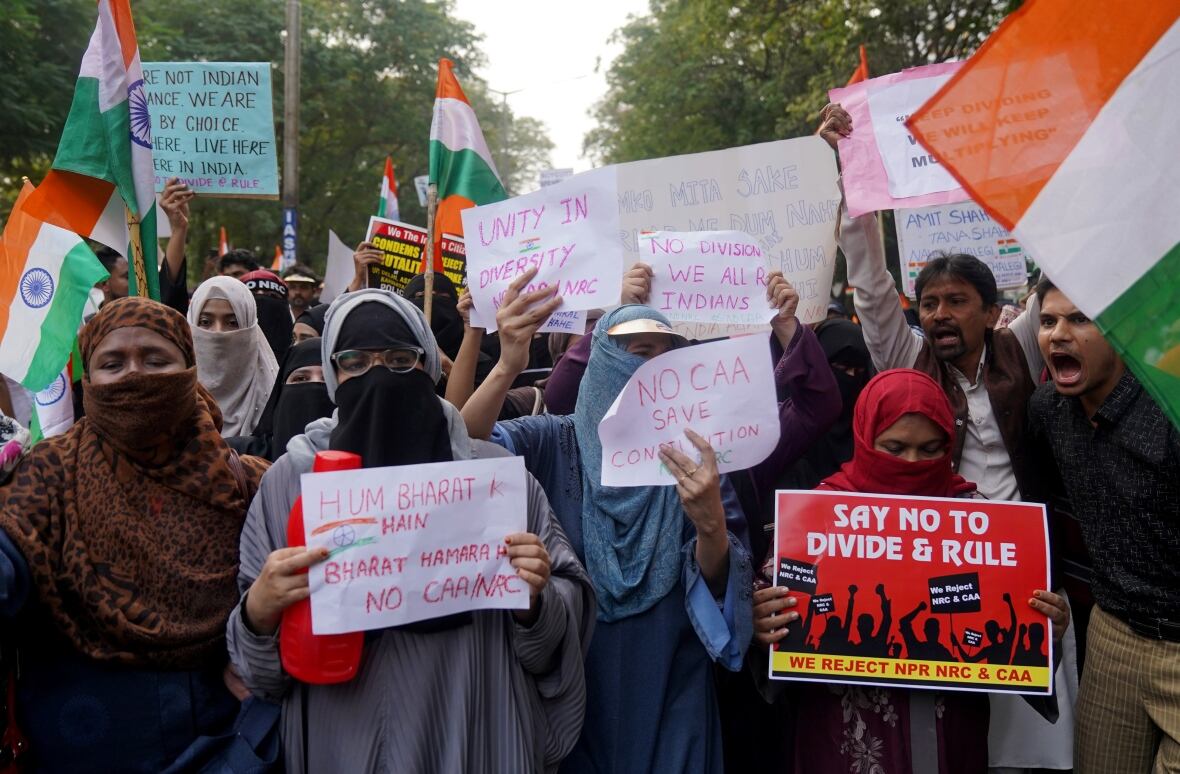
In the heart of India, a revolution is taking shape, and at the forefront are women—brave, fearless, and unwavering in their pursuit of justice. The recent mass protests against the Citizenship Amendment Act (CAA), perceived as yet another tool of institutionalized Islamophobia, have seen an extraordinary participation of women, particularly Muslim women. This emergence is not just a response to a draconian law; it is a testament to the evolving landscape of feminism in India, captured in the fiery spirit of the streets as women demand their rights, dignity, and humanity.
The CAA, which offers a pathway to citizenship for non-Muslim persecuted minorities from neighboring countries, is a potent symbol of a divisive and exclusionary nationalism. In this context, women have become the heartbeat of resistance, embodying a coalition of diversity and solidarity that transcends religious boundaries. Through their very presence, they challenge the cultural narrative that has often relegated women to passive roles in both societal and political spheres. The protests showcase a resurgence of feminist discourse, intertwined with questions of identity, belonging, and social justice, echoing broader themes of rights and representation.
Women as the Vanguard of Change
Historically, women’s participation in political movements has often been marginalized, their sacrifices and resistance reduced to the background. Yet here we see a different story unfolding. Muslim women, adorned in their hijabs, confront the state with resolute defiance, disrupting the stereotype that frames them as oppressed and unengaged. They are reclaiming their narrative, asserting their position not only as citizens but as catalysts for societal change. In marches across Delhi, Shaheen Bagh has become a symbolic epicenter, where women, mothers, daughters, and students have united to voice their dissent. With slogans like “Azaadi” (Freedom) echoing through the air, they embody the very essence of resistance.
This phenomenon does not merely highlight the agency of women within their communities but also reframes the conversation around feminism itself. In a country where discussions of gender often fall prey to elitism, the inclusion of marginalized voices, particularly those of Muslim women, invites a necessary introspection. By standing shoulder to shoulder in these protests, they challenge the patriarchal constructs that govern both religion and nation alike, positioning their fight within the larger context of global feminism and social equity. The assertion of their right to protest, wielding placards that exclaim “Not in my name!” and “Women’s rights are human rights”, serves as an emphatic reminder: we are not mere bystanders; we are active participants in shaping the narrative.
Feminism, Intersectionality, and the Fight for Justice
The unfolding protests against the CAA prompt a necessary interrogation of the frameworks within which we understand feminism. The intersectionality framework, a term popularized by Kimberlé Crenshaw, urges us to recognize the layered experiences of women facing multiple oppressions. In the Indian landscape, Muslim women navigate the complex realities of gender, religion, and class inequality. The protests encapsulate this intersectionality; they highlight that the fight for civil rights cannot be decoupled from the fight for gender justice. As these women challenge the patriarchal norms within their own communities, they simultaneously confront the state’s systemic oppression against marginalized identities.
This raises the question: how can contemporary feminism evolve to be more inclusive? The answer lies in the very essence of these protests. By centering the voices of marginalized women, we can ensure that feminist activism does not replicate the exclusions of the past. The movement should focus on collective empowerment, drawing from the rich tapestry of diverse experiences to create a holistic approach to gender justice. The youth today, with their penchant for inclusivity and radical change, hold the key to this transformation. It is imperative for younger generations to engage with these protests, to amplify these voices, and to recognize the importance of solidarity that transcends boundaries of identity.
The Role of Digital Activism in Modern Feminist Movements
In an age characterized by connectivity, the role of digital activism cannot be overstated. Social media platforms have become a lifeline for these protests, providing a space for organization, solidarity, and amplification. Women, particularly in urban centers like Delhi, have harnessed the power of social media to challenge narratives and mobilize support. Tweets featuring hashtags like #WomenAgainstCAA and #ShaheenBagh have flooded the internet, disseminating the urgency of their cause far and wide. This digital space empowers young activists who are adept at utilizing modern tools to challenge oppression in real-time.
Moreover, this phenomenon underlines the importance of creating a global narrative around activism. The images of resilient women standing in solidarity against the state have catalyzed similar movements worldwide, showcasing a collective struggle against fascism, misogyny, and xenophobia. Feminism is undergoing a metamorphosis, propelled by young women who are not merely spectators but architects of change. They refuse to be silent witnesses to injustice, leveraging their voices to resonate across borders. As these stories unfold, they invite young people everywhere to embrace a more inclusive vision of feminism—one that celebrates diversity, engages with complexity, and champions the liberation of all marginalized identities.
Ultimately, the protests against the CAA are emblematic of a broader narrative of women’s resistance in India, interwoven with the threads of feminism, social justice, and the quest for dignity. They illuminate the transformative potential of women’s activism, compelling society to confront deep-seated norms of discrimination and exclusion. The journey of these women—a beautiful tapestry of courage, resilience, and rebellion—stands as an inspiring testament that feminists everywhere can draw upon. It is a clarion call to wake up, to engage, and to fight alongside them, recognizing that their struggle is not just local but global. In the face of adversity, they radiate a fierce light, and it’s time we listen and act.