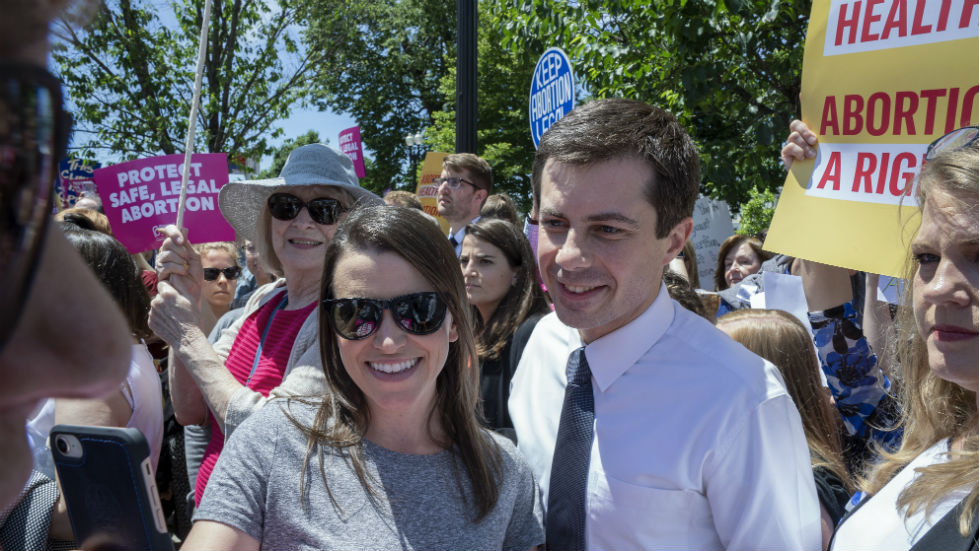
In the cacophony of political discourse, the rights of women, particularly in the realm of reproductive choice, have emerged as a rallying point for progressive candidates seeking to ascend the gnarled staircase to the presidency. This fervor culminated in a dinner event—an ostentatious affair where presidential hopefuls ardently espoused their commitment to upholding abortion rights. Through the lens of feminism, this gathering was more than just a political platform; it exemplified the intersectionality of gender, autonomy, and the ongoing struggle for equality in contemporary America.
The heart of the matter lies in recognizing that abortion rights are inextricably tied to feminist principles of bodily autonomy and self-determination. The candidates in attendance not only recognized this truth; they amplified it, emphasizing the importance of standing against regressive policies that seek to undermine women’s rights. Their speeches, ripe with conviction, served as a clarion call for continued activism and solidarity, weaving together personal narratives with legal imperatives.
As we dissect the layers of this event, it is essential to traverse the multifaceted terrains of feminism as they relate to abortion rights, examining the implications of each candidate’s stance and the broader cultural ramifications. Let’s delve into the salient components that emerged from this politically charged soirée.
The Reclamation of Women’s Agency
Reproductive rights are not merely about the act of abortion themselves; they symbolize the reclamation of women’s agency over their own bodies. At the dinner, candidates passionately articulated how relegating women to a position of subservience—in which their choices are dictated by patriarchal norms and archaic laws—constitutes a profound injustice. One candidate, for instance, invoked historical precedents that show how control over women’s reproductive capabilities has long been wielded as a tool of oppression.
This rhetorical framework is paramount in understanding that the conversation surrounding abortion transcends individual choice; it encapsulates historical struggles for liberation. Feminist theory posits that autonomy is central to the female experience, challenging the societal impositions that dictate women’s roles. By positioning reproductive rights as a matter of agency, candidates reaffirm the necessity of allowing women to define their destinies without external interference or judgment.
Intersectionality: The Diverse Narratives of Women
Intersectionality—a term coined by Kimberlé Crenshaw—was palpably present throughout the evening. The candidates astutely recognized that the fight for abortion rights must encompass a spectrum of experiences across race, class, and sexual orientation. They understood that a one-size-fits-all approach to women’s rights is insufficient and detrimental.
From stories of marginalized communities facing systemic barriers to healthcare, to the experiences of queer individuals navigating the complexities of reproductive rights, the event exemplified the necessity of an inclusive feminist discourse. The speakers echoed sentiments that echoed through the ages: the liberation of one is inextricably linked to the liberation of all. It was a poignant reminder that as the struggle for women’s rights moves forward, it must pull along the varied voices that have historically been silenced or overlooked in mainstream feminist narratives.
Challenging the Dystopian Landscape of Anti-Abortion Legislation
This rallying event did not shy away from confronting the stark realities presented by draconian anti-abortion laws proliferating across states. With the Supreme Court teetering on the edge of enacting restrictions that many fear would severely undermine the landmark Roe v. Wade decision, candidates were unwavering in their commitment to push back against these regressive forces. Their advocacy painted a sobering picture of the chaotic landscape facing women today, where accessing reproductive health services can feel like navigating a minefield.
With fervor, candidates articulated how these legislative machinery operates under the guise of moral righteousness while historically disregarding the lived realities of women. The dinner served as a platform to not only condemn these legislative attacks but to incite action. Ensuring that abortion remains a safe and legal option is not solely a legal battle but a moral one, and the voices of the attendees rang out, entwining politics with ethical imperatives.
Fundraising and Mobilization: Uniting the Feminist Front
The dinner event also spotlighted the crucial role of fundraising in the mobilization for abortion rights. Candidates acknowledged the need for financial resources that fuel grassroots organizations, ensuring that women’s voices remain prominent in the fight against oppressive legislations. The recounting of stories from activists on the ground underscored the tangible impacts of donations—how they facilitate outreach, education, and, ultimately, the empowerment of women to advocate for themselves.
However, this raises a pertinent question: how invested are we, as a society, in ensuring that abortion rights are protected? Are we merely spectators or are we participants in this ongoing struggle? The candidates’ impassioned pleas served to galvanize the audience, urging a collective action that transcends monetary contributions, calling for fierce activism in local communities.
Looking Beyond Politics: Cultural Conversations Around Reproductive Rights
The dinner event was not just about the political impact but also focused on the cultural discourse surrounding abortion. It highlighted how narratives around women’s reproductive choices are steeped in stigma, often laden with moral judgment. The candidates emphasized the need for a cultural shift—a collective dismantling of the shame that has been historically attached to abortion. Paving the way for open discussions, education, and visibility is crucial in fostering a more accepting environment where women can make choices without fear or stigma.
This cultural re-evaluation speaks to the broader implications of feminism in society. Women must no longer be relegated to the shadows; their choices and voices must take center stage in conversations about reproductive rights and health. The reclamation of these narratives is essential in the endeavor to normalize abortion and, more broadly, to advocate for women’s rights.
A Call to Action: The Road Ahead for Feminists
As the evening drew to a close, there was an undeniable charge in the atmosphere—a sense of urgency that propelled attendees to not merely support candidates but to embody the tenets of feminism in their own lives. The gathering was a microcosm of the larger movement for abortion rights—a movement that cannot stand still. It demands continuous engagement, courage, and an unwavering commitment to equality and justice.
In conclusion, the dinner event featuring presidential candidates was a resounding affirmation of the feminist struggle for abortion rights. It laid bare the complexities and intersections that define this movement while also highlighting the imperative for unity, activism, and cultural change. As advocates and allies, it is our responsibility to ensure these conversations continue, to amplify the voices of those who have been marginalized, and to advocate for a future where reproductive rights are recognized as fundamental human rights.