Women’s emancipation in Bolivia is an intricate tapestry woven with threads of resilience, struggle, and unyielding spirit, particularly among indigenous populations. While the broader narrative of feminism often eclipses the unique struggles of indigenous women, in Bolivia, it is these women who are spearheading movements of change, challenging socio-political structures that have long oppressed them. This article aims to illuminate the multifaceted dimensions of their fight for equality, examining cultural, economic, and political realms, and positing that their active role is not merely a chapter in the story of Bolivia but a seminal force that could inspire global feminist movements.
At the outset, one cannot ignore the unique cultural heritage of indigenous women in Bolivia. Rooted in ancestral traditions, their identities are often multifarious; at once women, mothers, and custodians of cultural knowledge. They bear the weight of history, nurturing languages, customs, and worldviews that are marginalised in a modernising Bolivia. Despite being relegated to the periphery, indigenous women have emerged as potent symbols of strength, challenging the colonialist underpinnings that define mainstream narratives of progress.
The street markets of El Alto, for instance, serve as microcosms of this resistance. Here, indigenous women often dominate the economic landscape, not merely as vendors but as economic agents wielding significant power. The act of selling artisanal goods, traditional foods, and crafts is imbued with more than just a quest for economic survival; it is a declaration of autonomy. These women are reclaiming spaces that have historically excluded them, weaving together commerce and cultural preservation in an act of both resistance and resilience.
Economic independence is the cornerstone of any emancipatory movement. Indigenous women in Bolivia are redefining conventional notions of entrepreneurship. They do not merely seek to uplift themselves but are committed to building communal economies that reflect their values. This commitment is not without challenges. Despite their entrepreneurial spirit, these women often face systemic barriers, including lack of access to credit, legal recognition, and fair market conditions. Activist organizations have emerged, advocating for policies that do not merely address the symptoms of poverty but strive for structural changes that will benefit indigenous communities as a whole.
Moreover, the intertwining of gender and class issues is palpable in Bolivia’s socio-political landscape. The Bolivian government, under leaders such as Evo Morales, has made strides towards recognizing the rights of indigenous peoples. However, the progress is sporadic and often fraught with contradictions. Indigenous women find themselves navigating a dual struggle: one that addresses the repercussions of colonialism and another that focuses on gender inequities. The feminist discourse must therefore broaden its scope to include these intersecting identities, ensuring that women’s rights are not seen in isolation but as part of a larger framework of social justice.
The recent surge in activism has also seen indigenous women take to the forefront of political movements. Their presence in political spaces is not just a matter of representation but a clarion call for a paradigm shift. They are challenging the patriarchal norms that pervade not only Bolivian society but also the very structures of power within political institutions. The fight for land rights, environmental justice, and indigenous sovereignty is inherently gendered, and it is indigenous women who are leading the way. Their activism is marked by a distinct understanding of the interconnection between the land, their cultural identity, and their rights as women.
In this context, education emerges as another battleground. Although progress has been made in increasing access to education for indigenous girls, significant gaps remain. Culturally relevant curricula, mentorship, and resources tailored to the needs of indigenous communities are paramount. Education should not merely aim to assimilate but to empower. By fostering an environment where indigenous girls can embrace their heritage while pursuing academic excellence, Bolivia can cultivate a generation of women well-equipped to lead the charge for emancipation.
The role of international feminism in this landscape is complex. While global movements can provide platforms and visibility for the struggles faced by indigenous women, there is a risk of overshadowing their unique voices in favor of a homogenized narrative. The feminism that is exported often fails to consider the experiential realities of these women, whose fights are deeply intertwined with cultural identity and communal values. It is imperative that solidarity is not merely performative but is grounded in genuine collaboration, respecting local knowledge and leadership.
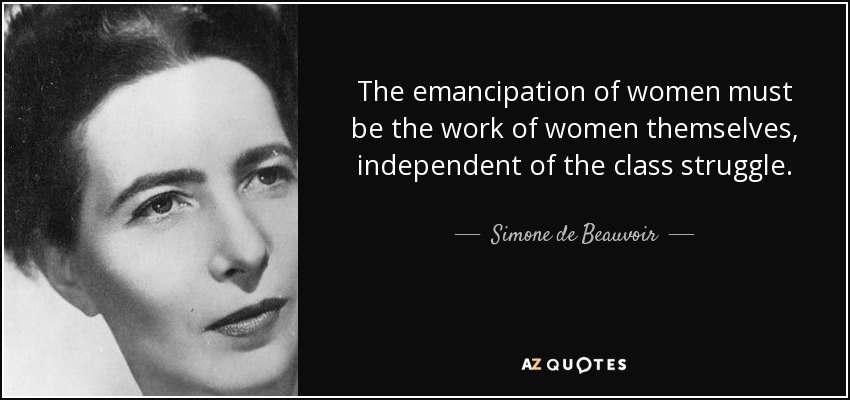
As the global community observes the struggles of Bolivian indigenous women, one cannot help but recognize the potential for transformative change. Their battles are not isolated but resonate across borders; they offer vital lessons in resilience, collective action, and the power of cultural pride. The emancipation of women, particularly those who have historically been disenfranchised, calls for a paradigm that acknowledges intersectionality, embracing a tapestry of identities rather than a monolithic approach to gender equality.
In conclusion, women’s emancipation in Bolivia, particularly among indigenous populations, is an ongoing revolution. It is a challenge to the status quo, an assertion of dignity, and an appeal for justice. As indigenous women continue to arise as leaders in this movement, they remind us that the fight for gender equality is not a solitary endeavor; it is a mosaic of interconnected struggles for liberation. The world must pay heed to their voices, celebrate their victories, and amplify their demands for a truly inclusive future. The time has come for these women to be not just participants but the architects of their destiny, leading the way to a more equitable Bolivia for all.