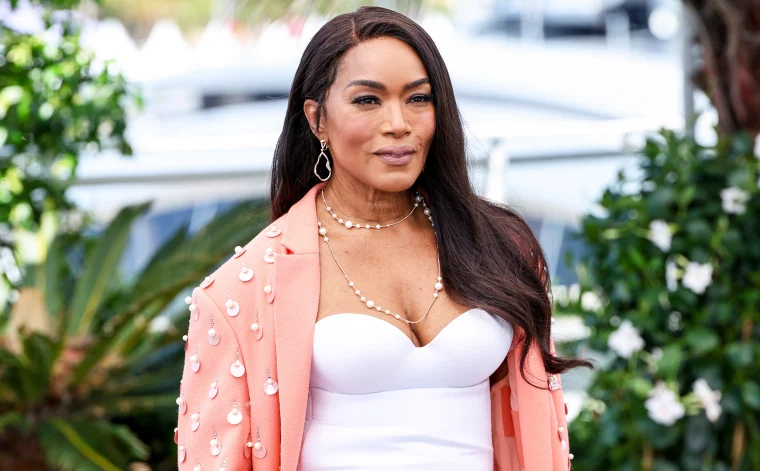
From the moment Angela Bassett steps behind the camera, history trembles. Not because horror is new territory for women, but because the structures of power in Hollywood have made such a moment feel revolutionary—an achievement that should have happened decades ago. In a cultural landscape shaped by patriarchal gatekeeping and systemic bias, Bassett’s ascendancy signals something deeper than career evolution: it represents an urgent recalibration of who controls narrative space and whose vision we allow to shape the stories that haunt us.
Bassett is no stranger to horror. Since her breakout role as voodoo queen Marie Laveau in American Horror Story: Coven, she has woven complexity and gravitas into genres that have historically marginalized Black women’s interior lives. Her performance was so profound that it earned critical acclaim and cemented her as one of the most dynamic forces within the AHS repertory company. (Wikipedia)
But now, Bassett has moved from commanding the screen to commanding the set.
The Significance of a First
In 2016, Angela Bassett directed the sixth episode of American Horror Story: Roanoke, an experimental chapter that submerged audiences into found footage and layered meta-narratives. (Wikipedia) While she was not the very first woman ever to direct an episode of the series, her contributions broke through a glass ceiling that most viewers—so used to seeing women front and center on screen—never realized existed: the directorial chair was overwhelmingly male. In fact, Vote for her episode marked a notable moment in a series that had been dominated behind the camera by men, despite its parade of iconic female characters and actresses. (Bustle)
This history-making moment is not merely symbolic. It reflects the persistence of deep-rooted barriers within Hollywood where women—especially women of color—are systematically excluded from positions of creative authority. To be the first (or among the very few) is to shoulder extraordinary pressure, to make every shot count not just for oneself, but for all who are watching, waiting, or wondering if it can ever happen again.
From the Screen to the Director’s Chair
Bassett’s directorial journey did not begin on American Horror Story. Years earlier, she made her official debut with the television biopic Whitney, portraying the life of Whitney Houston. That project revealed what many had long suspected: Bassett was capable of much more than performance alone; she was a storyteller with vision, emotional intelligence, and an eye for nuance. (Wikipedia)
Her transition into directing horror television is particularly potent. Horror has always been a genre that reflects our deepest fears—not only of monsters, ghosts, and contagion, but of the systems that oppress us: patriarchy, racism, social decay, and the violence we inflict on one another. For a Black woman to sit at the helm of how those stories are told is an act of reclamation. It reshapes whose fears are validated, whose voice commands the narrative, and whose perspective defines what truly terrifies us. Black women, historically depicted as side characters or stereotypes in horror, are here telling the story—and that shift is seismic.
What This Means for Women of Color in Hollywood
The entertainment industry has a long history of glorifying women as objects while simultaneously denying them power as creators. Women of color, in particular, are often boxed into roles that emphasize resilience without granting authority. Angela Bassett’s evolution disrupts that pattern. It challenges the myth that women can perform but cannot lead; that they can act but cannot architect.
This moment is not merely about one woman’s accomplishment—it is a crack in the cultural dam. It declares that women, especially women of color, belong in every seat of creative power, from casting to directing to producing. It demands that our stories be authored by those who live them, not filtered through someone else’s gaze.
Facing the Backlash and the Future
Of course, progress rarely arrives quietly. Moments like this are often met with erasure, misremembering, or reduction to novelty. Critics may downplay its significance or reduce it to a footnote in the larger history of television. But such dismissals reveal rather than deny the truth: representation still matters immensely—especially behind the camera.
For future generations of filmmakers—particularly Black women and other marginalized voices—Bassett’s achievement is a beacon. It whispers, you belong here. It asserts that the director’s chair is not a privilege to be granted but a right to be claimed. The future, then, must not treat this as a one-off triumph but as the beginning of systemic transformation.
Why This Moment Must Matter to Us All
Beyond fandom and industry chatter, what Bassett’s directorial milestone reveals is our collective hunger for stories that reflect the full spectrum of human experience. Horror thrives on fear, yes—but also on empathy, curiosity, and the unearthing of truths that many would rather keep buried. When women—and especially women of color—are in control of that narrative excavation, audiences are invited to confront realities they may have long avoided.
This is why Angela Bassett’s role as director is not merely an entertainment headline; it is a cultural inflection point. It challenges assumptions about gender, race, authority, and who gets to wield the camera.
In an industry that too often forgets the faces it once forgot to remember, Angela Bassett stands at the crossroads of history—and she is writing a new direction.
Her story behind the camera promises not just horror, but a deeper reckoning: that when women take control of the narrative, even the monsters tremble.