Let’s say the quiet part out loud. Game of Thrones never struggled with violence, betrayal, or spectacle. It struggled with imagination—particularly when it came to women who wanted power without apology. And nowhere is that failure more visible than in the abandoned possibility of a ruling alliance between Daenerys Targaryen and Yara Greyjoy.
What if the future of the Seven Kingdoms had not been handed back to another man with a better claim, a purer bloodline, or a quieter ambition? What if it had belonged to two women—one forged in fire, the other in salt—who understood conquest, loyalty, and survival better than any lord who ever sat a throne?
This is not fan service. This is political analysis.
Fire Meets Salt: The Alliance That Made Sense
When Daenerys and Yara first meet, the chemistry is unmistakable—not romantic in the shallow sense, but ideological. They recognize each other immediately. Two leaders raised in violence. Two women who had to take power rather than inherit it. Two rulers whose authority was constantly questioned because they refused to perform submission.
Yara does not kneel easily. Daenerys does not beg for loyalty. Their negotiation is striking precisely because it is not flirtatious or deferential. It is strategic. Respect is exchanged before promises. Terms are set, not gifted.
And here is the feminist provocation: this is what partnership between women in power actually looks like. Not softness. Not rivalry. Not emotional labor performed for men. It looks like mutual recognition of strength.
Why Westeros Was Terrified of This Possibility
A Daenerys–Yara power couple would have destabilized Westeros more than dragons ever could. Not because they were cruel, but because they represented a governance model the realm was structurally unprepared for.
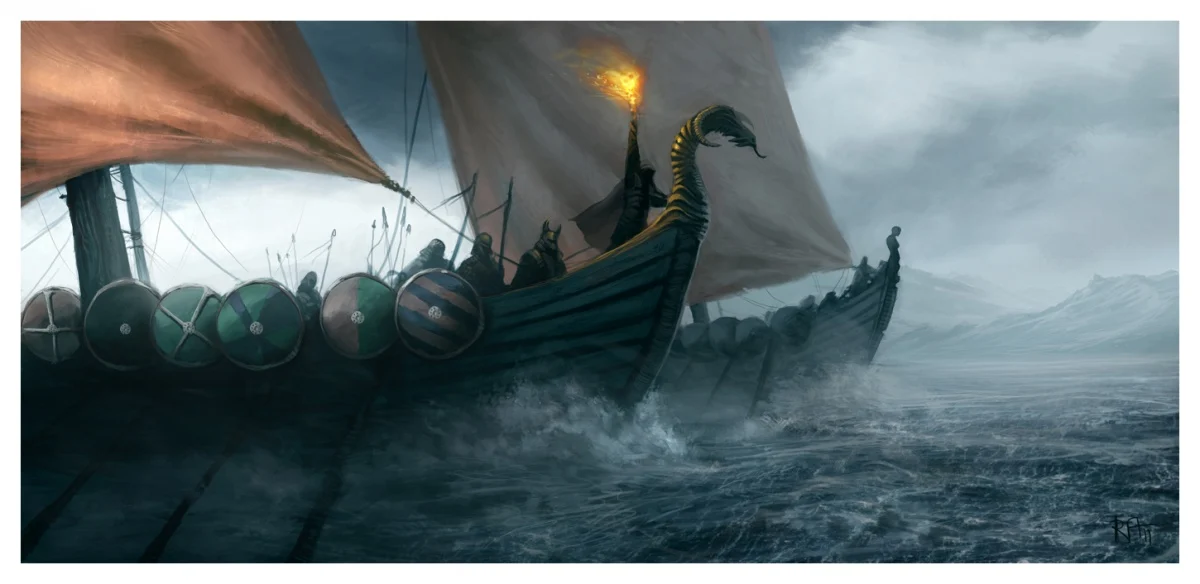
Westeros tolerates powerful women only when they are isolated, tragic, or eventually punished. A united front—fire and fleet, land and sea—would have rewritten the political grammar of the continent. The Iron Fleet under Yara combined with Daenerys’s dragons and armies would have rendered traditional houses obsolete.
And that is precisely why this alliance was never allowed to fully bloom.
Patriarchal storytelling has rules. Women can rise, but they must fall. They can rule, but only temporarily. They can love power, but never each other—because solidarity between women is more threatening than ambition alone.
The Power Couple We Were Denied
Let’s imagine it anyway.
Daenerys rules from the air and the throne room—visionary, absolutist, mythic. Yara governs the seas—pragmatic, brutal when necessary, fiercely loyal to her people. Together, they represent balance: conquest tempered by strategy, idealism anchored in realism.
Where Daenerys dreams of breaking chains, Yara understands what comes after liberation: governance, enforcement, and consequences. Where Daenerys commands loyalty through prophecy and destiny, Yara earns it through shared risk and survival.
This is not a fantasy romance. This is a functioning political partnership.
And yes—there is intimacy in that. Power shared is intimacy. Trust under fire is intimacy. The refusal to dominate one another is intimacy. Westeros simply lacks the language to recognize it.
Queer Possibility as Political Threat
Let’s be clear: the suggestion that Daenerys and Yara could have become more than allies is not a stretch. It is a refusal to accept compulsory heterosexuality as the only narrative endpoint for women in power.
Queer possibility in Game of Thrones was consistently defanged—relegated to subtext, tragedy, or predation. What was never allowed was a queer future that worked. A future where desire did not equal downfall.
A reigning power couple of two women would have shattered the show’s most persistent lie: that power inevitably corrupts women more than men. In truth, what the narrative punished was not power—it was autonomy without male oversight.
Why Jon Snow Had to Replace Yara
Narratively, Yara was sidelined when Jon Snow entered Daenerys’s orbit. Not because Jon was more competent—he wasn’t. Not because he was more loyal—he wavered constantly. But because he was legible to the audience as a ruler in waiting.
Jon restored a familiar hierarchy. Yara threatened it.
With Jon, Daenerys became reactive, emotionally burdened, and narratively constrained. With Yara, she was strategic, decisive, and respected. That contrast matters.
The story chose romance over revolution. Safety over solidarity. A man with a claim over a woman with a vision.
What This Prediction Reveals About Power
Predicting a Daenerys–Yara reign is not about rewriting canon. It is about exposing what canon refused to imagine. A future where women do not merely inherit broken systems but dismantle and rebuild them—together.
The Seven Kingdoms did not need another king. They needed a coalition that understood oppression from the margins. A dragon queen who knew exile. An ironborn leader who knew conquest without legitimacy.
They needed women who ruled not because they were chosen, but because they survived.
Final Reckoning
Would Yara Greyjoy and Daenerys Targaryen have become the Seven Kingdoms’ reigning power couple? In a story brave enough to trust women with sustained authority—yes. Absolutely.
The fact that this future was foreclosed tells us less about the characters and more about the limits of the narrative that contained them.
And perhaps that is the most haunting truth of all: the real tragedy of Game of Thrones was not who died, but which futures were never allowed to live.