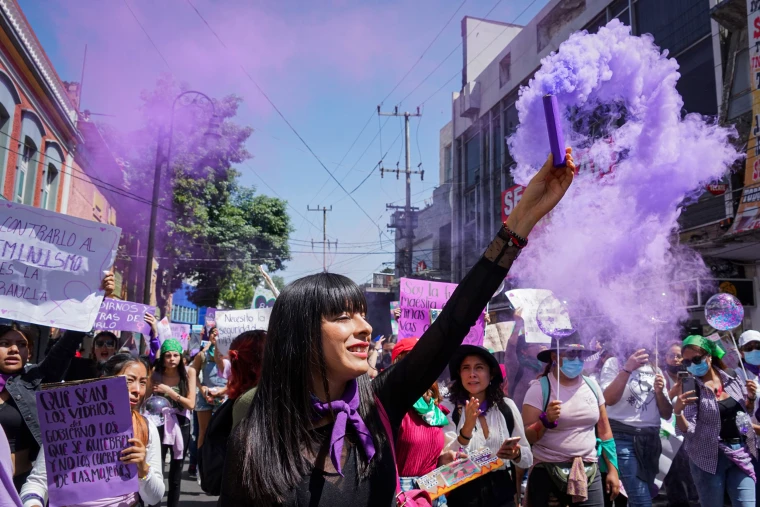
In contemporary digital culture, where visibility often fluctuates with algorithms and fleeting trends, intentional platforms dedicated to equity play an increasingly vital role. One such platform is Latina Feminista, a collective and digital presence grounded in advocacy, cultural affirmation, and community-building for women of color. As part of a broader tradition of “Friday Follow” features—designed to spotlight voices worthy of sustained attention—this focus on Latina Feminista underscores a deeper imperative: celebrating women of color is not a performative gesture, but a structural necessity for any credible feminist movement.
This celebration is neither ornamental nor episodic. It is principled, persistent, and anchored in lived realities.
Reframing Feminism Through Cultural Specificity
Mainstream feminist discourse has often struggled with inclusivity, historically centering narratives that reflect a narrow range of socioeconomic and racial experiences. Women of color, by contrast, navigate layered systems of marginalization, where gender intersects with race, language, immigration status, and cultural expectation. Latina Feminista addresses these complexities directly, refusing to dilute difference in pursuit of palatability.
Rather than adopting a universalized framework, the platform emphasizes cultural specificity as a source of analytical clarity. Stories are not abstracted into generalities. They are contextualized, grounded in geography, heritage, and political conditions that shape daily life. This approach does not fragment feminist discourse; it strengthens it by acknowledging that justice is not monolithic.
In doing so, Latina Feminista positions cultural identity not as an accessory to activism, but as its epistemological foundation.
Storytelling as Political Practice
At the core of Latina Feminista’s work lies narrative. Essays, testimonials, interviews, and visual media converge to form an archive of experience that resists erasure. These stories are not curated for sentimentality. They are constructed with intentionality, balancing vulnerability with analytical rigor.
Storytelling here functions as political practice. It documents structural inequities while also preserving joy, creativity, and resilience. It affirms that survival is not the sole metric of significance. Celebration, artistry, and intellectual labor are equally central to the lived experiences of women of color.
This narrative strategy counters dominant media tendencies that frame marginalized communities primarily through deficit. By offering multidimensional representations, Latina Feminista recalibrates public understanding, insisting that complexity is not an exception but the norm.
Digital Space as Community Infrastructure
Online platforms are often dismissed as ephemeral or superficial, yet for many marginalized communities, digital spaces serve as essential infrastructure. Latina Feminista operates within this digital ecosystem as both connector and convener. It facilitates dialogue across borders, disciplines, and generations, enabling solidarity that is not constrained by physical proximity.
This digital community is not defined solely by shared grievances. It is shaped by mentorship, collaboration, and cultural exchange. Calls for submissions, collective campaigns, and educational resources foster participatory engagement rather than passive consumption.
Importantly, this model challenges extractive dynamics common in media spaces, where content is often mined without reciprocal investment. Latina Feminista’s emphasis on collective authorship and community accountability reflects an ethic of mutuality, reinforcing the principle that representation without agency is insufficient.
Intersectionality in Practice, Not Just Theory
While intersectionality has become a widely cited concept, its practical application remains inconsistent. Latina Feminista operationalizes intersectionality by centering those whose experiences are most frequently marginalized, including Afro-Latinas, Indigenous women, LGBTQ+ individuals, and migrants.
Editorial priorities reflect this commitment. Content does not merely acknowledge diversity; it interrogates power relations within communities, addressing colorism, anti-Blackness, and heteronormativity with candor. This internal critique is not framed as division, but as necessary for ethical solidarity.
By engaging with these internal dynamics, Latina Feminista models a form of accountability that is both rigorous and restorative. It affirms that collective liberation requires continuous self-examination, not static declarations of unity.
Education as an Act of Empowerment
Beyond storytelling, Latina Feminista functions as an educational resource. Articles frequently incorporate historical context, policy analysis, and theoretical frameworks, rendering complex social issues accessible without sacrificing intellectual depth. This pedagogical dimension positions readers not only as audience members, but as informed participants in social discourse.
Workshops, reading lists, and collaborative initiatives extend this educational mission beyond digital publication. These efforts cultivate political literacy, equipping individuals with analytical tools to interpret their own experiences within broader structural systems.
Education, in this context, is not hierarchical. Knowledge is shared laterally, emphasizing collective expertise rather than centralized authority. This approach aligns with feminist pedagogical traditions that value experiential knowledge alongside academic scholarship.
Cultural Affirmation as Resistance
Cultural expression occupies a prominent place within Latina Feminista’s ethos. Art, poetry, and visual storytelling are not treated as secondary to political content. They are recognized as essential modalities of resistance and affirmation.
For women of color, cultural production has historically functioned as both refuge and rebellion. It preserves memory, challenges dominant narratives, and asserts presence in spaces that have often rendered such identities peripheral. Latina Feminista’s integration of artistic work honors this lineage, situating creativity within the continuum of activism.
This emphasis on culture also disrupts reductive portrayals of activism as solely oppositional. Celebration, in this framework, is not escapism. It is strategic, sustaining emotional and communal resources necessary for long-term advocacy.
The Significance of a Friday Follow
The tradition of highlighting organizations and creators through “Friday Follow” features may appear modest, yet its cumulative impact is substantial. Attention, when directed thoughtfully, functions as a form of capital. It amplifies voices, expands networks, and legitimizes narratives that might otherwise remain peripheral.
Featuring Latina Feminista within this context is not merely an endorsement of a single platform. It is an affirmation of a broader ecosystem of women of color-led initiatives that operate with limited institutional support yet generate disproportionate cultural and political influence.
Such recognition carries responsibility. Following must translate into engagement, resource-sharing, and sustained amplification. Symbolic gestures, while welcome, are insufficient without structural support.
Conclusion: Toward a Feminism That Reflects Reality
Latina Feminista exemplifies a model of feminist praxis that is culturally grounded, intellectually robust, and ethically accountable. Its commitment to celebrating women of color is not an ancillary mission, but the organizing principle of its work. Through storytelling, education, community-building, and cultural affirmation, it constructs a framework in which marginalized voices are not invited to participate in preexisting conversations, but are recognized as architects of discourse.
In an era where inclusivity is frequently proclaimed yet inconsistently practiced, platforms like Latina Feminista offer a corrective. They remind audiences that equity is not achieved through rhetorical alignment alone, but through sustained, deliberate action.
A Friday Follow, in this light, becomes more than a casual recommendation. It becomes an invitation to engage with a movement that understands celebration as a political act, visibility as a form of resistance, and community as the foundation of lasting change.