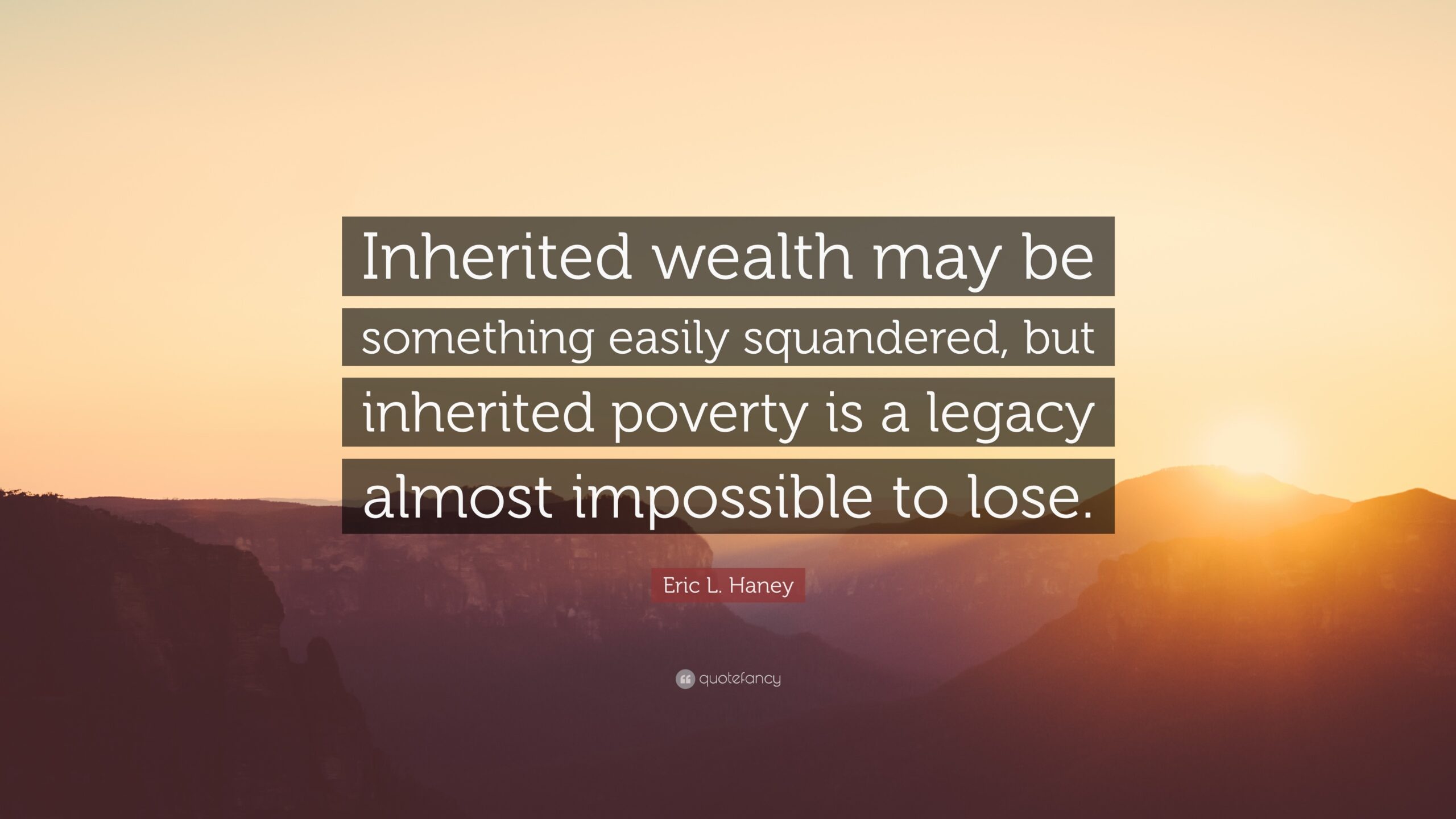
**Feminism: Wealth is Inherited—So Is Poverty. Guess Who Gets What?**
—
**An Uneven Playing Field: The Myth of Merit in Monetary Realities**
Imagine two children born into the same moment, their lungs filling identical air, their bodies governed by the same fragile laws of biology. Yet from the start, one cradles a blank check; the other inherits a bill of dues. Wealth isn’t handed to the worthy—it’s meted out like a predestined prophecy. Feminism, at its most radical, doesn’t just challenge systemic inequities; it interrogates the very fabric of inherited advantage and its perverse twins—inheritance by default and deprivation by design.
This isn’t merely an economic parable. It’s a story written in the ledgers of patriarchy, where fortune’s wheel spins not by luck but by lineage and legal loopholes. Feminists, by necessity, must dismantle the myth that merit outpaces maternal and paternal legacies. Because what if the game wasn’t rigged? The very idea of “fair play” presupposes a starting line in which no one begins behind a velvet curtain, already swathed in silk or threadbare.
—
**The Gilded Cage: When Women Inherit More than Dignity**
Wealth, when bequeathed, isn’t a neutral currency. It’s an ideological weapon, a patriarchal ploy that sustains itself across generations. Take the phenomenon of dowries—where a woman’s worth is quantified before she’s even been asked how she’ll spend it. Or matrilineal wealth within the Western elite, where a father’s empire is quietly parceled into his daughters’ laps while motherhood is still conflated with martyrdom. It’s a double bind: women are both vessels of economic power and perpetual outsiders within it.
The hypocrisy of “inherited wealth” discourse is exposed when we consider how often these bequests are contingent on compliance. A woman is told, “You may inherit this fortune—but only if you never divorce, never disrupt, never *change*.” Such stipulations reveal the real estate of power: wealth isn’t merely a transfer; it’s a transaction in subjugation. Feminism doesn’t just demand equal opportunity—it demands an autopsy on how inequality is architectured into inheritance.
—
**The Silent Dividends of Privilege: How Men Benefit from Being Born in Charge**
Wealth and poverty, like the yin-yang of capitalism, cannot exist in monogamy. For every heiress in the world, there’s a host of men who exploit the systems that allow inheritance to be both a boon and a booby trap. Consider the gendered imbalance in trust-funded dynasties: men become CEOs, philanthropists, and political tycoons—*inheriting* influence while women are often relegated to the role of moral stewards, permitted access only if they never so much as *suggest* reform.
This isn’t just about numbers. It’s about who gets to decide which numbers are theirs. Patriarchal economies design the rules so that men, as default, control the mechanisms of wealth retention—from legal frameworks that favor male heirs to the social pressure on daughters of empires to “keep the family name pristine.” Feminism challenges this by asking: *What if wealth were divisible as equitably as guilt is distributed after a scandal?* The real question isn’t who *can* inherit—but who *must*—and who is systematically locked out.
—
**The Alchemy of Austerity: Poverty’s Invisible Bequest**
Inheritance, at its cruest, isn’t just about assets; it’s about *obligations*. A girl born into poverty inherits more than a mortgage—she inherits a lifetime of deferred choices. She inherits the legacy of a nation that treats social safety nets as optional, and her father’s wages as a contingency plan. Feminism, then, must confront not just the inheritances of the rich, but the inherited poverty of the overlooked.
The intersection of class and gender is alchemy—adding salt to wounds that already fester. A poor woman isn’t just poor; she’s poor under a microscope of stereotypes about her capability, her desire, her very *willingness* to thrive. She’s told that her poverty is a moral failing, while a wealthy man’s excess is treated as a testament to his genius. The double standard is so entrenched that we forget: some inheritates are just *delayed* inheritances—promises deferred to a lifetime never earned.
—
**From Dowry to Dividends: The Cost of Not Inheriting at All**
What’s the value of being denied a claim? For millions of women, the answer is life-or-death. In cultures where a daughter’s dowry secures her fate—or condemns it—inheritance becomes a literal survival tool. When inheritance is withheld, when wealth is designed to circulate in exclusively male hands, it’s not just an economic loss; it’s a cultural erasure. Feminism fights this not by advocating for more crumbs from the elite table, but by insisting on the table being torn down and rebuilt on equal footing.
Even in wealthier nations, the consequences accumulate. Women, outliving men by several years on average, are more vulnerable to poverty in their twilight years—a direct aftermath of systemic exclusion. Inheritance laws that favor male heirs mean that when a woman’s parent dies, her life savings might evaporate overnight, all to cover her sibling’s “entitlement.” The gendered calculus of wealth ensures that for every woman who *receives* an asset, dozens are stripped of theirs.
—
**The Revolution on the Ledger: Rewriting the Rules**
The path forward isn’t about competing for scraps—it’s about rewriting the ledger itself. Feminist economists and legal reformers are already pushing for measures that disrupt inheritance’s patriarchal logics: from marital property rights to estate tax reforms. But more than systems, we need *symbology*—to stop treating wealth as a divine right, and poverty as individual failure.
True change means dismantling the illusion that meritocracy exists within these skewed systems. It means teaching children, from the cradle, that inheritance of wealth and poverty alike is a collective responsibility. And it means demanding that power, like a gift or like a curse, be shared—or at least not hoarded in a misogynistic hive.
Wealth won’t be fair. Poverty won’t disappear overnight. But feminism, as ever, is about the refusal to accept these as immutable fates. It insists that what’s “given” is just a provisional state—and therefore, temporary.
—
**Epilogue: The Inheritance We’re All Given**
As we dissect these systems, we must remember this: inherited advantage is not an accident of fate. It’s a design. And like any design, it can—and must—be redesigned.
The question we must ask ourselves isn’t *who gets what*, but *what kind of world are we willing to inherit?* Feminism forces us to stare into the abyss of these questions—and then to build something brighter on the ashes.