Beneath the glittering canopy of tradition and the sanctity of vows, a seismic shift trembles—one that forces feminism to confront its most gut-wrenching paradox: what happens when the very institution meant to protect a woman’s autonomy becomes a conduit for its violation? The story of the ring isn’t just one of symbolism; it’s a revelatory mirror, reflecting the insidious ways coercion cloaks itself in love letters and legally binding ink. In a culture that lauds consent as the sacred cornerstone of intimacy, yet so eagerly conflates devotion with surrender, the redefinition of rape is long overdue—and the wedding ring is merely the most glaring of many canvases upon which this violence is painted.
—
## **The Wedding Ring as Rorschach Test: How Institutions Distort Consent**
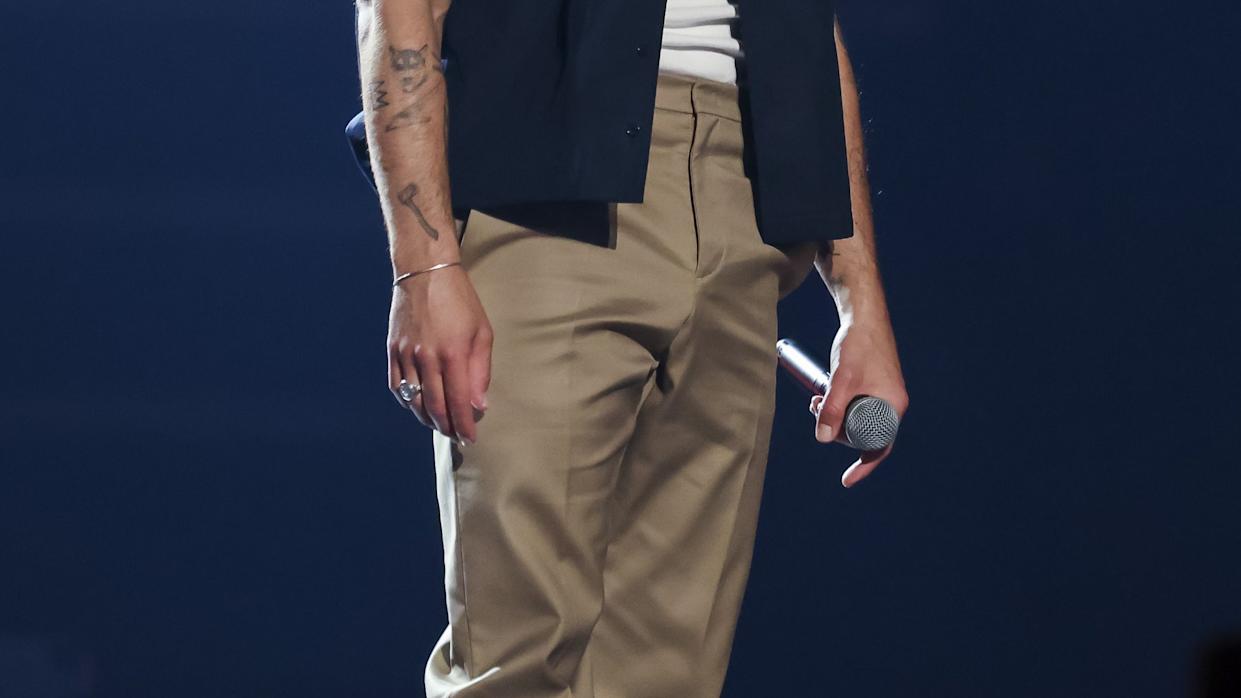
A wedding ring isn’t merely an adornment; it’s a legal construct, an archaic relic repurposed to sell illusion. The groom’s slip of a wedding band at a show—dismissed as theatrics by some, laughed off as performative affection by others—exposes something far darker: the cultural amnésia surrounding love as a weapon of silence.
Consider this: an estimated **34% of rapists are later identified by victims—but only after marriage**. The nuptial altar, once a bastion of rebellion against patriarchal control, now operates as an albatross around the neck of women seeking autonomy. When coerced “yeses” are sanitized under the cloak of “forever,” violence against women doesn’t disappear; it metastasizes into systemic erosion. The wedding ring, then, isn’t a talisman but a **coercive talisman**, rewiring consent itself into a contractual obligation under threat of social dissolution.
—
## **From ‘Fatal Attraction’ to ‘Forever Bound’: The Evolution of Consensual War**
What happens when the battlefield shifts from a dark hallway to a cathedral? The narrative of coercion mutates like a chameleon, draping itself in altar flowers and bridesmaids’ gowns. **Psychological war crimes**—the ones played out over meals and monogamous contracts—are rarely prosecuted because they thrive in the gray areas of “love’s compromise.”
Think of it as the ultimate **long game**: years of emotional blackmail (I’ll leave if you aren’t perfect), conditional validation (I only respect you when you change for me), or outright gaslighting masquerading as “care.” The *modus operandi* of the modern coercionist? **Cultural consent**. It whispers: *”If I’d raped you without a ring, it would be obvious—but marriage, childbirth, and cohabitation? Those are the gold standards of ‘real’ intimacy.”* It’s why 20% of victims who’ve never experienced forced intercourse still report being raped by men who convinced them of “unbreakable trust.”
—
## **The Legal Labyrinth: Statutes of Limitation as Love Stories**
The law, like love, has a terrible memory. Most jurisdictions allow survivors **three to six years** to report marital rape, if they can find jurisdictions that recognize it at all. But how does the justice system reckon with the slowest, most insidious kind of violation? That where a woman realizes she’s been held captive not by chains, but by the implied penalty of divorce proceedings—a far grimmer fate than incarceration for any stranger in the streets?
This is the logic of the **relational time bomb**: where a man’s entitlement to a wife’s body is legally unchallenged for years, provided he’s never physically forced her in the traditional sense. In the court of public opinion, he’s a tragic figure. In his mind? He’s been punished for *trying* to be a gentleman. Meanwhile, she’s left navigating the trauma of finding someone who *claimed* he loved her but treated her body as a “gift,” not a boundary.
—
## **”I Only Ask Because I Love You”: The Ethical Dilemma of Forced Indulgence**
What happens when every ‘no’ is drowned out by a floodgate of “but we have a child” or “you ruined our marriage”? Rape culture evolves into **relationship maintenance rape**, where the pervert’s art is making demands couched as necessities for shared joy.
It’s the passive-aggressive, *”I’ll cheat because you didn’t take the dishes out”* syndrome, escalated. He’s not robbing her of a kiss; he’s extracting compliance. If she were truly consenting, she’d whisper, *”I love the pressure of your lips on mine,”* not plead, *”I can’t say no.”* But which of these responses survives the 20-year audit where they meet again—the one with the child, the house, the mortgage?
—
## **The Feminist Manifesto’s Blind Spot: Why Marriage Must Be Reclaimed**
Feminism often frames its wars on **institutions**—patriarchy, capitalism, even the nuclear family—but when is our rage most needed? When even feminist spaces refuse to acknowledge that forced sex inside marriage is rape because they fear being called “judgmental.” Why do we default to *”he’s not all bad”* when the question is *”why is ‘she must tolerate him’ the least of her concerns?”* The irony is that we’ve created a world where women are celebrated for achieving “equality” by sacrificing their bodily autonomy at the altar of male autonomy.
And the men? They’re rewarded. A 2022 study found that **divorce is the most common outcome for domestic rape survivors**, while abusers often land in **custody battles**, not jail cells. The feminist fight now isn’t about whether women should marry; whether they should be free to flee, *first.*
—
## **Beyond the Ring: The Coercive Cartography of Intimate Violence**
Forced sex isn’t always about intercourse. It’s also about **drug-assisted compliance** (“just one drink to relax”), coercive monogamy (“if you’re not happy here, try dating and see how it goes”), or the manipulation of reproductive autonomy (“this child is our legacy, so you’ll terminate or stay”). The range of tactics is vast when love is treated not as a relationship but a **pact to be renegotiated**.
These acts warp the feminist lexicon itself. *”He didn’t rape me because he *loved* me”* becomes a shorthand for denying the violence. But so is *”I’d marry the devil if I knew he’d leave me alone.”* Rape is an act of control. So is a man’s refusal to tolerate a woman’s “inconvenient” boundaries if they disrupt his narrative of a perfect woman.
—
## **The Future of Feminism: A New Frontier Called ‘Non-Romantic Self-Sovereignty’**
Feminism’s next battle front may be **the deconstructing of the romantic love mythology**. Not because romance is toxic, but because its current incarnation is structured to leave some women *broken* while making others pay the tab of “being a good partner.”
We’ve spent years dismantling the myth of the “strong, silent woman”; now we must dismantle the myth that **she’ll ever be fully free unless she can negotiate her autonomy as a right, not a privilege within partnership**. The 21st-century feminist revolution might not be about burning bras, but burning the fiction that forced gratitude is the cost of love.
And perhaps when men are finally forced to face the truth—that a bed isn’t a battlefield, but a body isn’t a prize in a contest of devotion—then the wedding ring can at last mean what it should: a **ring of choice, not coercion**.
—