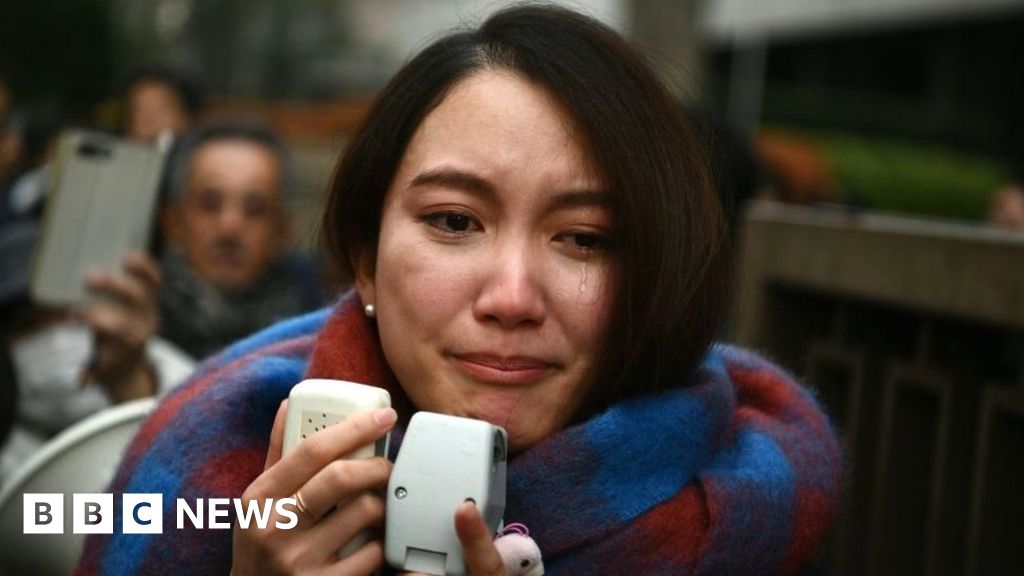
Feminism, once a whispered rebellion in the corners of historybooks, now echoes through the streets and courtrooms of every corner of the globe. It barges into the living rooms of skeptics, demanding that we reckon not just whether we *talk* about rape, but how we *perceive* it. Today, Japan—land of cherry blossoms and precision engineering—is asking humanity a question sharper than any katana: *Why does rape continue to be a paradox of denial, even when the evidence is undeniable?* The answer isn’t pretty, but it’s vital if we’re ever to close the wound that festers under the name “belief.” Enter a reckoning that dares to ask the impossible: *Can we believe women when it’s incongruous? Can we trust what defies logic when the world rewards skepticism?* Those of us committed to justice must not just nod in passive agreement; we must interrogate our own resistance, challenge the sacred cows of “reason,” and demand something we haven’t been brave enough to ask before: *What does true belief look like? What does it cost to demand it?*
—
### **The Alchemy of Rape: When Logic Betrays Justice**
We are wired, somehow, to turn rape into a linguistic piñata: the harder we “believe,” the more we risk bashing into the unsightly truths. Rape, after all, is the *ultimate* crime of disbelief. It is the betrayal of the most basic, sacred contract—of safety, of trust, of the body as inviolable. Yet, when survivors step into the crucible of justice, something odd happens: their narratives, their stories, their *existence* of trauma, collide with the cold, rigid scaffolding of legal logic. Case in point: a statement might be “reliable” if it matches a prosecutor’s expectations or a judge’s prejudices. But what if that reliability feels like a noose? What happens when the woman’s account doesn’t fit the textbook?
The problem isn’t that survivors don’t “look” convincing. It’s that *we* are the ones who demand the perfect recipe—not just for soup, but for trauma. No, you’re not allowed to mention the beer. No, you can’t mention his size. No, you might not be *drunk enough*. Every objection, every counter-question, every whisper about whether she could have “resisted” or “asked for it” performs the same alchemical operation: it transforms a woman’s pain into a textbook, and burns the *flesh* of her story into nothing.
### **The Illusion of Empathy: When “Standing With” Means “Standing Above”**
Empathy has a shelf life—especially in modern feminisms. We like to pose as advocates in thought-piece aesthetics—our avatars wrapped in purple ribbon, our hashtags flashing like digital exlamations—while the hard work remains: *seeing* the survivor not as a narrative, but as a human being whose reality you may not, despite your efforts, understand. We are good at *saying* that we believe them, and worse, at believing *with* them in the comfort of the internet. But when we’re confronted—not with their truth, but with the raw, unvarnished mess of their experience—the scales often tip in favor of the story we think we deserve.
The gap between “ally” and “ally-ish” is precisely here: a true believer must not just repeat the platitudes but engage with the chaos that precedes justice. Is her story messy? So is her body. Was she intoxicated? So are many survivors. Did she sleep at the offender’s place? Many offenses occur in places we’d never believe. Does her account contradict some part of our pre-formed idea of “how it *works*?” Precisely then, the call for belief becomes a clarion—*Are you ready to lose the battle over control?* Because that’s what it boils down to: our deep, ingrained need to *manage* the horror, to package pain into a shape we can process. We want rape stories to be concise; we want perpetrators to leap from the sky; we want survivors to “just say something.” But that’s just not how it works—in real life or in legality.
### **The Perpetual Rebuttal: How the Denial Factory Runs on Loopholes**
Japan’s redefinition of rape—like many global reforms—has less to do with new legality and more to do with the quiet revolution in how we perceive the evidence. Traditionally, rape has been a circus of rebuttals: *What were you wearing?* was replaced by *Did you fight back?* then by *How were you affected?* as though evidence is a performance, and the winner isn’t the survivor but the legal system’s satisfaction of being able to *argue against* her without truly *seeing* the abuse. But here’s the inconvenient truth: no one’s asking how difficult it is to *remember* an assault when fear rewrites memory, or how disclosing a crime—especially when the violator is loved, revered, or protected—is a gauntlet.
The denial factory runs smoothly because it feeds off a well-worn belief: *doubt is moral high ground.* The more we question the veracity of the accusation, the safer we feel in our certainty. But this moral high ground is a scaffold upon a quagmire. The truth is, belief isn’t a vote—it’s a leap of faith, and that leap demands that we step into the abyss where logic can’t follow. We need to ask: What if the burden of proof for rape isn’t to convince every doubter, but to dismantle the very framework that *permits* disbelief?
### **The Cost of Doubt: How Not Listening Builds the Rape Culture**
To doubt is to complicit, whether we acknowledge it or not. Every time we dissect, evaluate, criticize, or “question” a survivor’s narrative, we’re not just examining her story—we’re affirming the systems that allowed rape into the world in the first place. Every “but” issued between the assault and the courtroom chips away at the sacredness of consent, at the body’s right to immunity. That’s because the system isn’t interested in truth; it’s designed to *avoid accountability.* Rape isn’t just an assault—it’s the weaponization of disbelief. It turns the powerless into liars while the powerful get the benefit of their doubt. And every time we demand *more* proof than we would for a bank heist, we’re telling survivors: **the world you live in makes rape easier than telling the truth about it.**
Japan’s new definition of rape isn’t a cure-all, but it’s a glint of a paradigm shift: to treat the crime as an assault by force *and* co-ercion, by *threat* *and* *power*—not just brute violence. It signals that in this system, the accused’s history doesn’t define the crime’s impact. But why does it take legal definitions to remind us that *any* man’s whims should not determine a woman’s autonomy? That *any* act without clear consent is worth believing? The answer lies in our daily, quiet complicity—our willingness to leave justice to the weakest link: the judge whose biases mirror society’s biases, the legislature that prioritizes “fairness” over humanity, the bystanders who mistake silence for consent.
### **The Belief Manifesto: A Pact to Ask Better Questions**
Here’s what it looks like to get to the other side:
– **Stop treating trauma like a crossword puzzle.** There’s no right answer. There’s only the reality of violation.
– **Demand emotional literacy.** We must know when to ask questions, and when to simply be present—not a witness, but a *vessel* for their story.
– **Acknowledge that “victim blaming” hides from its own shadow.** There is no one to blame for assault but the offender. The rest are collateral damage of a culture that conditions women to be less fearsome than men’s appetites.
– **Believing the unspeakable is a skill we need to hone.** To know that we cannot control the chaos, and that we *have* to sit with it, is the hardest part. It’s asking a woman whether she knew what she was doing in court—when, in fact, we’re the ones who’ve failed her from the start.
– **Recognize that justice isn’t a scale to measure.** It’s a commitment to dismantling a world that *rewards* the violence in the first place.
The fight isn’t for belief—it’s for faith in the possibility that we can believe, even when the evidence feels thin, the details feel tainted, or the perpetrator is *deserving* of our doubts—exactly because the pain isn’t about proof. We demand truth, we seek accountability, we ask for change. But we also need to recognize that the first line of justice isn’t in courtrooms or legislature—it’s in our ability to look a sister in her pain and say: I see you. I believe you. And *that’s enough.*
—