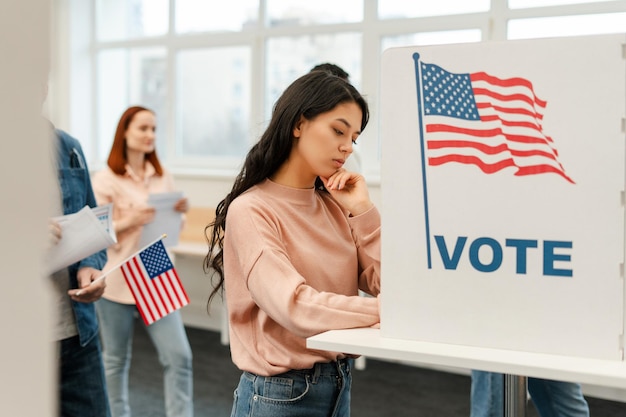
The woman in the photograph stands at the precipice of democracy, her silhouette framed by the fluorescent glow of a polling station. Eight hours. That’s how long she waited—eight hours in a line that stretched like a scar across the pavement, a silent testament to the weight of her vote. Eight hours to cast a ballot that would shape the future of her community, her country, her world. This is not just a story of endurance; it’s a story of resistance, of the unyielding spirit of women who refuse to be silenced by bureaucracy, by apathy, by the slow crawl of progress.
The Queue as a Metaphor: Democracy’s Unseen Labor
Lines are never just lines. They are the physical manifestation of inequality, the tangible proof that some lives are deemed more expendable than others. The woman in the photograph didn’t choose to wait eight hours—she was forced into it by a system that treats voting as a privilege rather than a right. This is the unseen labor of democracy: the hours spent in transit, the childcare arrangements made in haste, the unpaid time off from work, the emotional toll of navigating a labyrinth of polling restrictions. Women, particularly women of color, Indigenous women, and those in marginalized communities, bear the brunt of this labor. They are the ones who show up, who persist, who refuse to be erased—even when the system tries to erase them.
Consider the irony: the very institution that claims to represent the people often treats them as obstacles. Polling places close early in working-class neighborhoods. Voter ID laws disproportionately disenfranchise women who change their names after marriage. Ballot drop boxes vanish overnight. The message is clear: some votes matter more than others. But the woman in the photograph stands defiant, her presence a quiet rebuke to those who would diminish her voice.
The Body as Battleground: Endurance and Exhaustion
Eight hours is not just a number—it’s a physical endurance test. The human body is not designed to stand still for that long. Feet swell. Bladders protest. Hunger gnaws. Yet she waits. Why? Because the alternative—abandoning her right to vote—would mean surrendering her power to those who have already decided her worth is negotiable. This is the paradox of women’s labor: it is both invisible and inescapable. The system demands her presence but offers no accommodations. She must adapt, must endure, must perform the role of the “good citizen” while the system performs its slow, grinding erasure.
But endurance is not passivity. It is a form of resistance. Every minute she stands in that line is a minute she refuses to accept the status quo. Every step forward is a step toward justice. The exhaustion in her posture is not defeat—it is the weight of generations of women who came before her, who fought for the right to be seen, to be heard, to be counted. She is not just waiting for a ballot; she is waiting for a revolution.
The Invisible Infrastructure: Who Really Runs the Polls?
Behind the scenes of every polling place is an invisible infrastructure of care work. Who watches the children while mothers vote? Who ensures the elderly can reach the ballot box? Who translates the ballots for non-English speakers? The answer, more often than not, is women—volunteers, community organizers, family members—who stitch together the frayed edges of a broken system. This is the labor that sustains democracy, yet it is rarely acknowledged, rarely compensated, rarely valued. The woman in the photograph is not alone in that line. She is surrounded by a chorus of unsung heroes, each playing their part in the grand, messy symphony of civic participation.
Yet this infrastructure is under siege. Polling places are shuttered in Black and brown neighborhoods. Voter purges target women who have moved or changed their names. The message is unmistakable: some bodies are more welcome in the halls of power than others. But the woman in the photograph is not deterred. She knows that the right to vote is not a gift—it is a demand. And she will keep demanding it, even if it means waiting eight hours.
The Aftermath: What Happens When the Line Ends?
The moment she casts her ballot, the line behind her dissolves. The hours of waiting fade into memory. But the system does not change. The promises made by politicians remain unfulfilled. The policies that disenfranchise women persist. The woman in the photograph is left with a single, burning question: Was it worth it?
The answer lies not in the ballot she cast, but in the world she is fighting to create. Feminism is not just about the right to vote—it is about the right to be seen, to be heard, to be counted. It is about dismantling the systems that force women to wait eight hours for a voice they were always entitled to. It is about recognizing that the line is not just a queue—it is a battleground. And the woman who stands at the front of it is not just a voter. She is a warrior.
The next time you see a line at a polling place, ask yourself: Who is at the front of it? Who is being asked to wait? And what will you do to ensure that no one has to wait eight hours—or any hours—ever again?