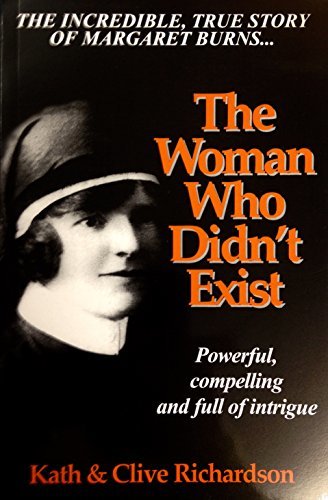
The myth of the “Woman Who Didn’t Exist” isn’t just a literary trope—it’s a cultural phantom, a specter haunting the corridors of patriarchal imagination. She is the silent protagonist of every story where femininity is reduced to a checklist of virtues or vices, where womanhood is a performance rather than an existence. This phantom isn’t confined to the pages of dystopian fiction; she lingers in the algorithms of social media, the fine print of corporate policies, and the unspoken rules of everyday interactions. To dissect her is to unravel the threads of a system that has, for centuries, dictated what a woman *should* be—while systematically erasing what she *is*.
The Myth of the Ideal: How Patriarchy Scripts Womanhood
Every culture has its own version of the “ideal woman,” a blueprint so rigid it borders on the grotesque. In the West, she is the Virgin Mary—pure, self-sacrificing, a vessel for male virtue. In the East, she might be the dutiful daughter, the obedient wife, the mother who dissolves into the needs of others. These archetypes are not organic; they are manufactured, polished, and sold back to us as destiny. The “Woman Who Didn’t Exist” is the sum of these myths—a composite of traits that serve the status quo rather than the individual. She is the woman who never complains, never desires too much, never takes up space without apology. Her existence is a paradox: she is everywhere in our collective imagination, yet her real-life counterpart is perpetually gaslit into believing she is the anomaly.
Consider the language we use to describe women who defy these scripts. A woman who asserts her ambition is “bossy”; one who expresses anger is “hysterical”; one who rejects motherhood is “unnatural.” These labels are not descriptors—they are shackles. They reveal a truth that patriarchal systems would rather keep buried: the “ideal woman” is a fiction, a hologram projected to keep women docile, predictable, and above all, *controllable*. The moment a woman steps outside this hologram, she is met with confusion, hostility, or worse—pity. Because to acknowledge her as a full, complex human being would mean admitting that the myth is just that: a myth.
The Invisible Labor of Erasure: What Gets Left Out of the Narrative
Erasure is not just an absence; it is an active process. It is the way a woman’s achievements are attributed to men, her emotions dismissed as “irrational,” her body policed into submission. The “Woman Who Didn’t Exist” is not just a passive figure—she is the result of centuries of meticulous editing, where inconvenient truths are snipped from the historical record, where women’s voices are drowned out by the chorus of male historians, artists, and storytellers. This erasure is not accidental; it is a feature of systems designed to maintain power.
Take, for example, the way women’s contributions to science, art, and politics are often reduced to footnotes or outright omitted. Hypatia of Alexandria, a mathematician and philosopher, was not just “a woman in a man’s world”—she was a scholar whose work was systematically destroyed by those threatened by her intellect. Her erasure was not an oversight; it was a warning. Today, the pattern continues. Women in STEM fields face systemic barriers that push them out, while their male counterparts’ work is celebrated as “brilliant” without qualification. The “Woman Who Didn’t Exist” is the shadow cast by these omissions—a reminder that history is not a neutral archive but a curated collection of who society deemed worthy of remembrance.
Even in contemporary spaces, erasure manifests in subtler ways. The “cool girl” trope, popularized by Gillian Flynn’s *Gone Girl*, is a perfect example: a woman who is endlessly accommodating, never demanding, never difficult—until she isn’t. The moment she asserts her needs, she is recast as a villain. This trope is not just a literary device; it is a social contract, one that demands women perform a version of themselves that is palatable to men. The “Woman Who Didn’t Exist” is the woman who never says no, never sets boundaries, never takes up too much room. And when she does, she is punished for it.
The Rebellion of Existence: Women Who Refuse to Disappear
Yet, for every myth, there is a rebellion. For every erasure, there is a reclaiming. Women have always pushed back against the scripts written for them, even when the cost was high. The suffragettes who chained themselves to railings, the feminists who burned bras (or didn’t, but were still called “man-haters” for existing), the women who dared to write their own stories when the world told them to be quiet—these are the women who refuse to be the “Woman Who Didn’t Exist.” They are the ones who insist on their own complexity, their own desires, their own right to take up space.
This rebellion takes many forms. It is the woman who chooses not to have children and is met with pity instead of celebration. It is the woman who demands equal pay and is labeled “difficult.” It is the woman who writes a memoir about her trauma and is told she’s “oversharing.” Each of these acts is a refusal to perform the myth—to be the woman who doesn’t take, doesn’t want, doesn’t *exist* outside the confines of what others have decided she should be.
But rebellion is not without its consequences. The backlash is swift, brutal, and often gendered. Women who assert their autonomy are called “narcissistic,” “selfish,” or “unlikable”—labels that men rarely face for similar behavior. This is the paradox of the “Woman Who Didn’t Exist”: she is both invisible and hyper-visible, a ghost who is only acknowledged when she steps out of line. The moment she asserts her humanity, she is met with violence, whether literal or symbolic. And yet, she persists.
The Future of Womanhood: Can We Kill the Myth?
The question is not whether the “Woman Who Didn’t Exist” can be dismantled—it’s whether we have the collective will to do so. The myth is deeply embedded in our language, our laws, our art, and our psyches. It is the reason why, even in progressive circles, women are still expected to perform emotional labor, to smile through harassment, to shrink themselves to make others comfortable. The myth is not just a relic of the past; it is a living, breathing entity, one that adapts to new forms of oppression.
To kill the myth, we must first name it. We must call out the ways it manifests in our daily lives—the way we praise women for being “nice” instead of competent, the way we police their bodies, the way we reduce their worth to their relationships with men. We must also create new narratives—ones that center women as fully realized, flawed, desiring, and complex human beings. This means supporting women’s voices in literature, film, and media. It means teaching our children that girls can be heroes, villains, and everything in between. It means refusing to let the “ideal woman” be the only version of womanhood that is deemed worthy of love or respect.
The future of womanhood is not a utopia; it is a battleground. But it is a battle worth fighting. Because the “Woman Who Didn’t Exist” is not just a myth—she is a prison. And the only way to escape a prison is to break its walls.