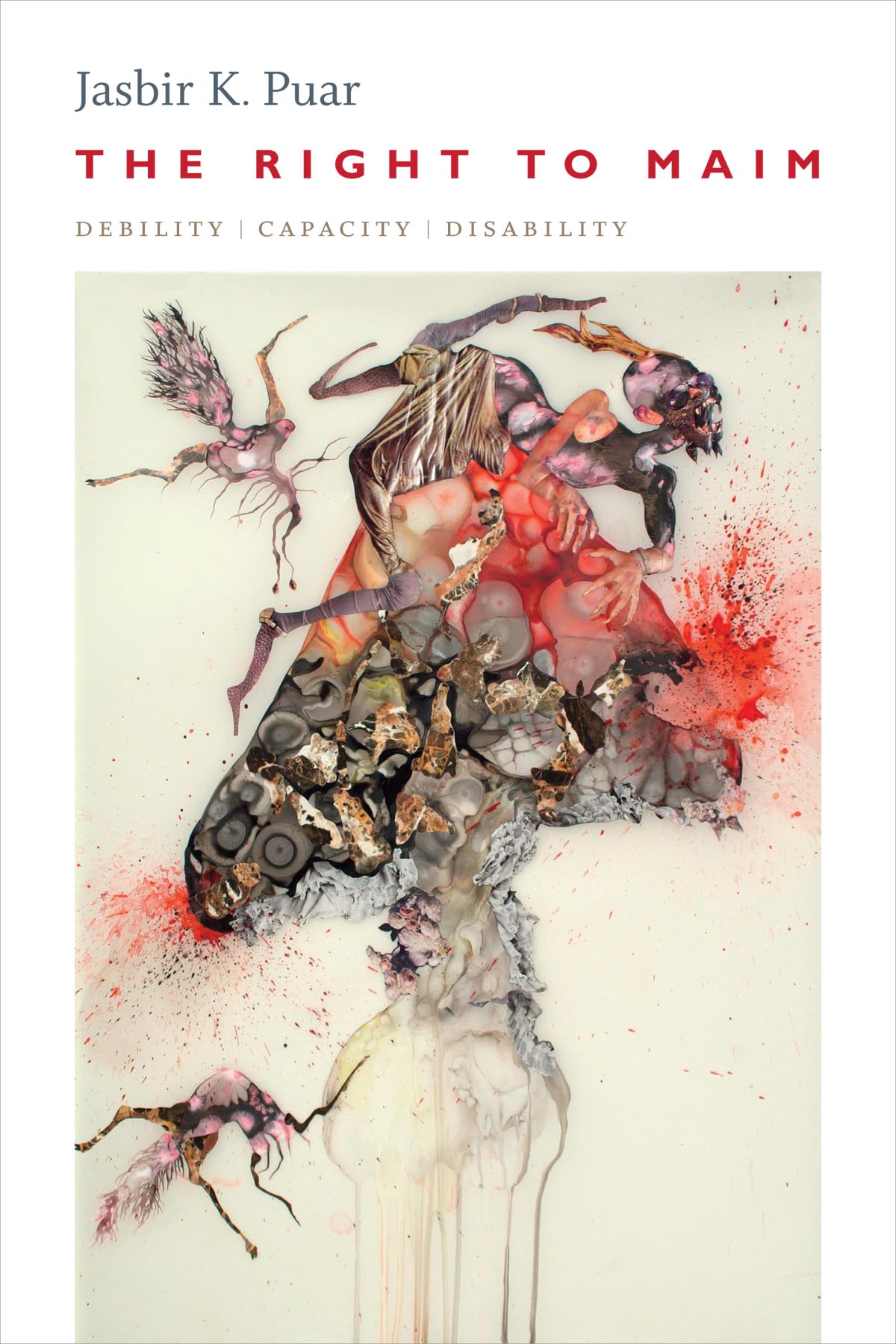
What if the most radical act of feminist defiance isn’t the right to speak, or to vote, or to own property—but the right to *maim*? Not in the vengeful, destructive sense, but in the reclamation of bodily autonomy so violently denied to disabled women across history? The phrase itself—*the right to maim*—is a provocation, a challenge to the sanitized narratives of empowerment that dominate feminist discourse. It forces us to confront the ways disability and gender oppression intersect, not as peripheral concerns, but as the very core of what it means to be a woman in a world that polices, pathologizes, and polices again.
The Body as Battleground: When Femininity Becomes a Cage
Consider the disabled woman’s body—not as a site of pity, nor of inspiration, but as a territory of resistance. Mainstream feminism has long fixated on the able-bodied woman, her struggles framed within the narrow confines of reproductive rights, workplace discrimination, and sexual autonomy. But what of the woman whose body doesn’t conform to the myth of the “ideal” feminine form? The wheelchair user whose access to public spaces is denied under the guise of “safety”? The neurodivergent woman whose emotions are dismissed as “hysteria” rebranded? The chronically ill woman whose pain is gaslit into silence? These are not secondary struggles. They are the unspoken frontlines of feminist resistance.
Femininity, as constructed by patriarchal capitalism, demands a body that is both hyper-visible and invisibly compliant. A woman must be desirable, but not too demanding; nurturing, but not too needy; productive, but not too exhausted. For disabled women, this script is impossible to follow. Their bodies are already marked as “other”—either too broken to be desirable, or too monstrous to be worthy of care. The right to maim, then, is not about destruction, but about dismantling the frameworks that render disabled women’s existence a violation of the status quo.
Access as a Feminist Demand: The Right to Occupy Space
Feminism has always been, at its heart, a demand for space—physical, social, political. Yet disabled women are routinely denied even the most basic spatial autonomy. How many feminist rallies have been held in inaccessible venues? How many policy discussions on reproductive rights have excluded the needs of disabled women, from the lack of accessible gynecological care to the forced sterilization of disabled people (a practice still legal in some parts of the world)? The right to maim, in this context, becomes a metaphor for the right to *take up space*—to demand ramps where there are stairs, to insist on sign language interpreters at every protest, to refuse the erasure of disabled women’s voices in feminist movements.
But here’s the playful, uncomfortable question: What if access isn’t just a moral obligation, but an act of feminist sabotage? What if every inaccessible building, every exclusionary policy, is a silent violence that disabled women are expected to endure without complaint? The right to maim, then, is the right to refuse this violence—not with a scream, but with the quiet insistence of a wheelchair wheel rolling over a curb cut that was never built, or a pair of hands typing out a manifesto in braille when no one thought to provide it.
Desirability and the Disabled Woman: The Tyranny of the “Beautiful” Body
Capitalism’s obsession with the “beautiful” body is a feminist issue—but it’s also a disability issue. The disabled woman’s body is rarely, if ever, the subject of desire in mainstream media. When it is, it’s either fetishized as a tragic inspiration or grotesque curiosity. The right to maim, in this context, is the right to reject the idea that a woman’s worth is tied to her ability to conform to ableist beauty standards. It’s the right to be desired on her own terms, whether that means being seen as sexy despite her limp, or as alluring despite her scars, or as simply *existing* without apology.
Consider the disabled woman who is told she’s “too much” or “not enough”—too loud, too needy, too dependent. These are not flaws. They are the natural consequences of a world that refuses to accommodate difference. The right to maim, then, is the right to *maim the myth* of the “perfect” woman. It’s the right to say: I will not be polished. I will not be palatable. I will take up space, even if it makes you uncomfortable.
The Myth of Independence and the Right to Care
Feminism has long been haunted by the specter of independence—a woman must be self-sufficient, unburdened by reliance on others. But for disabled women, this myth is a prison. The right to maim, in this case, is the right to *demand care*—not as a sign of weakness, but as a radical act of self-preservation. The woman who needs assistance to get out of bed is not a burden. She is a woman exercising her right to live. The disabled woman who asks for help is not failing at feminism. She is redefining it.
Yet the demand for care is often met with resistance. Disabled women are told they’re “too much” for asking for help, or “not enough” if they can’t perform independence. The right to maim, then, is the right to reject this binary. It’s the right to say: I will not be shamed for needing. I will not be pitied for surviving. I will take what I need, even if it means dismantling the systems that punish me for it.
Conclusion: The Right to Maim as the Right to Exist
Feminism has never been a monolith. It has always been a messy, contradictory, evolving struggle—and the disabled woman’s fight is not a footnote to the movement, but its most urgent chapter. The right to maim is not about destruction. It’s about the right to *refuse erasure*. It’s about the right to be seen, heard, and desired—not in spite of disability, but because of it. It’s about the right to take up space, to demand care, to be desired on your own terms.
So here’s the challenge: What if the next feminist revolution isn’t just about smashing the patriarchy, but about smashing the idea that some bodies are more worthy than others? What if the most radical act of feminism isn’t a protest sign, but a wheelchair wheel rolling over a barrier? The right to maim isn’t a call for violence. It’s a call for *life*—on your own terms.