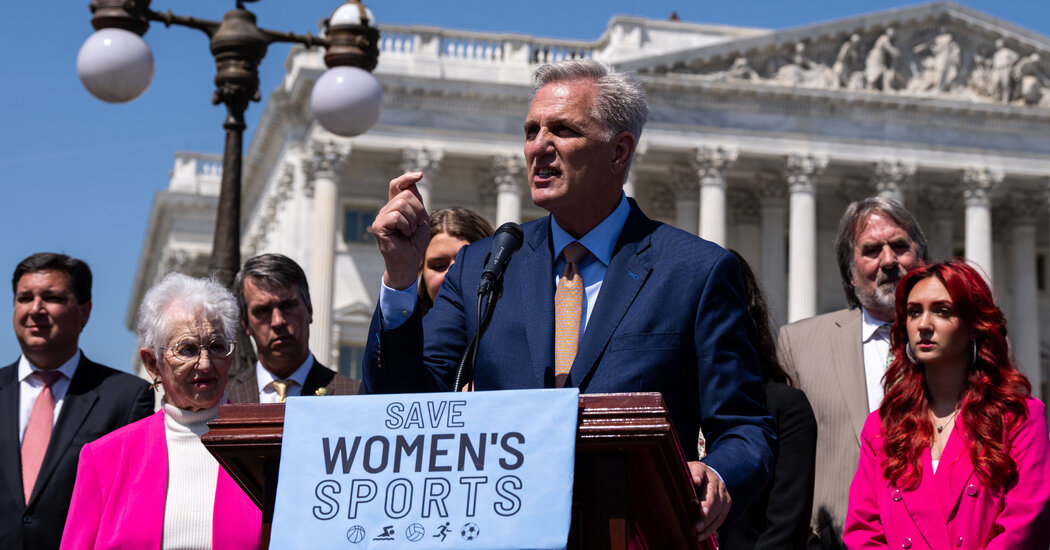
What if the fiercest battles for gender equity aren’t fought in boardrooms or courtrooms, but on the sidelines of a high school track meet? What if the very institutions claiming to protect women’s rights are the ones wielding the baton to exclude those who don’t fit the mold? The harassment of trans women athletes isn’t just a footnote in the annals of sports—it’s a glaring indictment of how feminism, when stripped of its radical roots, can become a weapon against the most vulnerable among us.
The Myth of the “Fair Play” Crusade
Let’s begin with the absurdity at the heart of this debate: the idea that cisgender women’s sports are somehow under siege by trans athletes. The myth of the “fair play” crusade is a carefully constructed farce, a Trojan horse smuggled into feminist discourse under the guise of equity. But who, exactly, is being protected here? The same women who already dominate in sports like gymnastics and figure skating—where the average athlete is a cisgender woman—are suddenly told that their achievements are under threat by a handful of trans women who simply want to compete? The cognitive dissonance is staggering.
This isn’t about fairness. It’s about control. It’s about who gets to decide what a woman is, and who gets to dictate the boundaries of femininity. The same people who decry the sexualization of women’s bodies in sports are the ones demanding that trans women athletes be stripped of their identities to “protect” cisgender women. The irony is as thick as the testosterone in a doping scandal.
The Tyranny of Biological Essentialism
Biological essentialism is the bogeyman lurking behind every trans-exclusionary policy. The argument goes something like this: trans women have an unfair advantage because of their testosterone levels, so they must be barred from competing. But this logic crumbles under the slightest scrutiny. If we’re going to police testosterone, why stop at trans athletes? What about cisgender women with naturally high testosterone levels? What about intersex athletes? The slippery slope is a cliff, and we’re all hurtling toward it.
Moreover, the obsession with testosterone ignores the reality that sports are already a labyrinth of inequities. Wealthy athletes have access to better training, nutrition, and resources. Doping scandals erupt with alarming regularity. Yet when a trans woman steps onto the track, suddenly the playing field must be leveled—by excluding her. The hypocrisy is suffocating.
And let’s not forget the psychological toll. Trans women athletes aren’t just fighting for a spot on the team; they’re fighting to be seen as women at all. The constant barrage of “prove you’re a woman” rhetoric is a form of violence, a denial of their existence. Is this the feminism we signed up for?
The Performance of Victimhood
There’s a peculiar performance of victimhood in the anti-trans sports movement. Cisgender women are cast as the damsels in distress, their achievements at risk of being “erased” by trans athletes. But who, exactly, is erasing whom? The same institutions that have historically marginalized women in sports—pay gaps, lack of funding, media coverage skewed toward male athletes—are now using trans women as scapegoats to distract from their own failures.
This isn’t solidarity. It’s a zero-sum game where one group’s gain is framed as another’s loss. The reality is that trans women athletes are a tiny fraction of competitors. Their exclusion does nothing to uplift cisgender women; it only reinforces the idea that women’s sports are a zero-sum arena where only the “right” kind of woman is allowed to thrive.
What’s more, the focus on trans athletes obscures the real threats to women’s sports: corporate greed, the commercialization of athletics, and the erosion of amateurism. But those are harder battles to fight. It’s far easier to target a marginalized group than to confront the systemic issues that plague sports as a whole.
The Weaponization of Feminism
Feminism, at its core, is about liberation. It’s about breaking chains, not forging new ones. Yet the anti-trans sports movement has co-opted feminist rhetoric to justify exclusion. Suddenly, feminism isn’t about solidarity; it’s about gatekeeping. It’s not about equity; it’s about purity tests. The same movement that fought for the right to vote, to work, to control their own bodies, is now demanding that trans women be denied the same opportunities.
This isn’t feminism. It’s femonationalism—a toxic blend of feminism and nationalism that seeks to define who belongs and who doesn’t. It’s the same logic that fueled the exclusion of women of color from early feminist movements. It’s the same logic that led to the policing of women’s bodies in the name of “protection.” And it’s just as dangerous.
The irony is that many of the same people who decry the “erasure” of cisgender women in sports are the ones advocating for policies that erase trans women from public life entirely. Where’s the outcry for the trans women who are denied healthcare, housing, and safety? Where’s the feminism for them?
The Illusion of Progress
We’re told that these exclusionary policies are a step forward, a necessary protection for women’s sports. But progress isn’t measured by how many people we can push out; it’s measured by how many we can bring in. The real victory isn’t in barring trans women from competing; it’s in creating a world where all women—regardless of gender identity—can thrive.
Sports are more than just games. They’re a microcosm of society, a reflection of our values and our flaws. When we exclude trans women from sports, we’re sending a message: that some women are more worthy than others. That some bodies are more acceptable than others. That some identities are more valid than others.
Is this the legacy we want to leave? A legacy of division, of exclusion, of a feminism that has lost its way? Or will we choose a different path—one where all women are celebrated, where all athletes are welcomed, where the playing field is truly level?
The Challenge Ahead
So here’s the challenge: Can feminism evolve beyond its narrow definitions? Can it embrace the full spectrum of womanhood, or will it remain trapped in the same old binaries that have held it back for centuries? The harassment of trans women athletes isn’t just a sports issue; it’s a litmus test for the movement itself.
Will we stand with the most vulnerable among us, or will we become the very thing we once fought against? The choice is ours. And the world is watching.