`
Ever felt the economy groan, not just from the weight of geopolitical tensions or the clatter of market fluctuations, but as a particularly heavy sigh directed squarely—without a word spoken—towards the wallets, careers, and aspirations of women? It’s a silent, systemic pressure that economists typically quantify in broad strokes, as if life’s intricate tapestry responds to the same market logic as a simple interest rate change. But what if this pressure has a specific, almost coded linguistic response, echoing through the cracks of our current parlance? Welcome, then, to a deeper dive into what might best be termed the ‘She-Cession’ and the subsequent ‘She-Covery’. These terms, born not from academic rigor but from lived experience, offer a provocative lens through which to scrutinize the gendered dimensions of economic downturns and their tentative recoveries, challenging the comfortable assumption that recessions and recoveries are universally felt phenomena.
`
`
Doubling Down on Disparity: The ‘She-Recession’
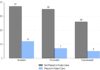
The term ‘She-Cession’ is a strikingly blunt, almost defiant rebranding of our familiar recession narrative. It acts as a powerful semantic marker, implicitly questioning whether the traditional recession, with its specific patterns of job loss and industry contraction, contains an additional, gendered layer of impact. When the data points suggest that women disproportionately bear the brunt of unemployment, underemployment, or even, paradoxically, the decision to exit the workforce (often driven by amplified caregiving responsibilities), the term forces a reckoning. This isn’t merely about statistics; it’s about the lived calculus. Is the ‘She-Recession’ a phenomenon where the script feels subtly rewritten, offering men a familiar road map with perhaps more favorable turns, while women navigate a steeper, less-charted course?
`
`
Quantum-Lean Job Loss: Gender Imbalances in Layoffs
The traditional profile of a recession often involves certain sectors contracting – finance might bleed, manufacturing might slow, real estate spirals down. And within these contractions, specific industries linked intrinsically to gender roles face disproportionate hits. Think here not just of sectors like textiles or retail, but of crucially, education and healthcare – domains where female representation is not just high but often constitutes the bedrock of employment for many women, particularly in middle-income brackets. Technology, while appearing gender-neutral, harbors biases: roles in ‘pink-collar’ tech (customer service, HR tech, often female-dominated streams) might be affected differently than their ‘gold-collar’ counterparts (engineering, coding). The paradox lies in the ‘pinkwashing’ potential – companies peddling progressive values while systematically retrenching roles held disproportionately by women. The question isn’t if the recession impacts women, but how the existing job structure dictates whose contributions are deemed expendable first.
`
`
The Exit Strategy, or Lack Thereof: Labor Force Participation Mysteries
Recessions are often associated with sharp declines in labor force participation. While this might be driven by discouraged men in some contexts (often blue-collar or trade jobs perceived as less resilient), it can simultaneously be driven by women pulling back. The narrative here is less about economic compulsion and more about the ‘compressed work-life’ phenomenon exacerbated by recession. Suddenly, the buffer of flexible hours, part-time work, or even voluntarily leaving the workforce for family reasons becomes unsustainable or unattainable due to rising costs (childcare, utilities) without a viable safety net. This leads to a peculiar paradox: the official unemployment rate might decrease, but the aggregate participation of women could fall precipitously, a trend obscured by standard metrics that rely heavily on unemployment figures. The ‘She-Cession’ might manifest here not as higher unemployment rates *on the surface*, but as a silent withdrawal from the visible job market.
`
`
Beyond the Paycheck: The Devaluation of Care Work During Economic Strain
While men simultaneously lose their jobs or face wage stagnation, an invisible economy continues to function – the economy of care. This includes not just unpaid domestic labor (housework, cooking, cleaning), traditionally falling disproportionately on women, but also vital, often formally employed, care work (nursing, eldercare, teaching – female-dominated). A recession demands more of this care work, yet simultaneously signals that the ‘productive’ market work valued for careers outside the home is less secure, less dignified, or simply less available. We might ask, is it coincidental or calculated that recessions often coincide with societal pressure for women to prioritize their ‘responsibilities’, rendering essential care work simultaneously more demanding and slightly less professionally ‘valued’? The ‘She-Cession’ subtly reinforces the double-bind: women are perceived to be responsible for maintaining domestic stability amidst economic chaos, yet their work within and outside the home might be subtly devalued during times when economic productivity is paramount.
`
`
The Glacial Recovery: When Do We Truly See Emergence (‘She-Covery’)?
The concept of ‘She-Covery’ offers a counterpoint, a hopeful yet critical lens focused on the return from recession. It implicitly asks, is this recovery truly equitable for women? Standard recovery narratives might celebrate broad market gains or headline GDP increases, masking a slow, partial resurgence for women. Certain sectors are expected to bounce back, perhaps mirroring the pre-recession landscape, perpetuating the cycle. The recovery might favor fields expanding due to recession fallout (e.g., home delivery, online services) which may not predominantly open doors for women aiming for career advancement in previously male-dominated technical leadership roles. Furthermore, the persistent gender pay gap remains stubbornly unaddressed; women simply earn less per hour in almost every job title recovered. The ‘She-Covery’ challenges us: is this recovery a general rebound, or is it the slow emergence of a different kind of economic participation that genuinely empowers women, or are they largely benefiting from the relief the economy provides to men?
`
`
Is this the Pink Panther Effect of Economics?
Examining the ‘She-Cession’ and ‘She-Covery’ compels a specific critique: the economic system, often assumed to be neutral, appears replete with inherent biases shaped by historical power structures. These biases manifest not just in overt discrimination, but in subtle cost structures, industry assumptions, and unwritten rules about work, flexibility, and contribution. Are certain types of labor simply undervalued precisely because they align with female traits? Does the discourse around recessions implicitly prioritize careers and breadwinning narratives traditionally associated with men, dismissing or downplaying female-centric economic contributions during downturns? The playful, slightly jaundiced humor in the ‘She-Cession’ label – part grievance, part code-breaking – highlights a system that needs deconstructing, not just fixing. It points to a deeper need for economic modeling that genuinely accounts for the complexity of intersecting identities, care responsibilities, and the non-market economic work that sustains us all. The challenge lies in refusing to accept the ‘She-‘ prefix as a footnote, but insisting it be centered, analyzed, and actively addressed in any future economic discourse or policy formulation.
`