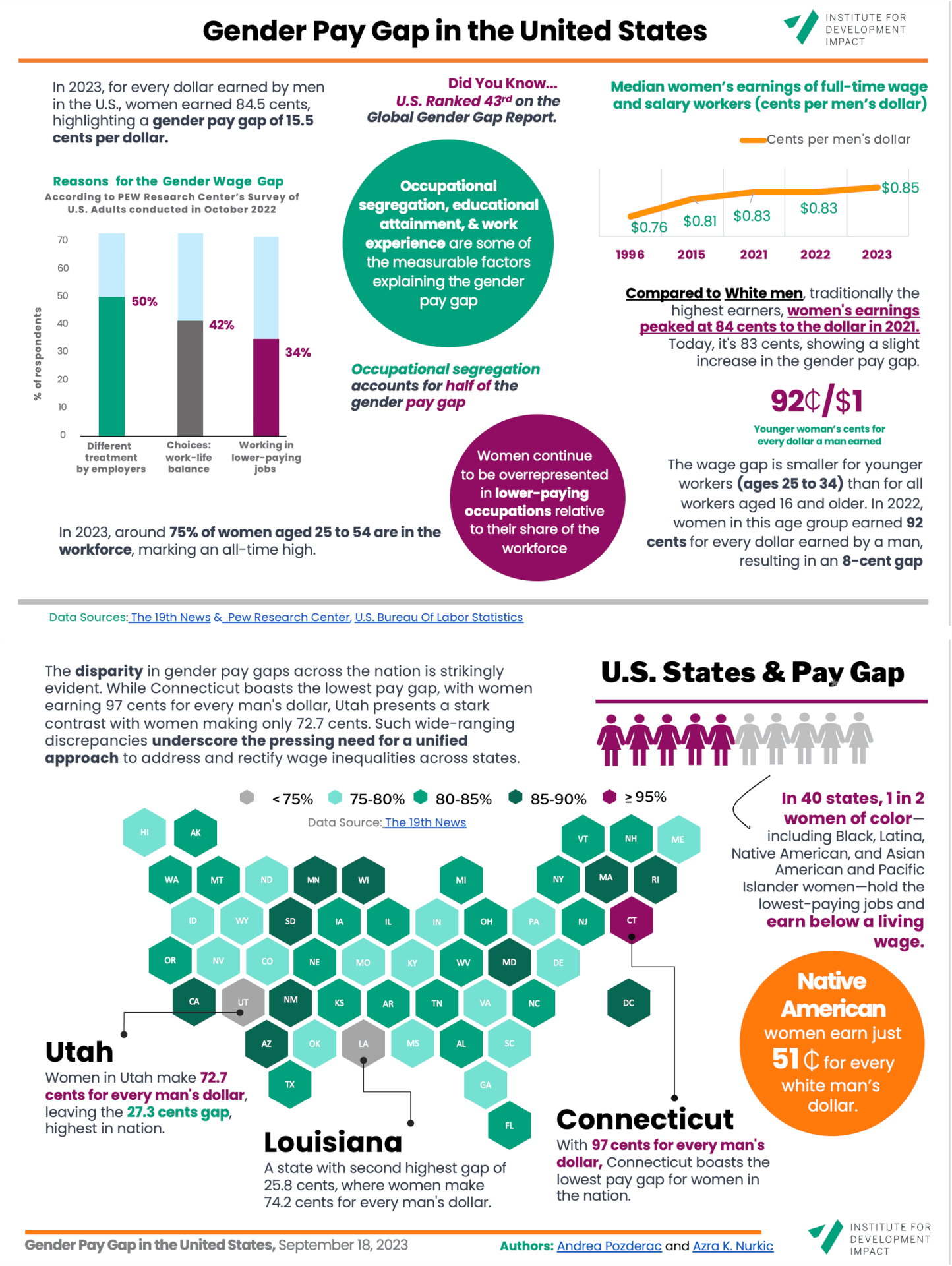
The map of the United States reveals not just land, but a landscape of disparities, and among the most discussed of these topographical variations is the difference in earnings between men and women working in specific regions. The common observation – that women earn less than men for similar work – is familiar ground. But a deeper map, one charting salary discrepancies across state lines, presents a terrain of perplexing inequalities. Why, exactly, does the conversation fixate on “State-by-State Gender Pay Gap” figures, often spotlighting particular states as exemplars of disparity? There’s more to this national preoccupation than mere curiosity; it points towards complex, interwoven narratives about opportunity, history, and identity.
Charting Unequal Terrains: An Overview
Beyond the national average, the distribution of the gender pay gap varies significantly across America’s 50 states. Some regions appear relatively level, though by no means perfect; others present stark, undulating disparities that resist easy explanation. The fascination with state-by-state comparisons likely stems from the power of concrete examples. Reducing a national issue to localized statistics can make it feel tangible, personal. When a state with a reputation for equity is compared to one often cited among the laggards, the contrast highlights the vast range of experiences women navigate across different geographic and social environments, implicitly questioning what factors truly drive these outcomes – and what might not be immediately visible on the surface.
The Rocky Mountain West: Wyoming Takes the Disparity Apex
Among the specific data points that consistently draw attention, Wyoming emerges preeminently. The reasons for this – why a state renowned for its vast natural landscapes, its constitutional mandate for women’s suffrage, and a significant energy sector might feature prominently at the top of pay gap lists – invite exploration beyond simple averages. Could the concentration in male-dominated industries (mining, logging, energy, and public construction in many parts of the state), often associated with higher pay rates, disproportionately affect the available female workforce in those sectors? The state’s relatively sparse population perhaps offers fewer diverse employment options overall, contributing to a workforce composition where disparities show more clearly.
The historical context also matters. Even from the period highlighted by the ‘woman suffrage’ amendment, Wyoming’s specific social and economic trajectory might have shaped workplace norms differently than other early-suffrage states or the nation at large. Today, the state continues to face challenges balancing female workforce participation with opportunities in high-wage sectors. These complexities suggest that national averages mask a unique and troubling geography of inequality.
Gilded Wastelands and High-Value Labor: Nevada, New Mexico, and California
Further down the rankings, but still in the spotlight, often figure states like Nevada, New Mexico, and California. Nevada’s economy, deeply tied to tourism, gaming, and extraction industries, might again reflect a pattern of male-dominated, potentially high-paying sectors alongside significant service sectors. Yet, California, while containing some of the nation’s highest-paying jobs (especially in tech and entertainment), also ranks high nationally for the gender wage gap. Why doesn’t California, despite its economic might, score exceptionally well on pay equality? Could the sheer scale and diversity of its economy dilute a focused push for pay equity? Could the challenges of proving unequal pay claims prevail over more subtle barriers, known or unknown? New Mexico’s situation, potentially grappling with economic challenges while having a strong history of labor organizing, adds another layer to the puzzle.
West and High-Tech: Washington
Washington state, often synonymous with progressive politics and innovative industries, including information technology, presents an interesting counterpoint – or perhaps a complex one. As a major center for high-growth sectors, one might initially expect greater pay equity. However, the data points towards its own unique challenges, potentially reflecting the specific structure of these industries or regional factors distinct from other tech hubs. How does the gender wage gap behave within complex industries like technology or biotech? Could the ‘feminization’ of caregiving roles even in affluent areas, sometimes overlooked in high-tech narratives, contribute to state-level averages that still fall short of the national target? The narrative of Washington isn’t just one of cutting-edge innovation, but also of navigating older patterns of pay stratification across all economic strata.
Deconstructing Disparity: Systemic Issues Shine Through
Regardless of the specific state, the factors contributing to the gender pay gap remain systemic and interconnected. The persistent undervaluation of work predominantly performed by women – roles in education, childcare, and administrative support – remains a fundamental driver. Occupational segregation, where women are statistically more likely to work in lower-compensated, traditionally female fields, also plays a crucial role, affecting pay curves across many regions, including states with seemingly more diverse economies. Moreover, negotiation gaps, implicit biases affecting hiring and promotion decisions, and the lingering effects of the ‘motherhood penalty’ further compound the issue, bleeding across state lines irrespective of specific regional rankings.
Beyond Numbers: The Story These Figures Tell
While the raw statistics define the “state-by-state” comparison, the deeper fascination might reside in the story implied by this information. It suggests an uneven translation of legal rights and social movements into everyday workplace realities. States thought to be progressive might contain deep contradictions. It demands questions about the influence of industry composition, cultural attitudes towards work and gender, the distribution of female labor force participants relative to male-heavy sectors, and the effectiveness of state-specific political engagement focused on this specific issue. Is the pay gap truly a national problem or a composite of numerous regional crises? Or perhaps, is it everywhere except where economic structures happen to align with the dual goals of opportunity and equality in perfect concert?
A Nation of Data and Disparity
To analyze the state-by-state nuances in the gender pay gap is not merely to consult comparative tables. It is to piece together a complicated tapestry, where threads of industry, history, negotiation, and societal valuation intersect, creating unique visual patterns of inequality. These discrepancies represent concrete evidence of widespread, albeit regionally varied, injustice. They demand more than headlines; they necessitate dissecting the underlying structures, challenging conventional wisdom, and asking uncomfortable questions about the real, lived experience of women as citizens, workers, and participants in the American economy, one state at a time. The pursuit of pay equity, therefore, looks different, perhaps harder, on closer examination across the American landscape.