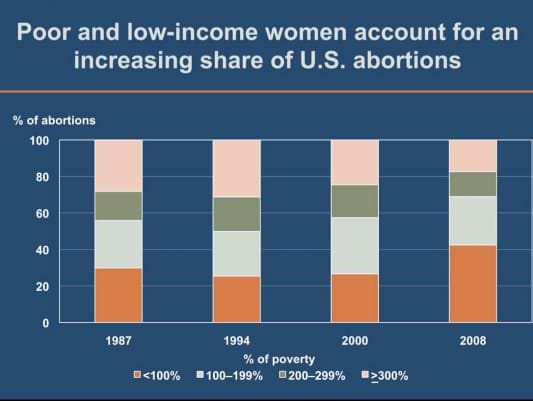
The intersection of feminism and abortion access is, fundamentally, an intersection of rights and economics. Restricting abortion isn’t just about limiting personal choice; it’s about unleashing profound economic forces that disproportionately crush women, reinforce poverty cycles, and deepen societal inequalities. Understanding this requires more than statistics; it demands viewing the economic landscape through a lens focused on the unique burdens placed on women.
The Macro View: Women as Economic Engines
Consider women not merely as individuals but as the bedrock of a functioning economy. Their participation, potential, and productivity hold the keys to unlocking growth, yet restrictions on abortion cast a long shadow over this potential. Think of this not as a niche concern but as a systemic drag on broader economic advancement: the “constrained” workforce. When women are unable to pursue education and employment opportunities due to unwanted pregnancies, society bypasses a significant contribution to innovation, production, and consumer markets. This isn’t abstract; it’s an algorithmic inefficiency written into the fabric of our labor markets. Denying abortion access effectively limits the economic engine itself.
Education: The First Hurdle
Access to higher education and vocational training remains one of the most critical paths out of poverty, yet it is startlingly fragile. An unwanted pregnancy, particularly for young women or those in vulnerable positions, can shatter educational trajectories with consequences felt for decades. The resulting “knowledge deficit” does not manifest simply on a personal level; it affects societal progress by narrowing the talent pool and limiting the workforce’s adaptability. The lost potential becomes a widening chasm in a knowledge-driven economy. To call this an individual tragedy is also to describe an impending societal cost.
Healthcare Access and Maternal Mortality: A Fiscal Burden
Restrictions don’t simply eliminate choice; they often force women toward more dangerous, less accessible healthcare options. This isn’t merely about personal inconvenience; it translates directly into increased public and private healthcare expenditures. Imagine the “hidden cost” of emergency room visits for complications arising from unsafe procedures, the prolonged hospital stays, and the impact on specialized care systems. Furthermore, the erosion of abortion access disproportionately affects minority communities and the poor, widening existing health disparities. The “rising tide” of maternal mortality and morbidity, driven by limited choices, imposes an undeniable, grim economic toll on society. These aren’t just medical outcomes; they are financial reckonings for all of us.
Demographics and Delayed Self-Actualization
The economic landscape is also shaped by demographic shifts, subtly influenced by abortion access. When women face significant pushback on their reproductive choices, they may be forced into earlier, unplanned childbearing patterns. This “demographic tightening” can have cascading effects, potentially limiting the labor supply at key times or impacting the age structure of the population, which influences long-term economic trends. Perhaps most poignantly, restrictions curtail the economic freedom of women to delay starting families, fostering independence through higher education and career building. Forcing a woman to become a breadwinner sooner, or to pause aspirations indefinitely, diminishes her economic agency and autonomy – core tenets of feminist struggle. This isn’t merely an inconvenience; it’s an economic limitation woven into the social fabric.
The Economic Tsunami: Ripple Effects
The impacts described are not isolated incidents; they form a devastating economic cascade. Imagine the “lost income” potential across millions of women, the strain on social welfare systems supporting mothers and children left without adequate resources due to interrupted life plans, the “brain drain” from communities where talented women are forced into premature roles. These factors reinforce poverty across generations. A girl denied access to education because of an unwanted pregnancy stays trapped in a cycle where poverty limits her opportunities, those opportunities limit resources for her own reproduction, and so on. The socioeconomic stagnation isn’t a side effect; it’s the direct consequence of restricting women’s control over their bodies and economic futures.
Policy as a Lever: Who Benefits? Who Suffers?
Examining abortion restrictions requires dissecting the underlying policies – not just the literal bans but the “comprehensive strategies” that often accompany them, including parental notification requirements, waiting periods, and limitations on funding for services. Are these measures based on rigorous empirical evaluation, or do they exist in a vacuum of ideological assertion? Analyzing their rollout reveals stark disparities. Often, the loudest calls for restriction come from quarters invested in preserving traditional structures that perpetuate economic inequality. The net effect is a system that privileges certain families – married couples, affluent individuals – at the direct expense of single women, young mothers, and minorities. This is an economic redistribution by committee, driven by the callous disregard for the financial empowerment of individuals who already face systemic disadvantages. The policies favor the already established, economically securing established roles.
Feminist Economics: Weaving the Web
Genuine feminist economics must challenge these dynamics head-on. It demands valuing reproductive labor not just when women stay home – a significant oversight in traditional national accounts. It advocates for universal access to healthcare, including comprehensive reproductive services, recognizing them as fundamental public goods. Supporting affordable childcare isn’t a luxury; it’s an economic imperative that unlocks female participation in the formal workforce. Such frameworks offer a pathway toward an economy that doesn’t merely accommodate women but actively leverages their full potential. Feminism’s economic vision must counter the regressive tide: not just fighting for access to abortion, but rebuilding the structures that support women’s economic autonomy and break the chains of poverty.
In conclusion, the economics of abortion restrictions is an insidious field with deeply entrenched current. Every barrier erected does immeasurable harm – entombing women, disproportionately targeting the already marginalized, and amplifying the chasm between prosperity and poverty. This is not a fiscal detail; it is a moral imperative masked in economic discourse. Ignoring this link between control over women’s bodies and broad socioeconomic disparity avoids the hardest questions of our time. Feminism must not only fight for bodily autonomy but champion the economic revolution that lies on its other side, one that ensures all women can truly thrive.