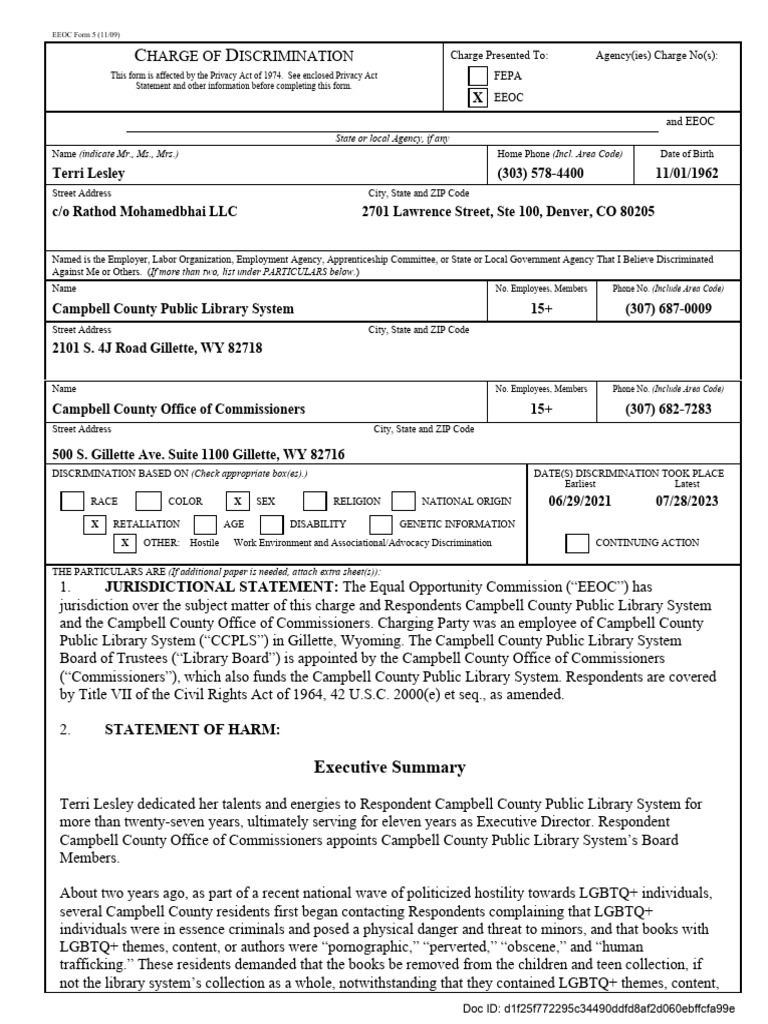
Ever wondered what it truly takes to weaponize your workplace grievances in the name of justice and feminism? Imagine navigating a labyrinth of legalese and bureaucratic red tape armed only with your righteous indignation and this guide. Filing an Equal Employment Opportunity Commission (EEOC) charge isn’t just clerical drudgery—it’s a bold declaration that systemic inequities will no longer be tolerated. But how does one actually initiate this process without getting lost in the maze? Let’s embark on a feminist journey through the art of filing an EEOC charge, transforming legal self-help into an act of empowerment.
Decoding the Power Behind an EEOC Charge
Before wielding the sword of legal recourse, it’s essential to understand the weapon you’re about to brandish. The EEOC charge is a formal complaint filed with the Equal Employment Opportunity Commission, the federal agency tasked with eliminating workplace discrimination. When feminism meets the EEOC, the charge becomes more than a dry procedural form—it morphs into a mechanism to challenge entrenched gender biases, wage disparities, harassment, and retaliation. It shatters silence and calls out injustice, demanding that workplaces reckon with their failures.
This is not just about your personal grievance—it’s a ripple in the pond of institutional misogyny. The act of filing your charge asserts your right to dignified treatment and equality. It’s a confrontation with the patriarchal status quo that often masks itself as business as usual.
Identifying What Constitutes a Valid EEOC Charge
Not every slight or workplace annoyance qualifies for this potent legal action. The law specifically addresses discrimination rooted in race, color, religion, sex (including pregnancy, sexual orientation, and gender identity), national origin, age (40 or older), disability, or genetic information. Feminists recognize that sexual harassment, unequal pay, and retaliation for speaking out fall squarely within these protections.
But here’s the rub: the EEOC demands that charges be filed within strict deadlines—typically 180 calendar days from the date of the alleged discriminatory act. That timeframe shrinks to 300 days if a state or local anti-discrimination law also applies. Pushing beyond these limits risks your complaint being dismissed as too late. Timing is therefore not just essential; it’s the first test of your commitment to justice.
Gathering Your Ammunition: Evidence and Documentation
Rhetoric is vital, but when you step into the arena of formal complaints, proof is your truest ally. Collect all correspondence, pay stubs, performance reviews, witness statements, and any other documentation highlighting the discriminatory behavior or policy. Feminist legal warriors understand that mountains of evidence aren’t required to file, but a coherent narrative bolstered by tangible proof makes your charge formidable.
Consider emails that illustrate bias, records of pay discrepancies, or notes on incidents of harassment. No detail is too trivial; the accumulation of facts can reveal patterns of abuse and systemic dysfunction. Remember: the EEOC process is often adversarial, and preparation can mean the difference between a dismissal and a breakthrough.
Crafting the Charge: How to Fill Out the EEOC Form
Faced with the EEOC intake questionnaire, many feel intimidated. Resist the urge to be cryptic or vague. This isn’t the place for minimalist narratives or passive complaints. The form demands clarity, detail, and a direct account of what occurred, when, and who was involved.
Explicitly state the nature of discrimination, referencing behaviors or policies you believe violated your rights. Feminist insistence on voice is paramount here. Use unmistakable language that leaves no room for ambiguity: “sex-based discrimination,” “hostile work environment,” or “retaliation after reporting.” Contextualize the impact on your career, emotional health, and livelihood.
And don’t hesitate to enlist assistance—advocacy groups and legal clinics often provide support in filing charges, ensuring you navigate the bureaucratic waters with confidence and efficacy.
Filing the Charge: Practicalities and Submission Methods
Once meticulously crafted, your charge needs to reach the EEOC efficiently. Charges can be filed online, in person at an EEOC office, or by mail. While online submission is expedient, some feminist advocates recommend in-person filings to assert presence and demand acknowledgment.
Keep copies of everything submitted, including proof of mailing or electronic submission receipts. Documenting each step is crucial when dealing with bureaucratic inertia or potential misplacements. This diligence is an act of self-care and self-assertion, underscoring the seriousness of your pursuit.
What Happens After Filing: The EEOC’s Investigation Process
Filing is just the prologue. The EEOC then assesses your charge’s merits, often reaching out to the employer for their side of the story. This phase can be both hopeful and fraught, as some employers may attempt to stonewall or discredit complainants.
If the EEOC finds reasonable cause to believe discrimination occurred, it can mediate a settlement or proceed with a formal investigation. For feminist claimants, this is a critical juncture to maintain vigilance and solicit legal or organizational support to ensure the process remains just.
In cases where the EEOC does not find cause, they issue a “right to sue” letter, empowering you to pursue your case in federal court. While this path demands greater resources and fortitude, it represents the ultimate test of your commitment to systemic change.
Empowering Yourself Beyond the EEOC Charge
Filing an EEOC charge is a formidable feminist act, but it need not be your only strategy. Parallel paths include joining unions, leveraging social media activism, engaging workplace allies, and supporting legislative reforms. The charge is one piece in a larger tapestry aimed at dismantling entrenched patriarchal workplace cultures.
Embrace solidarity. Connect with feminist legal aid groups, share your story when safe, and contribute to collective efforts that raise the cost of discrimination for employers. Each charge filed chips away at normalized injustice and paves the way for future generations to enter workplaces without fear or compromise.
Concluding Thoughts: Transforming Legal Procedure into Feminist Praxis
The act of filing an EEOC charge is far more than ticking boxes or submitting paperwork. It is a rebellious gesture against the quiet acceptance of inequity. By navigating the process with precision, audacity, and a feminist lens, you transform legal mechanisms into instruments of empowerment.
What starts as a challenge to documentation and deadlines becomes an assertion of self-worth and communal defiance. In the end, feminists do not just file charges—they rewrite the narrative of workplace justice, proving that laws can serve as both shield and sword in the relentless pursuit of equality.