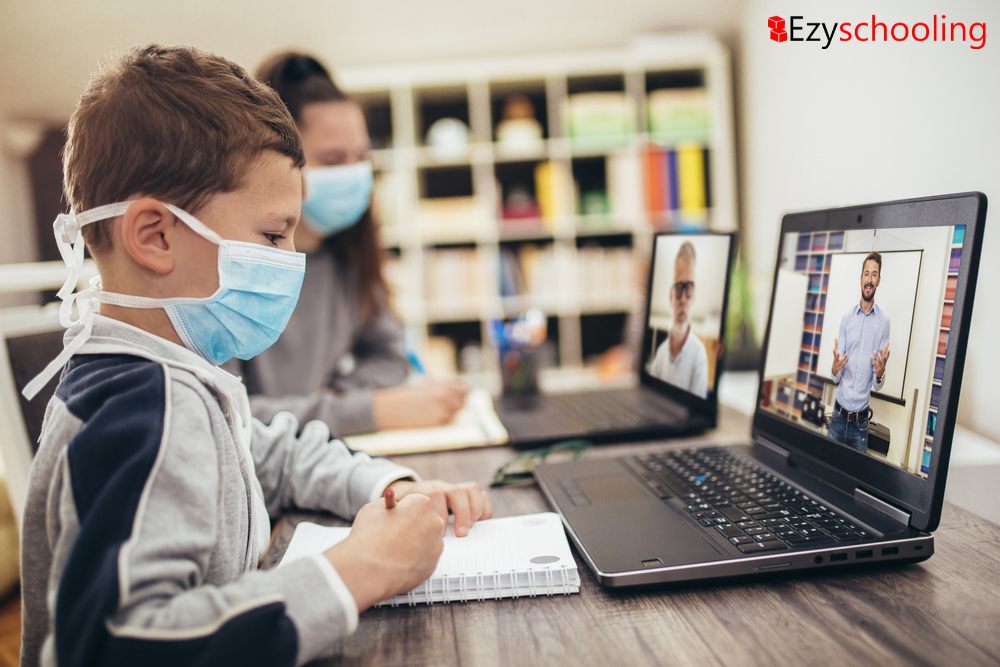
The pandemic has been an invisible puppeteer, yanking the strings of our domestic lives with ruthless precision. Among its many upheavals, remote schooling stands out as a seismic shift—one that didn’t just rewrite education, but the gendered architecture of home labor itself. Behind every laptop screen and Zoom call lurked a tempest of unacknowledged burdens, disproportionately siphoning women’s mental and emotional reserves. This is the story of feminism entangled with the relentless mental load of managing remote schooling—a trauma retrospective that demands a probing gaze into the invisible labor that fractured the very notion of home as sanctuary.
The Mental Load: The Invisible Symphony Conducted by Women
The mental load is akin to an unseen orchestra, with women as its unseen conductors. It is the ceaseless cognitive effort to anticipate, plan, and manage household and childcare duties, invisibly threading through daily life like an incessant background drone. During remote schooling, this load transformed into a tempest. Mothers were not simply helping with homework; they became de facto educators, IT specialists, psychologists, and chef-caretakers all rolled into one. The world outside shrank, but the mental labyrinth inside expanded exponentially.
Women found themselves juggling the demands of remote work and schooling, a tandem act on a highwire with no net beneath. This dual responsibility was less a balancing act and more a live-wire entanglement, fraught with anxiety and exhaustion. It was mental labor writ large—an unending checklist that weighed heavily on cognition and emotional wellbeing.
Remote Schooling: A Trojan Horse for Gender Inequality
On the surface, remote schooling appeared a pragmatic solution to an unprecedented crisis. But lurking beneath was a Trojan horse that further exacerbated entrenched gender disparities. The transition from classroom to kitchen table was painted with naïve optimism, yet the burden settled disproportionately on women. This re-entrenchment of traditional care roles wrapped in a digital veneer was both a regression and a revelation.
Far from a shared crusade, remote schooling became a battleground where patriarchal norms reasserted themselves with stealth. The “flexibility” touted by remote work and schooling became a euphemism for blurred boundaries and boundless expectations, most often falling on mothers. Even in ostensibly egalitarian households, women reported higher levels of fatigue, stress, and feelings of invisibility despite their expanded roles.
Emotional Labor: The Hidden Tributary of Trauma
It’s not merely the physical tasks—logging into classes, explaining algebraic equations, troubleshooting connectivity issues—that intensified. Emotional labor surged into a tidal wave. Women became the emotional anchors, soothing anxieties of children confused by the new normal, negotiating sibling rivalries exacerbated by confinement, and masking their own fatigue to maintain household equilibrium.
This emotional tributary coursed alongside the cognitive, feeding into a reservoir of chronic stress and psychological fatigue. The trauma of ongoing vigilance, compounded by isolation and lack of respite, fractured mental health in insidious ways. Anxiety, depression, and burnout were common companions, compounded by a societal tendency to overlook emotional labor as “just” part of being a mother or wife.
The Silent Erosion of Identity and Agency
For many women, the pandemic’s remote schooling demands acted as an erosion acid, corroding personal identity and agency. The daily inundation of mental load left little room to nurture individual aspirations, careers, or even basic self-care. The home, once a place of refuge, morphed into a pressure cooker. Women felt trapped in the Sisyphean cycle of caregiving and educational supervision, their needs subsumed beneath the avalanche of others’ demands.
This identity erosion wove a subtle yet devastating tapestry of trauma long after the immediate crisis. Professional ambitions took a backseat or were sidelined entirely. Self-worth became tethered to one’s ability to “manage it all”—a cruel yardstick that often failed to account for the unseen emotional expenditures.
Resistance and the Reimagination of Feminist Futures
Yet amid the dark weave of trauma, threads of resistance and reimagination emerged. Feminism’s longstanding critique of invisible labor found new urgency during this period, sparking vital conversations about mental load and equitable caregiving. Women began vocalizing the staggering reality of their roles, demanding recognition and redistribution.
This crisis illuminated fissures in social infrastructure—highlighting the urgent need for systemic solutions such as accessible childcare, flexible work policies that do not default to burdens on women, and societal valorization of caregiving labor. The mental load became a rallying banner, positioning feminism not only as a movement for equality but as a struggle for collective mental health and human dignity.
The Pandemic’s Legacy: A Call to Reckon and Redress
The trauma retrospective is not meant to fossilize pain but to transmute it into a clarion call for transformation. Remote schooling during the pandemic distilled the essence of what feminism has long argued: labor—both seen and unseen—demands equitable distribution. It exposed the brittle scaffolding of gender roles that underpins modern life and underscored how crisis can both cement and challenge these norms.
As society cautiously steps toward a post-pandemic future, the imperative is clear. We must reconstruct educational and domestic paradigms through a lens attentive to gendered mental load, ensuring that no woman bears the full weight of invisible orchestration again. This is feminism’s unfinished symphony—one that requires courageous composition for generations yet to come.