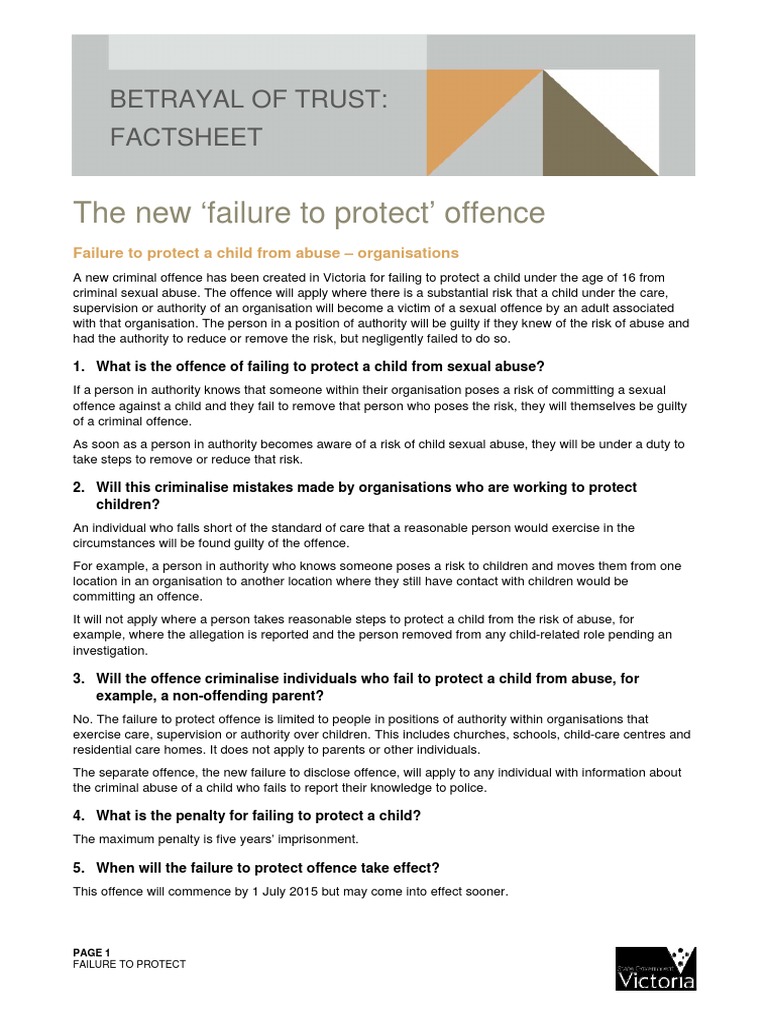
In the labyrinthine corridors of family law, where power and vulnerability collide, a peculiar paradox festers: the “Failure to Protect” doctrine, ostensibly designed to shield children from harm, has become a cudgel wielded against the very women it claims to defend. This legal fiction, draped in the rhetoric of child welfare, often ensnares battered mothers in a web of culpability, forcing them to answer for the sins of their abusers. The irony is as glaring as it is grotesque—women who have endured years of violence, coercion, and psychological torment are then penalized for not magically insulating their children from the very predators they themselves could not escape. It is a perversion of justice that reveals the deeper, rotten underbelly of a system that claims to prioritize safety but instead perpetuates the cycle of victimization.
The Illusion of Protection: How “Failure to Protect” Betrays Its Own Premise
At first glance, the “Failure to Protect” charge seems like a commonsense safeguard—a legal mechanism to ensure that parents do not expose their children to environments rife with danger. Yet, in practice, it operates as a blunt instrument, flattening nuance into a binary of guilt or innocence. The doctrine assumes a level of agency that battered mothers simply do not possess. When a woman is trapped in an abusive relationship, her ability to “protect” her child is often circumscribed by the very violence that defines her reality. She may fear retaliation, lack financial independence, or be gaslit into believing that her child’s safety depends on her silence. To demand that she single-handedly shield her child from a partner who has systematically eroded her autonomy is to ask the impossible.
Moreover, the doctrine’s focus on maternal failure obscures the structural forces that render women vulnerable in the first place. Poverty, housing insecurity, and the absence of accessible shelters are not personal failings—they are systemic failures. Yet, when a mother is deemed to have “failed to protect,” these broader injustices are conveniently erased. The legal system, in its myopic gaze, sees only a woman’s perceived shortcomings, not the scaffolding of oppression that holds her aloft.
The Alchemy of Victim-Blaming: How Abuse Becomes Complicity
Victim-blaming is not a bug of the “Failure to Protect” doctrine—it is its core feature. The moment a battered mother is accused of failing to protect her child, the narrative shifts from one of systemic violence to one of individual inadequacy. Her abuser, the true architect of harm, is often absolved of responsibility, his actions reframed as mere background noise to her perceived negligence. This inversion of culpability is not accidental; it is the logical endpoint of a legal framework that prioritizes the illusion of control over the reality of coercion.
The psychological toll of this alchemy is devastating. A mother who has survived years of abuse is then forced to relive her trauma in a courtroom, where her every decision—from staying too long to leaving too late—is dissected and judged. The legal system, in its obsession with quantifiable outcomes, reduces her lived experience to a checklist of failures. Did she call the police? Did she leave immediately? Did she anticipate every possible scenario? The answer, of course, is that she did what she could with what she had, and it was never enough.
This dynamic is particularly insidious because it mirrors the tactics of abusers themselves. Just as an abusive partner gaslights his victim into believing she is the problem, the legal system gaslights her into believing that her suffering is her fault. The message is clear: if you could not protect yourself, how could you possibly protect your child?
The Specter of the “Good Mother”: A Myth That Perpetuates Injustice
The “Failure to Protect” doctrine is undergirded by an insidious myth—the myth of the “good mother,” a woman who is selfless, all-knowing, and perpetually vigilant. This myth is not a standard; it is a straitjacket. It demands that mothers be perfect, even as the world conspires to make perfection impossible. A battered mother, by definition, cannot meet this impossible standard, for her very existence is a testament to her failure to embody the myth. Yet, the legal system clings to this fantasy, using it as a cudgel to punish women who fall short of its impossible ideals.
The “good mother” myth is also a racialized and classed construct. Women of color, poor women, and immigrant women are disproportionately targeted by “Failure to Protect” charges, their parenting scrutinized through a lens of suspicion and deficit. Their cultural practices, their economic struggles, and their community ties are pathologized, while the systemic barriers they face are ignored. The myth of the “good mother” is, in reality, a tool of oppression, a way to justify the punishment of those who do not conform to a narrow, white, middle-class ideal.
The Collateral Damage: Children Caught in the Crossfire
The most heartbreaking consequence of the “Failure to Protect” doctrine is the collateral damage it inflicts on children. When a mother is stripped of custody or forced into supervised visitation, the child is not shielded from harm—they are uprooted from the only stable figure in their life. The legal system’s obsession with punishing the mother often results in the child being placed in foster care, where they are exposed to new forms of trauma, including the instability of the system itself. The irony is cruel: the very doctrine that claims to protect children ends up harming them.
Moreover, the removal of a child from their mother’s care does not erase the abuse they witnessed or experienced. It merely transfers their suffering from one context to another, from the home to the state. The child is left with the same questions that haunt their mother: Why didn’t she protect me? Why wasn’t she enough? The legal system, in its haste to assign blame, offers no answers—only more pain.
The Deeper Rot: How “Failure to Protect” Reinforces Patriarchal Control
To understand why the “Failure to Protect” doctrine persists, despite its obvious injustices, one must look beyond the surface of child welfare and into the heart of patriarchal control. The doctrine is not merely a legal tool; it is a mechanism of social regulation, a way to discipline women who dare to deviate from their prescribed roles. By punishing battered mothers, the system reinforces the idea that women are responsible for the safety of their families, even when the danger comes from outside. It shifts the burden of protection from the state to the individual, absolving institutions of their duty to address systemic violence.
This dynamic is particularly evident in cases where fathers are the abusers. Despite overwhelming evidence of their violence, these men are often granted unsupervised visitation or even custody, their behavior excused as a “failure to co-parent” rather than the abuse it is. The legal system’s reluctance to hold men accountable for their actions reveals the deeper truth: the “Failure to Protect” doctrine is not about protecting children. It is about controlling women, about ensuring that they remain within the bounds of their prescribed roles, no matter the cost.
The Path Forward: Reimagining Protection Without Punishment
The solution to this systemic injustice is not to double down on the “Failure to Protect” doctrine but to dismantle it entirely. True protection for children and mothers alike requires a fundamental shift in how we conceptualize safety. It means recognizing that battered women are not failures—they are survivors. It means holding abusers accountable, not punishing their victims. It means providing resources, not just reprimands. It means building a system that supports women, rather than one that preys on them.
This reimagining begins with listening to the voices of battered mothers themselves. Their experiences are not anecdotes; they are evidence. Their struggles are not failures; they are testament to their resilience. The legal system must move beyond its obsession with blame and toward a model of restorative justice, one that addresses the root causes of violence rather than its symptoms. It must recognize that protection is not a zero-sum game—that holding a mother accountable for her abuser’s actions does not make her child safer.
The “Failure to Protect” doctrine is a lie wrapped in a legal fiction, a tool of oppression disguised as a shield. It is time to expose that lie, to tear down the fiction, and to build a system that truly protects the vulnerable. The first step is to stop blaming the victims—and start holding the real perpetrators of harm to account.