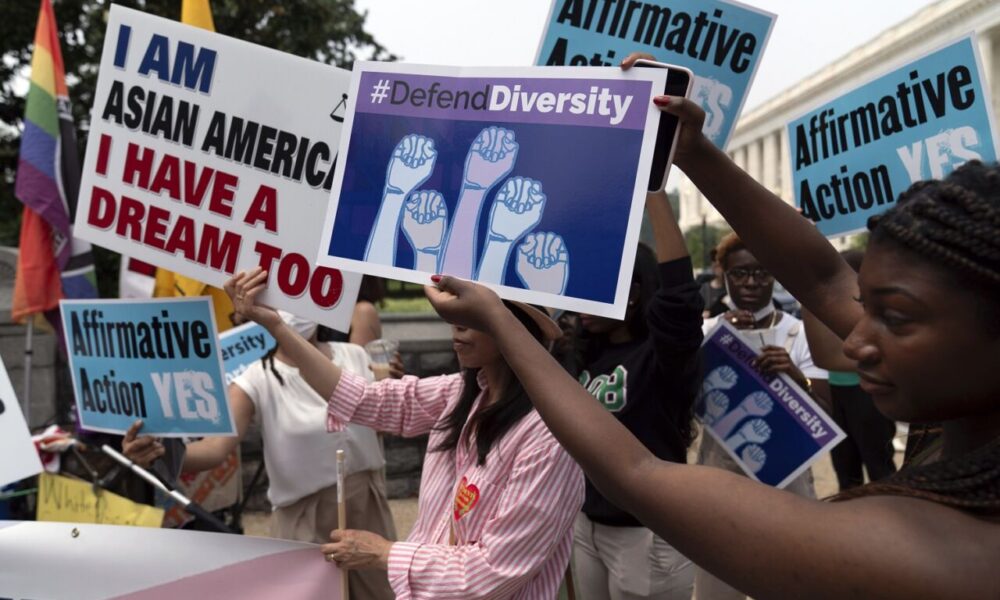
In the looming shadow of Texas’s appeal to the Supreme Court, the future of affirmative action hangs in the balance, invoking significant implications for diversity in colleges across the nation. This is not merely a legal battle; it is a furious ideological clash around gender, race, and the essence of equity in education that becomes ever more vital in shaping feminism’s trajectory. As feminist activists, we stand at a crossroads: do we accept a return to an era of exclusion, or do we galvanize for change? The consequences of this case will echo in the halls of academia and grip the collective consciousness of generations.
Affirmative action has long been a mechanism for rectifying historical injustices and creating equitable opportunities in education. However, anti-affirmative action forces like those orchestrating the Texas appeal remind us of the relentless push against equity, attempting to dismantle systems designed specifically to uplift marginalized communities. In scrutinizing this appeal, it is pivotal to unravel the implications for diversity within higher education through a distinctly feminist lens.
The Historical Context of Affirmative Action and Its Feminist Roots
Understanding the genesis of affirmative action is crucial; it was birthed from an acknowledgment of systemic inequities. The Civil Rights Movement catalyzed this ethos, intertwining the quest for racial equality with the struggle for gender equity. Affirmative action, initially directed towards dismantling the barriers faced by African Americans, soon expanded to include women, enhancing access for those who have historically been marginalized in academic spheres.
In examining how affirmative action has transformed into a battleground for feminist ideologies, it becomes glaringly apparent that this legal maneuver isn’t just about race; it is also about gender. Women of color especially face the double jeopardy of racism and sexism, creating an urgent necessity for programs that actively counteract these intersecting oppressions. Thus, attacking affirmative action is not merely an assault on racial diversity; it is an affront to the very fabric of feminist progress, a threat that seeks to unravel the hard-won rights of those who dare to challenge the status quo.
The Texas Appeal: A Dangerous Precedent for Gender Equality
The state’s appeal to the Supreme Court serves as a pivotal moment, not just legally but culturally. What does the decision made in this case say about America’s values regarding equality? If the court sides with Texas, we risk endorsing a precedent that prioritizes a colorblind ideal over the imperative for inclusive practices. This stance posits that diversity initiatives are merely “unfair advantages,” rather than essential corrective mechanisms necessary for leveling the playing field.
This notion is inherently flawed. It denies the lived experiences of marginalized groups who continue to encounter systemic barriers that render equal footing unrealistic. Furthermore, it undermines the intersectionality foundational to feminism, which posits that multiple forms of discrimination overlap. In this context, denying the existence of affirmative action sends an alarming message: the struggles for gender equality and racial equity are mutually exclusive when in fact, they are intrinsically linked.
As colleges craft their admissions policies, eliminating affirmative action would curtail the diversity that enriches academic environments. For women, especially those belonging to intersectional identities, the implications of this ruling could mean diminished representation in STEM fields, business, and leadership roles. Leaving these spaces predominantly male and homogenously raced not only deprives women of opportunities but also impoverishes the collective pool of ideas essential for societal progress.
The Repercussions of Repealing Affirmative Action
To comprehend the forthcoming implications of repealing affirmative action, one must consider the broader cultural and social ramifications. Beyond the immediate landscape of college admissions lies the societal architecture that elevates voices and experiences from a diverse array of backgrounds. Without a conscious effort to foster diversity, we run the risk of perpetuating an echo chamber of privilege, stifling innovation and progressive thought.
Moreover, if we witness a regression in affirmative action policies, we must brace ourselves for the collateral damage sustained by feminist movements. The convergence of race and gender in educational settings critically influences the professional trajectories of young women. As spaces of learning become increasingly homogeneous, women of all backgrounds are left to navigate pipelines that favor the privileged few.
Additionally, the erasure of support systems aimed at uplifting marginalized communities fosters an environment where stereotypes can flourish. Women and people of color may find themselves facing heightened biases, impeding their academic achievements. The long-term consequences are profoundly alarming: reinforcing cycles of disenfranchisement rather than dismantling them.
Grassroots Mobilization: A Feminist Call to Arms
In the face of this daunting challenge, grassroots mobilization emerges as an urgent necessity. Feminist activists must galvanize communities to advocate for inclusive policies that honor diversity rather than marginalize it. Building coalitions among races, genders, and socioeconomic classes is crucial for advancing a shared agenda of equity in education.
Through activism, we can articulate the tangible benefits of diversity in academia—offering enriched perspectives that contribute not only to educational excellence but also foster social cohesion. Let’s invest our energy in cabinet discussions, community outreach, and lobbying for the protection of affirmative action policies. Framing this fight as one that embraces intersectionality reinforces our stance: diversity is non-negotiable in a just society.
We must also reframe the narrative surrounding affirmative action from one of contention to one of necessity. The conversation should not solely hinge on legal interpretations but pivot toward visions for a future where all students have equitable access to opportunities. Education, after all, is a human right deserving of unfettered access, especially for those whose identities resonate with a multiplicity of challenges.
Moreover, engaging with allies across various sectors—corporations, non-profits, and educational institutions—will amplify our voices clamoring for preserving affirmative action. The time to act is now; as we mobilize, we send a clear signal that feminism, with its commitment to justice and inclusivity, cannot afford to cower in the face of adversity.
The Choice of Tomorrow: A Vision for a Diverse Future
Ultimately, the Texas appeal to the Supreme Court poses a daunting quandary. Will we stifle progress, or will we champion the ideals of diversity that enrich our educational institutions? The fight for affirmative action mirrors broader struggles within feminism—it is a testament to power dynamics that still pervade our society. The values we uphold today will reverberate into the future, sculpting the landscape of higher education for generations to come.
As we await the Supreme Court’s judgment, it is imperative that we remain vigilant, united, and unyielding in our belief that diversity in colleges is not merely a statistical number; it is a vibrant tapestry woven from the threads of resilience, innovation, and justice. Our future depends on whether we can collectively rise against the tides of regression and reimagine a world shaped by equality, access, and unceasing progress.