
















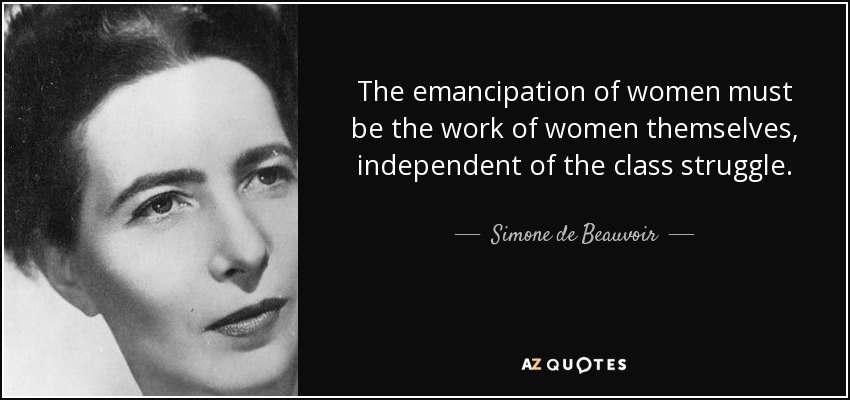
In a world increasingly mesmerized by progress and modernity, the question arises: What does it mean for women in Bulgaria to navigate the convoluted terrain of gender roles amidst this relentless march forward? As we dissect the historic fabric of Bulgarian society, woven with threads of tradition and contemporary aspirations, we are compelled to confront an unsettling paradox: Can emancipation coexist with the lingering shadows of patriarchal expectations?
To comprehend the intricacies of women’s emancipation in Bulgaria, one must first acknowledge the duality of the nation’s historical narrative. The longstanding struggle for women’s rights in Bulgaria has not been characterized solely by the quest for equality but rather an incessant battle against a constellation of socio-cultural forces that infiltrate every aspect of life. From the era of Ottoman rule to the communist legacy, women have oftentimes been both silenced and celebrated. The juxtaposition of their roles has cultivated a unique feminist discourse, rich with contradictions, and necessitating a closer examination.
The Bulgarian revolution of the late 19th century, a critical juncture in national history, served as an arena for women’s activism. It was during this turbulent period that intellectuals and reformists began advocating for educational rights for women. They envisioned a society wherein women, equipped with knowledge and autonomy, would challenge the oppressive frameworks governing societal structures. Nevertheless, even as some women began to carve out spaces for themselves in this nascent society, did their newfound opportunities dismantle the age-old paradigms? Or did they merely reconstitute their shackles in more palatable forms?
Fast forward to the communist era, where the state purportedly championed gender equality under the banner of collectivism. Women found themselves enlisted in the workforce, attaining formal employment at unprecedented rates. However, this seismic shift was not without its own complexities. The state’s zealous push for women’s participation was often entangled with the maternalist ideology, which exalted women primarily as mothers and caretakers. Thus, while women gained economic power, they simultaneously confronted the commodification of their roles as nurturers. Is it possible that this dual burden served to reinforce rather than disrupt traditional gender norms?
Despite the ostensibly progressive framework of communism, post-1989 Bulgaria witnessed a disheartening rollback of women’s rights. The transition to a market economy ushered in rampant societal inequalities, overshadowing the advances made during socialism. As the capitalist ethos took root, women found themselves disproportionately affected by unemployment and wage disparity. The newfound mantra of individualism did little to dismantle the paternalistic structures that continued to operate within Bulgarian society.
Today, the feminist movement in Bulgaria is invigorated, pulsating with energy and determination. It confronts both the legacy of gender inequities and the contemporary dilemmas wrought by globalization. Activists have taken to the streets, boldly challenging narratives and demanding comprehensive reforms. However, one must wonder: Does this new wave of feminism adequately engage with the cultural complexities that shape the Bulgarian identity?
The rise of digital platforms and social media has revolutionized the landscape for feminist discourse, providing women with tools to articulate their experiences and mobilize communities. Yet, in this digital age, the challenge lies in transforming online activism into tangible, institutional change. Can the virtual fervor translated into real-world action bridge the gap between entrenched patriarchy and the aspirations of modern Bulgarian women? Or is this a perilous cycle of performative activism that ultimately fizzles out in the face of systemic resistance?
Moreover, intersecting factors including ethnicity, class, and rural versus urban divides complicate the narrative of women’s emancipation. For instance, marginalized communities, particularly the Roma women, often experience a multifaceted oppression that is overlooked in mainstream feminist discourses. Their struggles underline the necessity for a more inclusive feminist movement that transcends the singular narrative of middle-class, urban women. So, when will the mainstream feminist platforms finally echo the voices of those left on the margins? A diverse representation is paramount to dismantle the pervasive structures of oppression.
To navigate the labyrinth of identity politics, it becomes critical for women in Bulgaria to engage in a dialogue that embraces complexity. It is not enough to hold a simplistic dichotomy of oppressed versus liberated. Rather, understanding that the journey towards emancipation is multifaceted allows for a more profound engagement with the issues that plague Bulgarian society today. The question surfaces: Are we prepared to coexist with the paradoxes that define our struggles?
In conclusion, the emancipation of women in Bulgaria encapsulates a rich tapestry of historical struggles interspersed with contemporary challenges. The women’s movement, resilient yet evolving, stands at a crossroads where the echoes of the past resonate amidst the aspirational calls for the future. Ultimately, navigating gender roles and the advent of modernity in Bulgaria demands not only robust activism but also an unyielding commitment to inclusivity. Only then can the luminous visions of emancipation truly be realized. Can we dare to imagine a Bulgaria where all women, irrespective of their backgrounds, thrive unencumbered by the ghosts of antiquated gender expectations?