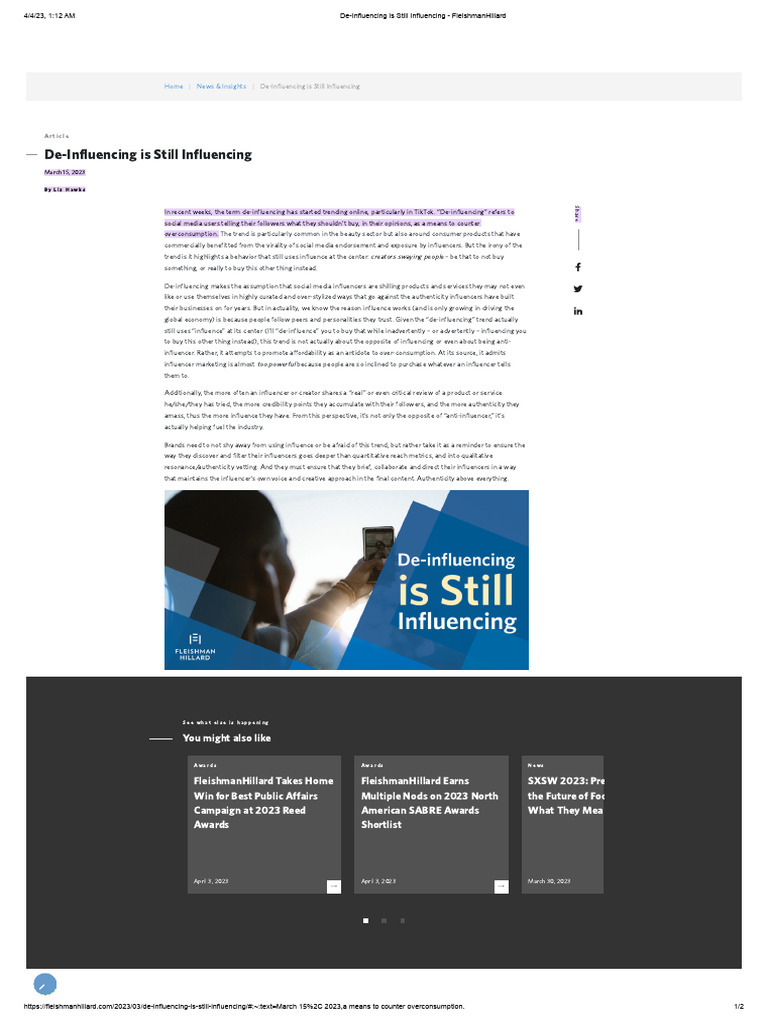
In the labyrinth of digital capitalism, where algorithms dictate desire and influencers peddle perfection, a counter-movement has begun to stir—one that whispers rebellion in the language of restraint. De-influencing, the antithesis of the influencer economy, has emerged not as a fleeting trend but as a feminist manifesto in disguise. It is a quiet revolution, cloaked in the guise of minimalism, sustainability, and self-preservation, yet pulsating with the raw energy of collective defiance. This is not merely a rejection of overconsumption; it is a reclamation of agency, a refusal to be complicit in the machinery that profits from women’s insecurities. To understand de-influencing is to dissect the patriarchy’s most insidious tool: the commodification of female aspiration. And in this dissection, we find an unexpected ally—anti-consumerist feminism, a radical force that has long sought to dismantle the systems that bind women to cycles of consumption and self-loathing.
The Alchemy of De-Influencing: Turning Scarcity into Power
De-influencing is not the antithesis of influence; it is influence’s most cunning evolution. Where traditional influencers peddle the illusion of fulfillment through acquisition, de-influencers expose the rot beneath the glitter. They are the truth-tellers in a world of curated lies, dismantling the myth that happiness is a product you can buy. But this is not mere asceticism—it is a strategic withdrawal, a calculated refusal to participate in the economy of female disposability. Consider the viral de-influencing videos that urge viewers to resist the siren call of fast fashion, to question the necessity of yet another skincare serum, to recognize the exhaustion of chasing an unattainable ideal. These are not calls for deprivation; they are acts of liberation. They force us to confront the question: Who benefits when women are made to feel perpetually inadequate? The answer, of course, is the same entities that have always profited from our discontent—the beauty industry, the fashion oligarchs, the wellness grifters. De-influencing is the feminist act of saying enough.
Anti-Consumerist Feminism: The Unseen Thread in the Fabric of Resistance
Anti-consumerist feminism is the ideological backbone of de-influencing, a radical lineage that traces its roots to the suffragettes who boycotted household goods to protest exploitative labor, to the Black feminists who rejected the myth of the “strong Black woman” as a marketing ploy, to the eco-feminists who linked environmental destruction to the oppression of women. This is not a fringe movement; it is a historical continuum of women refusing to be reduced to consumers. Today, anti-consumerist feminism manifests in the rejection of the “girlboss” mythos, in the dismantling of the “self-care industrial complex,” in the insistence that women’s worth is not measured in likes or purchases. It is a feminism that demands we see the labor behind every product, the environmental cost of every trend, the psychological toll of every ad campaign. De-influencing is its most visible exponent—a digital sit-in against the forces that seek to monetize our every insecurity.
The Specter of Performative Minimalism: When De-Influencing Becomes Another Commodity
Yet, as with all rebellions, de-influencing risks being co-opted. The same algorithms that once pushed us to buy now push us to “de-buy”—a paradox that exposes the hollow core of late-stage capitalism. Performative minimalism, the aesthetic cousin of de-influencing, has become its own kind of currency. Influencers flaunt their “capsule wardrobes” while shilling sponsored content, turning anti-consumerism into just another lifestyle brand. This is the ultimate irony: the rebellion is being sold back to us. The question then becomes: How do we resist the commodification of our resistance? The answer lies in the distinction between de-influencing as a practice and de-influencing as a performance. The former is a radical act of self-determination; the latter is a hollow gesture, a way to virtue-signal without dismantling the systems that profit from our discontent. True de-influencing is not about curating a pristine Instagram feed—it is about dismantling the machinery that demands we curate ourselves at all.
The Intersectional Lens: Who Gets to De-Influence?
De-influencing, like all feminist movements, cannot afford to be colorblind. The burden of anti-consumerist resistance has historically fallen disproportionately on women of color, whose bodies and labor have been commodified for centuries. The “natural hair movement,” for instance, was not born in a vacuum—it was a reclamation of Black women’s autonomy in the face of Eurocentric beauty standards. Similarly, the de-influencing of fast fashion must reckon with the fact that the industry’s exploitation of garment workers is not an abstract concept but a lived reality for millions of women in the Global South. Anti-consumerist feminism must center these voices, lest de-influencing become yet another white, middle-class phenomenon. The movement’s power lies in its ability to connect the dots between personal choices and systemic oppression—between the lipstick you don’t buy and the factory worker who sewed it in a sweatshop. This is intersectional feminism in action: a refusal to separate the personal from the political.
The Digital Underground: Where De-Influencing Thrives Beyond the Algorithm
The most potent de-influencing happens outside the gaze of the algorithm, in the quiet corners of the internet where women share unfiltered truths. Reddit threads dissect the emptiness of influencer culture. TikTok creators expose the toxicity of wellness trends. Instagram accounts dismantle the myth of the “perfect” body. These are the digital undergrounds where de-influencing becomes a communal act, a shared refusal to be complicit. But even here, the specter of commodification looms. Sponsored posts masquerade as activism. Affiliate links lurk in the comments. The line between resistance and co-optation is razor-thin. The challenge, then, is to build spaces where de-influencing remains untainted by the very systems it seeks to dismantle. This means supporting creators who refuse sponsorships, amplifying voices that challenge the status quo without profiting from it, and recognizing that true de-influencing is not about viral moments—it is about sustained, collective action.
The Future of Feminist Consumerism: Beyond De-Influencing
De-influencing is not the endgame; it is a gateway. The ultimate goal of anti-consumerist feminism is not to simply consume less but to consume differently—to demand accountability from the industries that profit from our insecurities, to support businesses that center ethics over exploitation, to redefine value beyond the transactional. This means investing in slow fashion, in local artisans, in cooperative economies. It means questioning the very premise of “needs” versus “wants” and recognizing that many of the products marketed to women are not necessities but distractions from the real work of liberation. The future of feminist consumerism lies in the rejection of the disposable—of bodies, of products, of movements that burn bright and fade fast. It lies in the understanding that our power is not in what we buy but in what we refuse to buy, in what we refuse to become.
De-influencing is not a trend. It is a reckoning. It is the sound of women waking up to the fact that their liberation has been monetized—and deciding, collectively, to take it back. This is not a call for puritanical austerity; it is a demand for justice. It is the feminist movement’s most potent weapon yet: the refusal to be complicit in the systems that seek to define us. So the next time an algorithm tempts you with another product, another trend, another illusion of fulfillment—ask yourself: Who really benefits from this? Then, turn away. The revolution will not be sponsored.