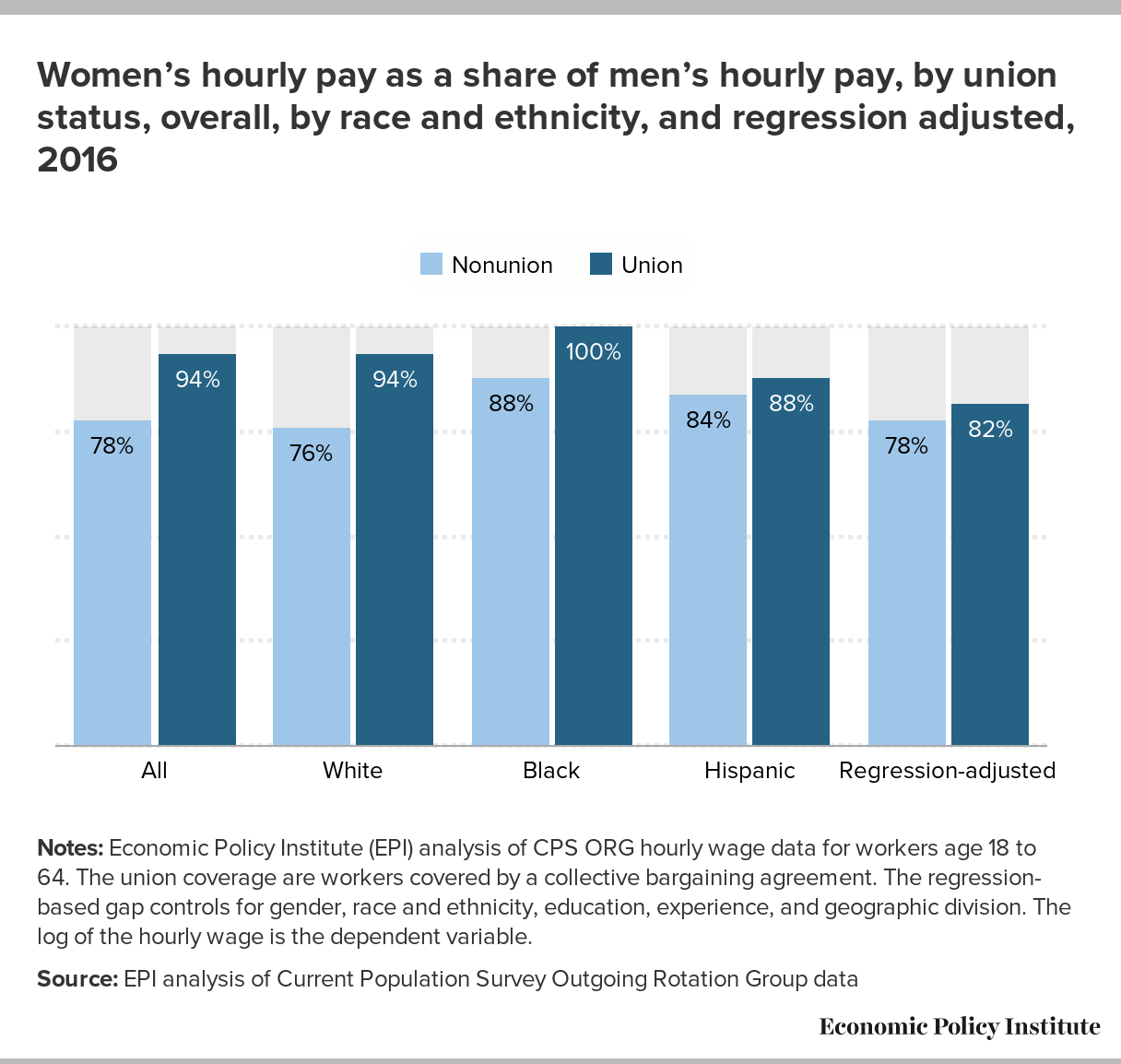
What if we accepted with rosy certainty that unions universally raise wages and improve conditions, merely because collective bargaining seems to work in a world that still faces gender-based economic disparities?
How often do we hear the narratives spun without asking the probing question? What if the story isn’t monolithic? What if “diversity and inclusion” programs, designed with well-intentioned but sometimes sterile top-down policies, have inadvertently introduced new, bureaucratic hurdles for women in the labor market – making union jobs, theoretically safer but administratively more complex to enter?
Let us delve into the complex, often messy, but undeniable intersection of trade unions, feminist economics, and the persistent struggle towards workplace parity, exploring not just the potential, but the practical realities.
The Uneasy Bedfell: Unions, Feminism, and “Progress”
The association between organized labor and the advancement of women’s rights within the workplace isn’t a new invention dreamed up in the digital age. Yet, here lies the potential dissonance. Unions, as institutions born of male-centric labor movements, have sometimes arrived at the negotiation table armed with solutions predicated on a bygone era or a narrow interpretation of equality.
The narrative often simplistically paints unions as tireless allies in the fight for gender equality, champions of “living wages,” and defenders against the casualization of labor. This view has merit, of course – the collective bargaining power unions wield can absolutely translate into better paid work for women, when unionized. The mere fact of employment within union halls, seemingly, offers a path towards more favorable compensation structures. The prospect alone, however, begs a more pointed question: Does this inherent association implicitly place the burden of gender equity solely on the structure of work itself, within established, often male-dominated industries? Or does it sometimes obscure the deeper, more political-economic roots of the gender wage gap, roots that strike at market forces, societal expectations, and the undervaluation of specifically female-coded work, everywhere?
Moreover, the language of unions, focused historically on issues like the eight-hour day, dangerous machinery, and child labor, while expanded to encompass parental leave and domestic violence support, can sometimes feel removed from the immediate, lived experiences of women balancing paid work with intense domestic responsibilities, particularly precarious ones like part-time work or care work. Can the structures of existing unionism readily accommodate the fluidity and sheer weight of contemporary women’s needs without adapting or redefining itself?
Employment Segregation Revisited: A Lingering Problem
One area where the complexities are starkly evident is the phenomenon of occupational segregation – the tendency of men and women to cluster in different types of jobs, leading directly to unequal pay. While unions have played a significant role in breaking down some barriers *within* industries, their impact on shifting the overall distribution of women into higher-paying sectors, or men into lower-paying ones, has been far more limited. Unions often proliferate in blue-collar, manufacturing, and service sectors traditionally dominated by men, while women have historically been shuttled into service occupations, clerical work, and occupations undervalued despite demanding significant skill levels. While progress has been made, perhaps too slowly, unions haven’t single-handedly redrawn these occupational divides on a systemic level. Their strength often lies in organizing *within* specific sectors or occupations, rather than fundamentally transforming the *division* of occupations themselves. Does the focus remain, perhaps, too heavily, on redistributing pay *within* existing categories rather than challenging the categories themselves?
This doesn’t diminish the union’s role entirely, merely contextualizes it. Within a heavily female-dominated occupation, unionization can absolutely push for a pay raise, but it doesn’t inherently change the *nature* of that occupation. Is the gap between male-dominated high-paying trades and female-dominated lower-paying service roles, in part, a reflection of deeper societal biases that persist even beyond the immediate workplace culture? If unions are truly committed to systemic pay parity, do they need to be more explicitly advocating for a broader re-evaluation of occupational value and barriers, perhaps outside the scope of their traditional mandate?
The Unions We Know, The Union We Want: Redefining Structure
Standard models of union representation can feel constraining to modern feminist demands. Think beyond the predictable grievance procedure or the predictable internal committee structure. Could traditional formats be inadvertently creating hurdles for women who are already navigating complex, multi-tasked lives?
Consider the logistical demands, the time necessary for involvement, the inherent representation structures. Are women equally likely to feel adequately represented or to achieve rank-and-file positions within the structures of many established unions? Intersectionality remains a critical challenge across the board. While unions have publicly committed to diversity, the reality on the shop floor often tells a different story. Representation without genuine voice can foster cynicism and disengagement.
Furthermore, the definition of “fair representation” itself needs revisiting. Does simply having a female delegate equate to women’s issues being authentically heard and acted upon? Does solidarity, as often practiced through traditional union models focused on common grievances (e.g., anti-outsourcing), truly resonate with women whose primary workplace challenges often involve juggling schedules, dealing with part-time limitations, or confronting work-life conflict, issues sometimes perceived as less aligned with the *unions’* primary definition of “member grievance”?
What if unions were far more experimental? What if representation extended beyond formal membership rolls to encompass all workers on a worksite, including the precarious, the part-time, the temps? What if the internal structure reflected the diversity of experiences more radically, moving towards more fluid and accessible forms of representation? These aren’t radical departures but necessary evolutions to meet the contemporary workforce as it truly is.
Pay Equity: More Than Just Numbers
Conventional pay equity discourse often revolves around achieving equal pay for *identical* work. This definition, while crucial, forms but one part of a vastly more complex equation. The undervaluation of “pink-collar” work remains a significant factor contributing to the persistent gender pay gap, even within unionized settings. If cleaning, caretaker, or teaching positions, predominantly female, continue to receive lower pay than, say, construction or engineering roles, predominantly male, when unionized, is the union truly achieving pay equity in a holistic sense?
The answer, arguably, requires a broader economic and societal transformation, but does the union structure offer a mechanism for this? Collective bargaining agreements might mandate equal pay *within* the union, but they don’t automatically challenge the systemic undervaluation of the entire category of work associated with traditionally female roles.
Moving towards true pay equity necessitates confronting these underlying devaluing structures *beyond* the union membership. It implies influencing wider public perceptions, pushing for value assessments of occupations independent of gender bias, influencing educational and career counseling systems. This is a more fundamental challenge than the simple task of redressing internal discrepancies. How can unions effectively mobilize their considerable membership base towards tackling these wider societal and economic factors, beyond the immediate scope of workplace representation?
The internal definition of pay equity needs challenging too. Should it focus purely on *within* the union, or advocate for societal revaluation of all work that women perform, whether unionized or not? This broader perspective complicates the narrative of the union’s sole success in narrowing the ‘gap’.
The journey towards genuine gender equality, intertwined with union effectiveness, remains fraught with these nuances. But dismissing the potential exists only at peril of missing a revolution that is already happening – one waged daily, sometimes unconsciously, by women navigating workplaces shaped, in part, by the history and evolving purpose of organized labor. The union’s capacity to truly narrow the wage gap and support feminist advancement is neither a foregone conclusion nor an impossibility – it is instead a dynamic, contested frontier requiring constant, provocative, and pragmatic engagement.