















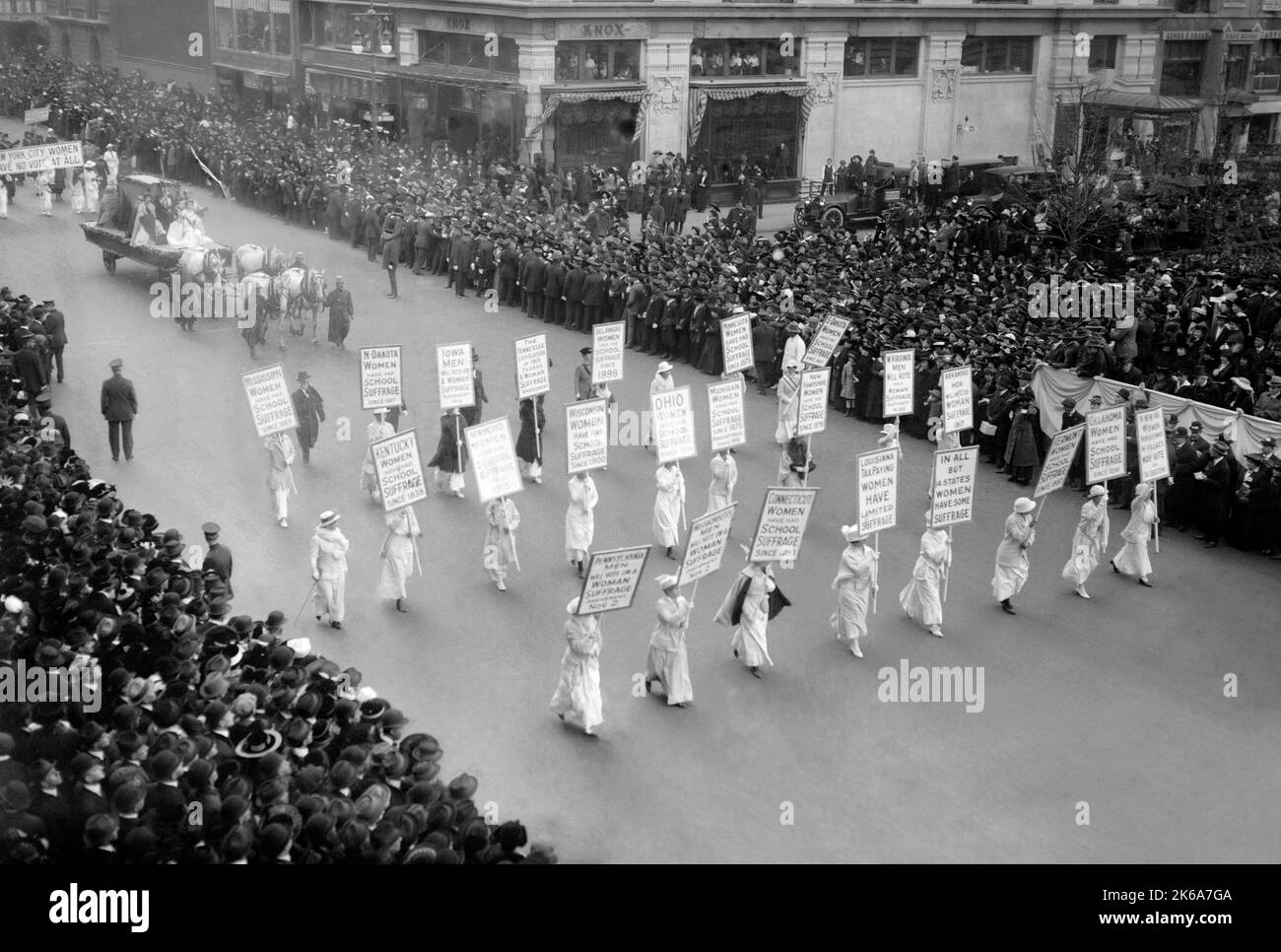
As the dawn broke over New York City on October 23, 1915, the streets thrummed with anticipation. A veritable tide of suffragists prepared to converge, marching not merely for the right to vote but to redefine the very fabric of society. With an expected turnout of 45,000 supporters, this suffrage parade promised to be a momentous event, echoing beyond the concrete canyons of Manhattan into the annals of history. The symbolism of such a demonstration is immense, and within its bounds lie the seeds of feminist discourse—an intricate tapestry woven with threads of resilience, ideology, and the fight for equality.
What does it mean for 45,000 individuals to march in solidarity? This gathering was not just a show of force; it was a clarion call for justice, a revelatory moment in a long struggle against patriarchy. Women—predominantly middle-class and white in visible representation—were uniting their voices to challenge a status quo steeped in centuries of oppression. Yet, this march was as much a reflection of privilege as it was an act of defiance. The fight for women’s suffrage was inextricably linked to broader movements of class, race, and socioeconomic disparities. The parade, while rooted in the noble goal of enfranchisement, was laden with complexities that require deeper exploration.
Understanding the context of the 1915 suffrage parade necessitates a gaze into the philosophies underpinning feminism at the time—an era marked by vibrant debates over the nature of femininity, activism, and societal roles. This was a turbulent age, wherein women began to carve paths from the confines of domestic life into the public arena, asserting their voices in an environment often hostile to such proclamations. The suffrage movement, emerging as a formidable force, promised not merely to secure the right to vote for women but envisaged a broader reconfiguration of societal norms and expectations. However, it also simplified complex issues of gender inequality into a singular narrative that favored a selective group of women, often sidelining the diverse experiences and voices of women from marginalized communities.
A perfunctory examination of the parade reveals its superficial significance as a tactical maneuver in the larger suffrage movement. However, there lies a deeper ideological contention beneath the surface, which warrants rigorous scrutiny. Despite the parade’s objective of championing voting rights, it was orchestrated within the precincts of respectability politics—a framework that sustained white middle-class ideals of femininity and morality. These dynamics merit reflection as they pose critical questions: Who gets to partake in the advocacy for rights? Whose voices are prioritized, and at what cost?
Another layer to this discourse involves the strategic mobilization of media and spectacle during the parade. The suffrage movement adeptly utilized the symbolism of the parade itself—shiny banners, meticulously arranged floats, and the visible unity of thousands—as a potent tool for garnering public attention. This spectacle of solidarity served dual purposes: it galvanized supporters within the ranks, feeding the fervor of activism, and it appealed to a media landscape eager for sensational stories that could be sensationalized and disseminated. Yet, as the cameras captured picturesque images of women marching in their finest garments, the profundity of the struggle for intersectional feminism often lingered on the periphery. The narrative crafted through these spectacles could be reduced to one that emphasized respectability, obscuring the raw, disparate realities of women who faced systemic barriers far beyond the right to vote.
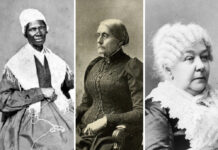
As we delve deeper into the implications of this monumental day, we must interrogate the ideological tenets that defined the movement’s approach. The push for women’s suffrage was emblematic of a broader demand for respect and agency, yet it perpetuated a certain narrowness, focusing predominantly on formal legal rights without necessarily addressing the socio-political milieu that marginalized diverse identities. The historical accounts of this day often bypass the voices of women of color, working-class women, and LGBTQ+ individuals, who contended with the compounded difficulties of their realities. Sustaining a monolithic narrative around women’s suffrage risks erasing these essential contributions, and thus it is incumbent upon contemporary feminists to unearth these orbits of struggle and celebrate the multiplicities of voices rallying for justice.
Furthermore, the implications of the 1915 NYC Suffrage Parade ripple into modern feminist discourse. Fast forward to the contemporary era, and the essence of intersectionality, as posited by figures like Kimberlé Crenshaw, beckons urgent attention. Intersectionality shifts the lens, urging advocates to embrace a pluralistic understanding of oppression that recognizes the matrix of identities each individual embodies. The challenges that face women today—even over a century later—are not dissimilar to those experienced by their predecessors; class barriers, racial inequities, gender-based discrimination, and sexual harassment persist and morph in new, often insidious ways.
If we are to honor the legacy of those who marched in the New York City suffrage parade, our feminist pursuits must resist the reductive narratives that confine the movement to a singular storyline. The foundations laid in 1915 should compel a reexamination of privilege, race, and class within the continuing fight for rights. Feminism’s journey is not linear, but rather a fierce contestation of ideas, points of view, and lived experiences. This must inform the frameworks and methodologies employed by contemporary feminists as they navigate the complexities of feminist advocacy in the 21st century.
In conclusion, the significance of the 45,000 supporters gathered at the 1915 suffrage parade extends far beyond their numbers or public demonstrations. It encapsulates a powerful yet fragmented story of struggle, resilience, and burgeoning agency. The event stands as a catalyst for an ongoing conversation about feminism’s role in advocating for an equitable society. As feminists march forward, one must wield the lessons learned from history as both a shield and sword—combatting exclusionary practices while championing a more inclusive vision of equality. Ultimately, the aspirations ignited in that pivotal moment in 1915 should inspire a relentless quest for justice that acknowledges and uplifts every voice in the collective human experience.