

















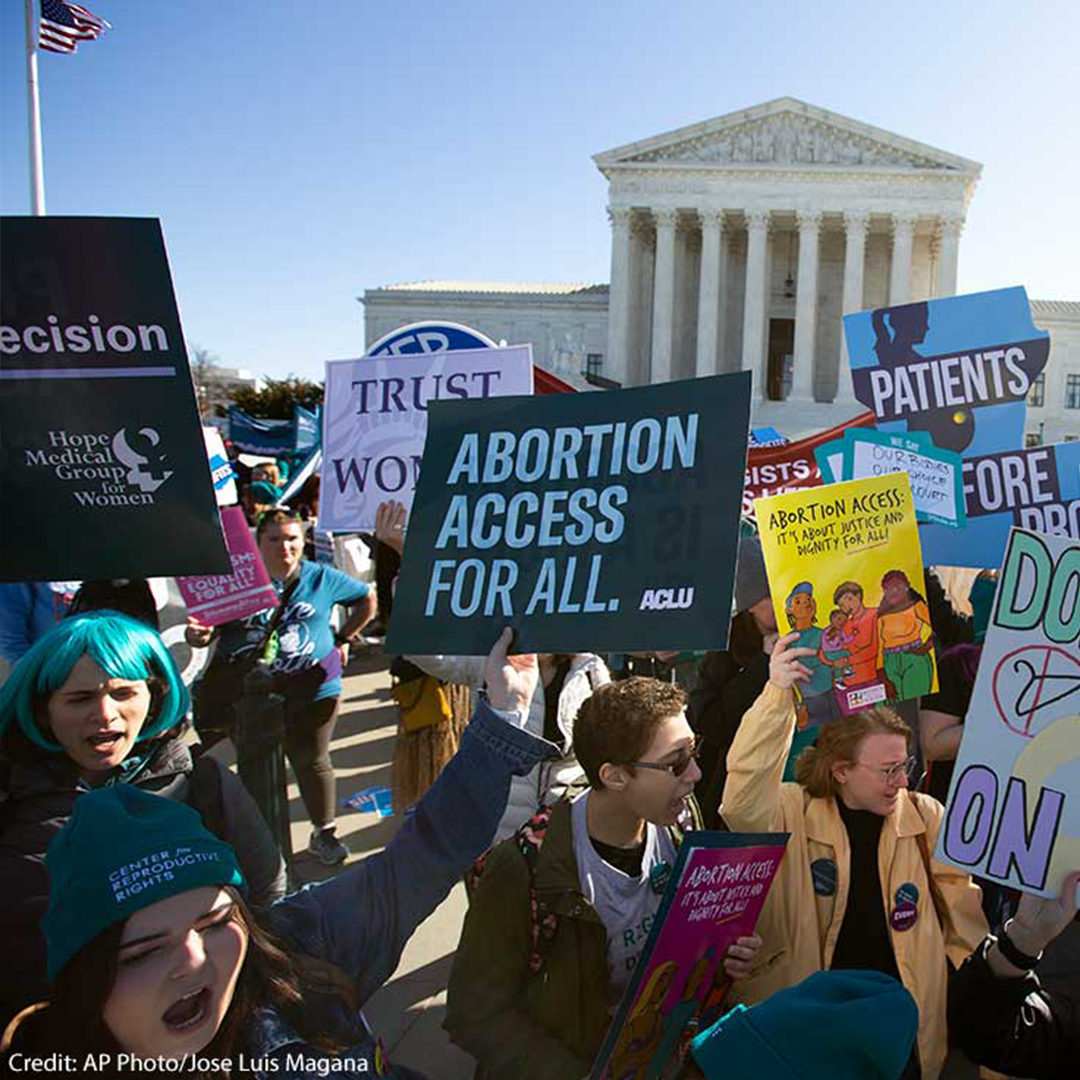
The intersection of faith and healthcare has been a contentious battleground for years, with religious hospitals often standing at the center of the debate. The ACLU’s recent push to compel these institutions to provide reproductive healthcare services is a clarion call within the feminist movement, a challenge to the antiquated ideologies that dictate bodily autonomy within sacred spaces. What does this mean for the broader discourse on women’s rights? Let’s unravel this multifaceted issue.
The ACLU is calling for a paradigm shift, urging religious hospitals to uphold the tenets of comprehensive healthcare, which should unequivocally include access to reproductive services. Women, regardless of their faith, deserve the full spectrum of medical care—a sentiment that resonates deeply with feminist philosophy. At its core, this is not merely an administrative issue; it is a moral imperative that scrutinizes the convergence of religious doctrines and essential health services. Feminism advocates for agency and choice, traits that are often undermined when religious institutions dictate the terms of reproductive healthcare.
To understand the ACLU’s position, one must delve into the complexities surrounding religious exemptions in healthcare settings, where being guided by faith often compromises the wellbeing of individuals. It’s important to recall that the crux of healthcare is not about imposing religious beliefs but about offering equitable treatment that respects a woman’s autonomy and decisions concerning her body.
The feminization of healthcare highlights the need for women’s voices to permeate discussions traditionally dominated by men—especially in religious contexts. The ACLU is asserting that the intersectionality of faith and repro-health is fraught with dilemmas that can and should be addressed. This advocacy isn’t merely a legal argument; it’s a feminist rallying cry against the systemic oppression that manifests when personal beliefs are allowed to dictate public healthcare policy.
The implications of the ACLU’s initiative are profoundly significant, paving the way for broader interpretations of what it means to provide care in a religiously-affiliated setting.
The Challenge of Faith-Based Health Interventions
In a landscape where faith-based directives can lead to healthcare disparities, the ACLU emphasizes the intrinsic right to comprehensive healthcare. Religious hospitals frequently operate under moral codes that eschew certain reproductive healthcare measures, such as contraceptive access, abortion services, and even preventative care that could avert unwanted pregnancies. This practice is not merely an administrative oversight but a reflection of an overarching ideology that prioritizes doctrinal adherence over patient care.
Feminism abhors the notion of a person’s right to choose being sidelined in the name of divine edicts. The doctrine of informed consent becomes meaningless when a woman is systematically denied access to all available reproductive healthcare options. Moreover, these barriers disproportionately affect marginalized communities who may over-rely on such facilities while facing chronic underfunding in areas offering comprehensive care. The ACLU’s contention is incredibly timely, as we are witnessing a resurgence of fundamentalist thinking that poses a direct threat to gender equality.
This is not merely a legislative tussle; it is a fierce ideological battle. The ACLU’s call to action demands an urgent examination of how religious beliefs can be reconciled—or not—with critical medical services. Are we to valorize religious freedoms at the expense of half the population’s autonomy? The answer must be an emphatic ‘no’ if we have any hope of bolstering women’s health rights within our society.
Exploring Boundaries: Autonomy vs. Doctrine
In the clutches of dogma, the fundamental question looms: Whose rights are paramount? The ACLU’s argument posits a conflict between religious liberty and women’s reproductive rights—a duality that has been hotly debated in courts and community forums alike. Feminists advocate for bodily autonomy, which calls for an unequivocal rejection of any ideology that places religious principles above an individual’s healthcare needs.
This ideological struggle is magnified in an era where the political lens scrutinizes not solely acts of legislation but the values stemming from those decisions. The question that must be asked is whether it is acceptable for an institution to impose its moral framework upon individuals who may not share those beliefs. Feminism argues that the sanctity of informed choices cannot be infringed upon, especially when those choices pertain to one’s health and wellbeing.
Deniers of comprehensive reproductive healthcare often argue that their religious ethos necessitates adherence to certain conservative values. Yet, that perspective fails to recognize that many patients enter healthcare facilities with diverse religious backgrounds and no allegiance to the specific dogmas espoused by their service providers. The ACLU is spotlighting this ethical inconsistency, insisting that healthcare must transcend dogmatic confines to genuinely serve the community.
Empowering Patients: The Necessity of Ethical Reproductive Services
The fight for reproductive rights is ultimately a quest for empowerment. When a woman is stripped of agency, her health—and indeed her very existence—hangs in the balance. The ACLU’s advocacy is bolstering the idea that patients deserve ethical reproductive services within every hospital, religious or not. The refusal of care on the basis of religious beliefs undermines not only women’s autonomy but society’s foundational ethics on healthcare as a human right.
The feminist viewpoint radically champions the dismantling of systemic barriers that conspire against women accessing essential healthcare—especially in regions where religious-affiliated institutions dominate medical landscapes. A call to arms is necessary, as a singular voice attempting to penetrate the fortified walls of religious resolve can be easily dismissed. The ACLU’s focused challenge can be seen as an opportunity to harness collective feminist energy to fight against a narrative that privileges doctrine over patient welfare.
This demand for reproductive healthcare services within religious institutions should not merely be seen as a legalistic endeavor but a significant push towards an ethical reevaluation of how healthcare is perceived and delivered. Each woman’s right to healthcare is intertwined with compassion and respect, values that must triumph over pious decrees that deny basic medical services.
Conclusion: A Transformative Movement for Reproductive Justice
The ACLU’s critical initiative reaffirms that reproductive healthcare is not merely a fringe issue—it is a matter of social justice and human rights. Feminists must rally behind this statement, urging for a future where healthcare decisions reign supreme over religious imperatives. The assault on reproductive rights cannot be treated as a standalone issue; it is a reflection of a broader societal struggle that encompasses gender equality, equity in healthcare, and the right of all individuals to exercise autonomy over their bodies.
Thus, the call to compel religious hospitals to provide reproductive health services becomes more than just a legal challenge or a matter of policy—it emerges as an essential aspect of the feminist fight for justice and equality. A concerted effort must be made to enact such changes, catalyzing a movement that prioritizes the well-being of individuals above the constraints of dogma. The time for action is now, and the ACLU’s call is not merely a plea; it is a rallying cry for all who yearn for a society where choice and autonomy prevail. Women’s health is not inferior to religious belief—it is part of the sacred tapestry of human experience that demands unapologetic protection.