

















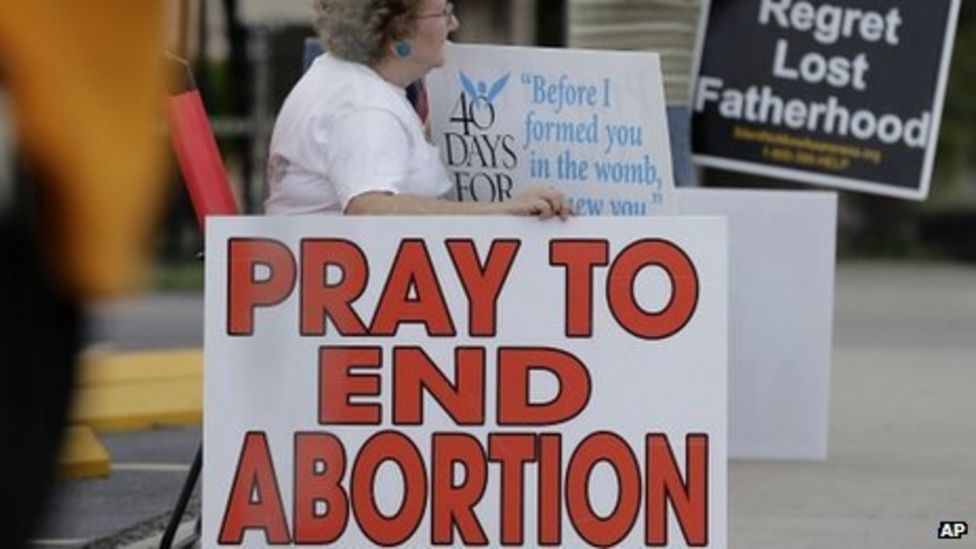
In recent rulings, the American judicial apparatus has delivered a staggering blow to reproductive rights by upholding a Texas law that effectively eliminates a significant number of abortion clinics across the state. This decision reverberates far beyond the borders of Texas; it sends a resounding message about how women’s autonomy is still viewed in a patriarchal society. The implications of this law extend into the heart of feminism, inciting urgency for an evolved dialogue around women’s rights and bodily autonomy.
To place this discussion in context, one must first unpack the historical entanglement of women’s rights with the larger feminist movement. The continued assault on reproductive rights harks back to a debilitating reality: legislative bodies predominantly governed by men dictate the choices of women. This also reflects the entrenched societal dichotomy of control over women’s bodies—an aged, archaic perspective juxtaposed against the evolving ethos of individual autonomy.
When an appeals court lends its authority to a law that restricts access to abortion, it is not merely a legal decision; it is an endorsement of a broader ideology that seeks to confine women within the borders of motherhood. The feminist movement, longstanding in its fight for equality, has been framed by this ongoing duel. It is a fight not merely for the right to choose but for the very notion that women can define their destinies. So, what happens when the law thrusts its iron fist down upon this fundamental choice?
Every time access to abortion is curtailed, we witness a tangible regression in women’s rights. The Texas law does not culminate in a vacuum; it engenders a cascading effect that extends beyond the state lines. The lives of women—especially those from marginalized communities—are strangled by such draconian measures. With the closure of clinics, access to safe and legal abortions dwindles, engendering not only physical peril but also deep emotional and psychological repercussions.
Let us examine the intersections of race, class, and gender within this legislative reality. Women of color and lower-income women will bear the brunt of these restrictions, as they are often less able to travel long distances to obtain necessary healthcare. The economic burden and physical trauma associated with unwanted pregnancies disproportionately impact these groups. To overlook this reality is to neglect the multifaceted struggles that women face. Fighting for reproductive rights is intrinsically tied to dismantling the systemic structures that perpetuate inequality.
The implications of the Texas law provide fertile ground for a broader feminist discourse—one that compels us to ask: what kind of future do we envision for women? Can we sustain a society that legislates our bodies while claiming to champion freedom? The answers necessitate an evolution in feminist ideology.
We must interrogate the narrative perpetuated by anti-abortion advocates who frame their mission in the language of “life” while simultaneously disregarding the lives of women who are confronted with the complexities and sometimes dire consequences of unwanted pregnancies. It is a thinly veiled approach that cloaks itself in moral righteousness yet leaves a wake of emotional, physical, and societal destruction. Feminism argues vehemently against such hypocrisy.
Feminists must not only take a stand but must turn awareness into action. The implications of a law that allows for the shuttering of abortion clinics cannot be underestimated. It is a direct affront to the tenets of feminism: autonomy, equality, and justice. It imperils the very notion that women are the primary authorities over their bodies, lives, and futures. This legislative overreach calls for a sharpening of our collective feminist ethos—advocacy must morph into activism, into a clarion call for change.
In a world increasingly characterized by its divisive nature, it is imperative for feminist movements to unite across state lines. The struggle for reproductive rights must assimilate into a larger tapestry for social justice. Imagine a coalition—a synthesis of different feminist theories—converging to combat laws that seek to constrain, rather than liberate. It’s time for a direct confrontation with systems that perpetuate gender-based inequities.
A focal point of this activism should underscore not only the legal implications of such rulings but the moral imperatives behind advocating for women’s health and freedom. This conversation opens the door to bridge the gaps between feminism and healthcare rights, entwining them in a way that advocates for comprehensive care rather than reactive measures.
We must spotlight those voices that are often silenced; the voices of women who suffer not just from the limitations placed upon them by the state but from the consequences that stem from being denied the choice of abortion. Their narratives are invaluable. Women’s lived experiences can no longer be relegated to the periphery; they must penetrate the center of the conversation around reproductive rights.
Moreover, as we galvanize support for reproductive rights, we must also be cognizant of how societal narratives shape public opinion. Media portrayal, community dialogues, and political rhetoric all play critical roles in shaping perceptions. A feminist response requires actively challenging these narratives, heralding the complexities of motherhood, family planning, and bodily autonomy as core facets of feminism today—all whilst dismantling harmful stereotypes and false dichotomies.
The time has come for a renewed feminist movement that understands the stakes. It is a fight that can no longer be viewed solely through the lens of legal battles; it must encompass activism, education, and relentless advocacy for an entire generation of women and girls. The future of reproductive healthcare should not be confined to the whims of legislative bodies. Instead, it should be a reflection of consent, choice, and, above all, empowerment.
In conclusion, the upholding of Texas’ restrictive abortion law serves as a stark reminder that the struggle for women’s autonomy is far from over. Feminism has always been about dismantling systems that seek to control and oppress—it is not merely a feminist issue but a human rights issue. As advocates, as activists, as individuals, we must rally against these injustices with passion, solidarity, and an unwavering commitment to ensuring that every woman has the right to determine her own destiny. The work is not easy, but the necessity for action has never been more urgent. In the echo of resistance, the future awaits—a future built on the unyielding foundations of equality, justice, and choice.