

















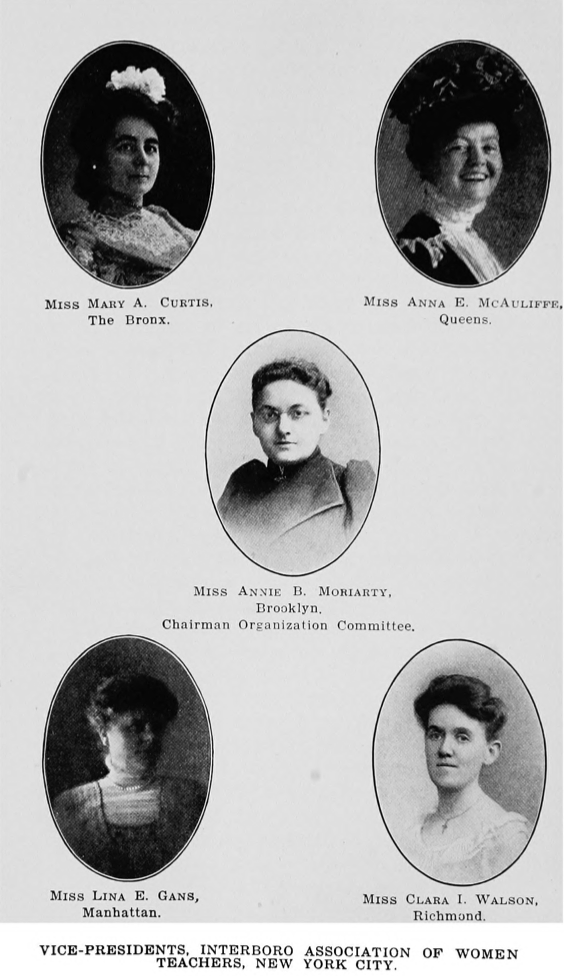
April 29, 1905, was not just another day in New York City; it was a day simmering with the fervent spirit of women teachers who boldly converged en masse to demand equal pay and professional respect. This rally represented not merely a cry for monetary parity but also a clarion call for dignity in a profession frequently relegated to the shadows. In an era when women’s voices were often stifled, these indomitable educators made their collective stand, propelling the discourse on feministic values into the public arena. Let’s unpack this pivotal moment in history, situating it within the broader framework of the feminist movement and its resonating impacts on today’s youth.
To grasp the significance of the 1905 rally, one must contextualize the socioeconomic conditions of the time. The late 19th and early 20th centuries were rife with industrial upheaval and gendered segregation in the workforce. Education was perceived as a woman’s domain, yet this perception hardly translated into respect, recognition, or recompense. Women, predominantly hired as educators, found themselves on the receiving end of a double-edged sword: they held pivotal societal roles while being grossly undercompensated. This paradox would ignite the passions of countless female educators who wouldn’t be silenced any longer.
As they gathered, their chants echoed a broader narrative in the struggle for women’s rights, intertwining educational reforms with the suffrage movement. The interconnection amongst these campaigns highlights a critical understanding: the battle for equality doesn’t exist in silos. Teachers demanded financial justice while simultaneously advocating for broader societal changes. This rally of 1905 was a microcosm of a larger feminist awakening. The time had come for women to assert their rights beyond the household.
The social fabric of early 20th-century America was woven with threads of intransigent misogyny. Women were often relegated to subservient roles, and those engaged in professions like teaching were often seen merely as placeholders rather than pioneers. The call for equal pay was not simply about achieving the same salary as male counterparts; it represented a quest for recognition and validation in a world that systematically undermined their contributions. The teachers at the rally were armed with statistical evidence and personal testimonies showcasing shocking wage disparities. They presented an incontrovertible argument that it’s not just about money; it’s about the values we assign to labor predominantly performed by women.
In harnessing their collective power, these educators found a platform where they could channel their frustrations into a cohesive movement. They didn’t merely want parity; they demanded respect as professional educators. Their fight illuminated the broader implications of gender inequality in all walks of life. Today’s youth, often so invested in issues of social justice, can draw an essential parallel: the struggles for equal pay and respect in education are not confined to the past. They are experiences echoed in contemporary discourses that still plague young women—especially those pursuing careers perceived as ‘women’s work’.
But what does this mean in an age where individualism reigns supreme? The answers lie in the legacy these trailblazers left for us. Just as those teachers marshaled their courage, young activists today are encouraged to seize opportunities to amplify their voices. The sentiment of #MeToo and the influence of Gen Z activism echo the sentiments of the early 20th-century women teachers. The narrative shifts not only from ‘me’ to ‘we’ but evolves into a collective understanding—every struggle intertwines, every voice matters.
The discourse surrounding equal pay is now louder, more vibrant, and undeniably global. Today, we witness the amplification of feminist voices on platforms such as social media, a tool that allows for both localized and international solidarity. The rallying cry for equal pay and professional recognition is no longer confined to the four walls of a schoolhouse; it reverberates across social platforms and cities worldwide. The 1905 New York City teachers acted with forethought, understanding that their battle was a rallying point—not solely for them, but for women to follow.
To comprehend the full impact of the NYC teachers’ rally, we must also analyze the evolution of labor movements in tandem with feminist thought. The working conditions educators faced were emblematic of broader labor rights issues, highlighting the importance of intersectionality—a concept that resonates profoundly within today’s discussions. Teachers clamoring for fair wages were standing at a foothold that would later become a deluge, setting the stage for future labor rights advancements and gender equality movements. Today’s youth must appreciate that these progression points didn’t happen overnight; they were birthed from relentless advocacy and transformative social upheaval.
We learn from the past so as not to repeat it, yet we often find ourselves staring at the same injustices. So, what are the lessons we can extrapolate from this moment in history? For many teachers today, educational settings are still fraught with inequities, and despite the progress made, women continue to earn less than men in most sectors, including education. This is where solidarity becomes crucial. Seeking out allies across gender lines can have a profound effect, just as it did in 1905 when women teachers rallied their male counterparts, buoying the movement through unity.
Understanding this collective struggle encourages today’s young women to leave behind an important legacy of activism while also providing an expansive lens through which to see their own potential impact. The question becomes not whether we owe it to ourselves to rally, but how? These educators faced threats of dismissal, public scorn, and societal rejection. Today, young activists can harness the power of community and technology to advocate against systems that perpetuate inequality. Be it online petitions or grassroots campaigns, the tools of advocacy are ever-evolving.
Ultimately, April 29, 1905, calls for reflection as much as it does for action. It serves as a historical beacon guiding the youth of today, urging them to explore the continued implications and challenges surrounding women’s struggles within educational and professional sectors. The Friday rally, with its earnest appeals and powerful demands, was not just a moment in time; it was a harbinger of change, a testament to the resilience of women who inspired generations to come.
Let the legacies of those audacious teachers echo through the ages. The paths they forged alongside their quest for equal pay mirrors a broader human endeavor: the relentless pursuit of dignity and respect for every individual, irrespective of gender. Today, as we stand at the intersection of progress and continuity, let us remember their fight and continue to champion the cause. Stand up, speak out, and rally for a future where every teacher—past, present, and future—receives not just equal pay but also the professional respect they undeniably deserve.