

















The recent move by the Arkansas Governor to enact a draconian anti-abortion law sends shockwaves through the feminist movement and raises critical questions about women’s autonomy, bodily integrity, and the very fabric of feminist ideals. This regressive action not only impacts the lives of those in Arkansas but poses a chilling precedent for states across the nation. In this article, we delve into the implications of this perilous legislation from a feminist perspective, exploring the overarching themes of empowerment, rights, and the systemic control over women’s bodies.
The Arkansas law, which bans abortions except when the mother’s life is at risk, starkly illustrates the encroachment on women’s rights, reducing them to mere vessels for reproduction. This viewpoint is not just a philosophical debate; it’s a matter of socio-political urgency. The specter of such extreme measures highlights an insidious effort to undermine women’s agency over their reproductive health — an issue that resonates painfully in a society that still grapples with gender inequality.
Across the landscape of feminist discourse, the notion of bodily autonomy is sacrosanct. It forms the basis for many struggles: from the suffragists fighting for the right to vote, to contemporary movements advocating for reproductive rights. By signing this law, the Arkansas Governor is unequivocally asserting that women’s bodies are subject to legislative scrutiny, eroding the very essence of autonomy that has been fought for over decades. The implications are staggering.
Legislating Women’s Bodies: A Regression to Patriarchal Norms
This anti-abortion legislation marks a regression to outdated and patriarchal norms that prioritize control over women’s bodies above personal freedom and health. In a society that prides itself on progressivism, such an extreme stance starkly contrasts with the ideals of equality and freedom that feminism advocates. It is emblematic of a wider systemic issue where men in power impose their ideologies on women. By restricting access to abortion services, lawmakers are effectively curtailing women’s ability to make decisions about their own health and future.
The paternalistic undertones are palpable: the assumption that women cannot make informed choices without the interference of a legislative body is both insulting and dangerous. This legislative control mirrors historical attempts to regulate women’s reproductive rights, recalling eras when women’s autonomy was non-existent. The echoes of the past remind us that the fight for reproductive freedom is perennial and deeply tied to the fight for gender equality.
Furthermore, this law disproportionately affects marginalized women, particularly those in lower socio-economic strata. These women often lack access to adequate healthcare and resources, making the ramifications of a restrictive abortion law even more devastating. Feminism calls for intersectionality, recognizing that the fight against gender oppression cannot be divorced from the realities of race, class, and accessibility. Thus, this law not only confines women’s choices but enforces systemic inequities that widen the gap of injustice.
The Health Crisis: A Dangerous Disregard for Women’s Safety
One of the most sinister aspects of this law is its blatant disregard for women’s health and safety. By forcing women to carry pregnancies to term against their will—regardless of the circumstances—it exacerbates health crises that can lead to mental and physical harm. This legislation is not just an infringement of rights; it’s an insidious threat to women’s wellbeing.
Pregnancy is inherently complex, and complications can arise at any stage. Women face a plethora of health risks, from ectopic pregnancies to severe fetal abnormalities. By outlawing abortions except for life-threatening situations, the Arkansas legislation does not consider the nuances and variances in women’s health. Feminism advocates not only for the rights but for the health and safety of women, asserting that medical decisions should be made by women in consultation with their healthcare providers—free from political intervention.
The concept of informed consent is diminished in a framework that prioritizes dogma over an individual’s health needs. This law perpetuates a culture where women are denied critical healthcare options, and is a stark violation of the Hippocratic Oath, which dictates that medical practitioners strive to do no harm. If women cannot access safe, legal abortions, they may resort to unsafe alternatives, putting their lives at risk and bankrupting them emotionally and financially. This law does not protect life; it endangers it.
Community Responses: The Feminist Mobilization
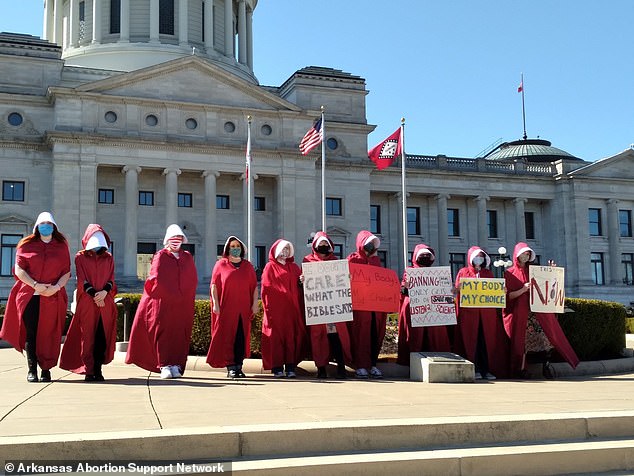
As the news of this extreme anti-abortion law reverberates through communities, it has incited a robust feminist mobilization that echoes the calls to action from previous generations. Activists and advocates rally together, illustrating the resilience within the feminist movement, an emblem of solidarity against systemic oppression. Progressive organizations have begun strategizing on how to counteract this assault on reproductive rights, utilizing social media campaigns, grassroots organizing, and legal challenges to galvanize public outrage.
Women’s voices are rising to the forefront, affirming that the fight for reproductive rights is non-negotiable. Activists are harnessing the power of storytelling, sharing personal experiences that humanize the complexities of reproductive choice. Feminism is rooted in the belief that every woman deserves access to safe healthcare, complete agency over her body, and the autonomy to make choices that align with her life circumstances. This movement underscores the fact that reproductive justice is not merely a woman’s issue; it is a societal issue that affects everyone.
Through education, awareness campaigns, and community organizing, feminists are pushing back against the tide of patriarchal legislation. Legal experts and policymakers are exploring avenues to challenge this law through litigation, thus highlighting the importance of intersectional feminism in understanding the broader implications of reproductive rights on issues of race, class, and socio-economic status. The mobilization against the Arkansas law serves as a reminder that silence is complicity; it calls to action not only those most affected but society as a whole.
Conclusion: A Call to Defiance and Empowerment
The Arkansas Governor’s enactment of this extreme anti-abortion law is not merely a state-level issue; it is emblematic of a nationwide struggle that threatens the very foundations of reproductive rights. Feminism stands firm against such regressive measures, advocating for a world where women are empowered, informed, and respected as decision-makers regarding their own bodies. This law serves as a clarion call for activists and allies to unite in resistance against systemic injustice.
Women deserve the right to navigate their reproductive choices without the shackles of oppression or the threat of legislative backsliding. The fight for reproductive rights is a fight for dignity, equality, and humanity, one that must be fought with relentless passion and unwavering resolve. We must challenge this egregious infringement, not only for those in Arkansas but for women everywhere. The future of women’s rights, autonomy, and health hangs in the balance— and we cannot afford to be silent. Stand up, speak out, and fight back. The time is now.