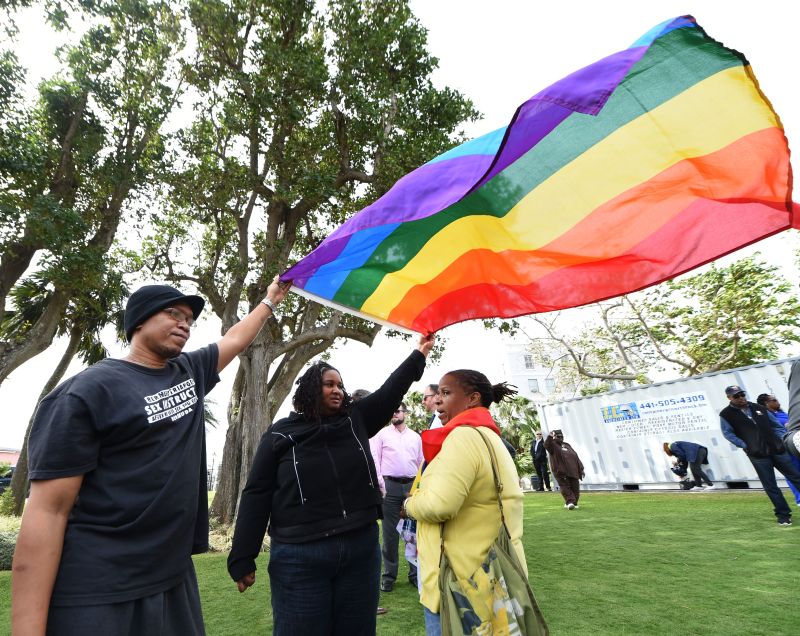
Bermuda’s Top Appeals Court has delivered a resounding verdict that echoes far beyond its shores: the same-sex marriage ban is unconstitutional. While the ruling is an emphatic affirmation of equality, it is also a clarion call for feminist activists to scrutinize the ongoing struggles for gender and sexual rights across the globe. The implications of this ruling serve as a potent reminder of the intersectionality of feminism and LGBTQ+ rights, galvanizing advocates to unite against systemic oppression in all its forms.
In various socio-political landscapes, the struggle for same-sex marriage has been viewed as a pivotal front in the fight for LGBTQ+ rights. However, this historic ruling in Bermuda should compel us to peel back the layers of patriarchal narratives that have, for far too long, sought to define the contours of love, intimacy, and partnership. The legitimization of same-sex marriage in Bermuda not only signifies a legal victory but also invites us to interrogate societal norms that have sustained structures of inequality.
The court’s decision embodies a watershed moment—one that urges feminist activists and allies to re-examine the complexities beneath the surface of gender and sexual identity. We must interrogate the consequences of legal victories and understand their broader implications within the context of intersectional feminism.
Let us explore the multifaceted dimensions of this ruling through the prism of feminism, illuminating the deeper narratives and drawing connections between social justice, equality, and love.
How Legal Frameworks Can Uphold or Undermine Equality
The ruling by Bermuda’s top court questioned the constitutional legitimacy of discriminatory practices. At its core, the decision captured a critical moment when legal frameworks embrace equality rather than perpetuate inequality. The ruling dismantles a historically entrenched legal landscape that has systematically marginalized same-sex couples.
Creating inclusive legal structures is paramount for feminism. The courts are not just arenas for legality; they shape cultural narratives. They can either bolster discriminatory attitudes or foster an ethos of acceptance and recognition. Thus, legal victories must be recognized as essential steps in achieving substantive equality.
The jurisprudential assertion of love as an unrestrictive concept—one that transcends gender—aligns with feminist advocacy for autonomy and choice. Feminist movements have long argued for the dismantling of oppressive legal frameworks that inhibit love and partnership. In opposing antiquated marriage laws, feminists emphasize that the right to marry is not merely about personal freedom; it is also about societal validation and access to critical rights and privileges that marriage confers.
Furthermore, dismantling the barriers to same-sex marriage speaks to broader feminist principles of dismantling heteronormativity and patriarchal social constructs. The burgeoning recognition of same-sex couples indicates a collective acknowledgment that love, in its myriad forms, is a human right—accessible to all, irrespective of gender or sexual orientation. It directly challenges the patriarchal values that stereotype relationships and deny individuals the agency to define their romantic and familial bonds.
The Intersection of Feminism and LGBTQ+ Rights
Feminism is intricately woven with the fabric of LGBTQ+ rights; one cannot advocate for gender equality while negating the rights of sexual minorities. The triumph in Bermuda serves as a reminder that gender and sexual identity are not discrete categories but intersections of identities that inform lived experiences. Thus, the struggles for same-sex marriage rights must be viewed as an extension of the broader feminist movement—it is about fostering a more equitable society for all.
The fight for same-sex marriage is emblematic of the struggle against systemic oppression. The stigma surrounding LGBTQ+ relationships is imbued with patriarchal prejudice that seeks to marginalize those who challenge traditional norms. By recognizing same-sex marriage as a legitimate institution, Bermuda’s top court unequivocally champions inclusivity and equality. This recognition is vital for dismantling the discriminatory narratives that have historically relegated LGBTQ+ individuals to the margins of society.
Moreover, the ruling serves as an exigent call to action for feminist activists. The battle for equality is far from over; it requires an unwavering commitment to allyship in pursuit of justice. Feminists must engage in the collective efforts to elevate the voices of those who have long been silenced by oppressive regimes. Marriage equality is merely one piece of a larger puzzle; activists must continue to advocate against discrimination, violence, and inequity faced by LGBTQ+ individuals worldwide.
Sparking Dialogues: Changing Cultural Narratives
The aftermath of this landmark ruling will undoubtedly invigorate conversations surrounding gender, sexuality, and equality within Bermuda and beyond. The decision is not merely a judicial declaration; it holds the power to shift cultural narratives and challenge deeply entrenched stereotypes. These dialogues often focus on love, acceptance, and the inherent value of diverse relationships—critical components of a truly egalitarian society.
For feminists, this is an invaluable opportunity to educate and raise awareness about the realities faced by LGBTQ+ individuals. It serves as an invitation to dismantle preconceived notions of love and partnership that have perpetuated a culture of inequality. Engaging communities in discussions around the implications of the ruling can bolster understanding, empathy, and acceptance.
Additionally, recognizing that marriage equality is but one aspect of broader societal equality prompts us to confront the multifarious dimensions of discrimination. Conversations must extend to gender-based violence, economic disparities, and public health access for LGBTQ+ individuals. It is this type of comprehensive dialogue that fosters an inclusive environment, empowering individuals to assert their rights without fear of reprisal or prejudice.
Charting a Path Forward: Sustaining Momentum in Advocacy
While this ruling is a significant milestone, it should not be viewed as the ultimate remedy for the injustices that LGBTQ+ individuals experience. Feminists and activists must stay vigilant and continue the momentum built by this victory. Advocating for equality requires consistent, sustained efforts to dismantle systemic discrimination and promote acceptance in all arenas—social, economic, and legal.
Furthermore, fostering solidarity among diverse groups enriches the feminist movement and creates a formidable coalition against injustice. By embracing intersectionality, feminists can amplify the voices of marginalized communities and work toward comprehensive societal reforms.
Ultimately, the ruling by Bermuda’s top appeals court encapsulates a critical juncture in the ongoing struggle for equality. It serves as a beacon of hope, urging feminists to unite against systemic oppression, challenge patriarchal narratives, and empower individuals to live authentically. The fight for same-sex marriage embodies not just an individual right but an affirmation of love and justice, a crucial tenet of feminism that celebrates diversity in all its glorious forms.