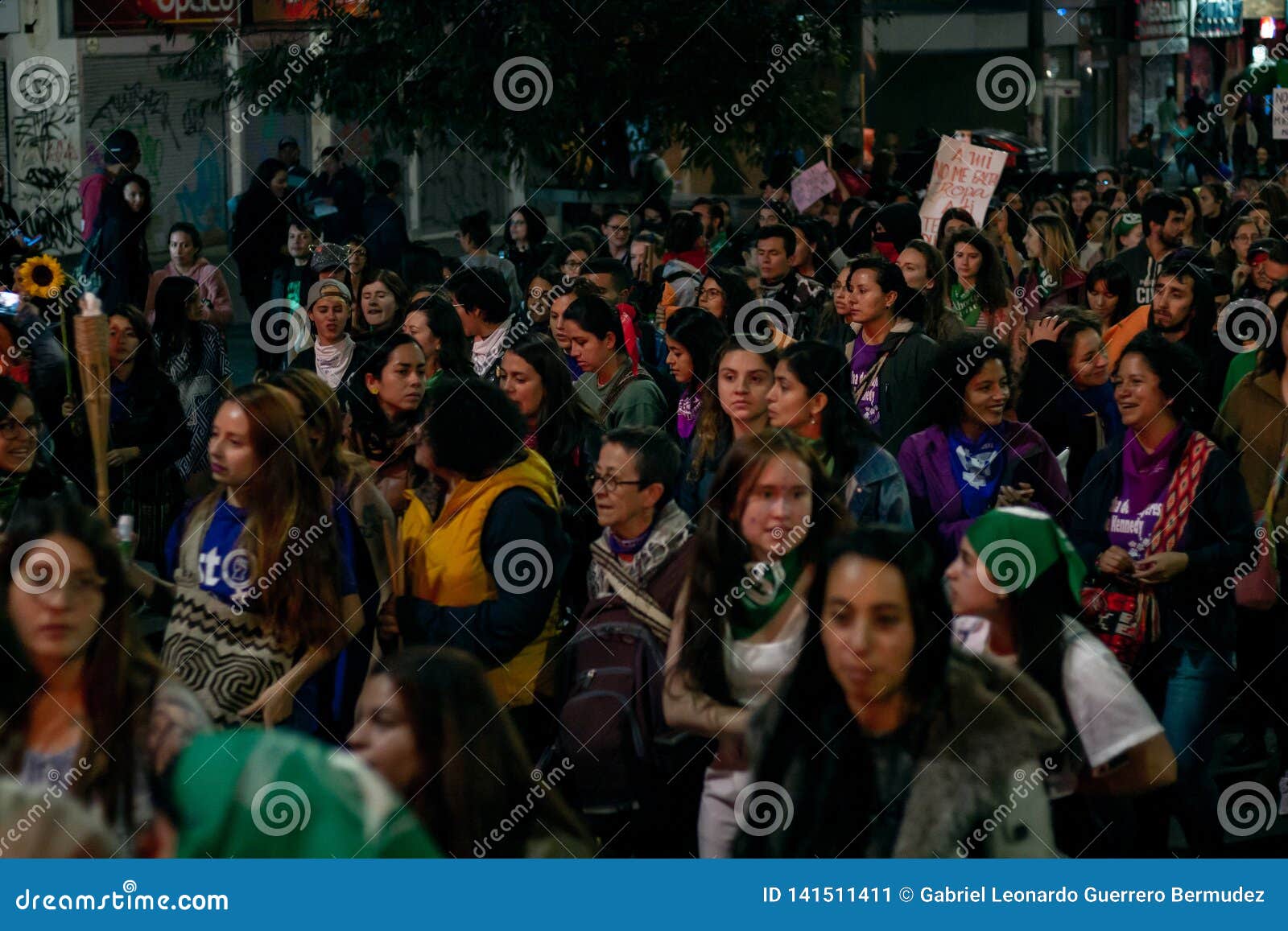
As the sun dipped below the horizon, a palpable energy surged through Bogotá. The city, bursting with an effervescent vibrancy, became a cauldron of feminist fervor as women embarked on an audacious initiative dubbed the ‘Night Without Men.’ This movement marked not just an evening devoid of male presence, but a clarion call for liberation, solidarity, and unabashed empowerment. Women danced through the streets, blazing with the resolve to challenge societal norms and reclaim their narratives in a patriarchal world.
The inception of this initiative stems from a broader context—one where women’s voices are often muted amidst the cacophony of male dominance and systemic oppression. ‘Night Without Men’ transcends the ordinary; it is, quite frankly, a radical act of defiance. This event resonates deeply with the undercurrents of feminism, igniting a profound sense of unity among women, and inviting the younger generations to engage critically with the importance of their positions in society.
The allure of ‘Night Without Men’ lies not only in its critique of traditional gender roles but also in its potential to galvanize a new generation of women who are no longer willing to adhere to societal expectations. It serves as a vivid reminder that empowerment is more than just a buzzword; it is a movement that requires active participation, deliberation, and risk-taking.
Take a moment to picture the scene. Women adorned in vibrant attire, each individual thread symbolizing a story of struggle and triumph, flocking to designated areas—parks, plazas, and community centers—creating alternative spaces where women can express themselves freely. This stunning display of solidarity echoes beyond geographical confines, challenging the patriarchy that often seeks to silence them.
What makes this initiative powerful, however, is its multi-dimensional approach. In a world marred by division, ‘Night Without Men’ manifests as a kaleidoscopic representation of intersectionality. It invites not just individuals from various walks of life but also recognizes the diverse challenges faced by women of color, LGBTQ+ women, and those from differing socioeconomic backgrounds. This inclusivity is pivotal; it cultivates a culture of understanding, respect, and collaboration that fuels feminist activism.
Yet, one must question: Does this abstention from male companionship truly effectuate change? Critics might argue that segregating by gender could inadvertently reinforce divisive ideologies. But, herein lies the brilliance of the ‘Night Without Men.’ It’s not about exclusion; it’s about reclamation. It invites women to reclaim their spaces, their joys, and their freedom without the looming shadows of male expectations. Imagine the liberation felt when women come together to converse, to create, and to celebrate without the pressures of conforming to patriarchal standards.
Moreover, this night is ingeniously designed as a critique of society’s often unnoticed gender biases. By opting out of traditional social settings that typically involve male participation—bars, clubs, and even family gatherings—women spotlight the myriad ways in which their experiences are overshadowed. This deliberate choice fosters a critical dialogue about the limitations placed upon them, urging society to re-assess notions of masculinity and femininity.
One cannot ignore the inherent irony of such an event—men are still indirectly invited to participate in a pivotal transformation. This is not merely about policing relationships; it’s a form of civil protest that begs men to reflect on the power dynamics at play. As women celebrate, men are compelled to recognize their complacency in this systematic hierarchy and to challenge their own behaviors that perpetuate these outdated norms. Engaging men in dialogues about gender equality, consent, and respect is essential for ultimately achieving gender cohesion.
As discussions around the ‘Night Without Men’ unfold, there emerges an urgent need to engage younger audiences actively. Social media platforms are ablaze with conversations, hashtags, and visuals that beckon the youth to participate in these revolutionary acts. Harnessing the power of digital connectivity, this initiative appeals to the sensibilities of young women, catalyzing their involvement in feminist discourse. The ‘Night Without Men’ effectively seeds a grassroots movement aimed at empowering women to share their stories, advocate for change, and lend their voices to the larger feminist narrative.
What will a world look like where women are genuinely liberated from centuries of constraint? How will this newfound freedom cascade down the generations? This is not merely a hypothetical discussion; it is a call to action. A society devoid of gender disparity is one grounded in respect, equality, and empathy. The ‘Night Without Men’ serves as a precedent, an inkling of what could be achieved when women unite and reject conformity. It represents a radical deviation from the status quo, urging all of society—women and men alike—to envision an inclusive tomorrow.
In hindsight, ‘Night Without Men’ could very well be a mere flash in the feminist pan. However, its significance transcends temporary gatherings and celebrations. It is an incubator for ideas, aspirations, and importantly, a symbol of resistance. The stories that are hallmark to this initiative are vital; they must be illuminated and shared perpetually. For when women’s voices rise as one, they morph from mere whispers to anthems of autonomy and strength.
Thus, as the vibrant celebrations culminate in Bogotá, the impact will resonate within hearts and minds, far beyond the city’s borders. This event propels the conversation surrounding feminism forward, challenging both women and men to introspectively examine their roles within this societal fabric. It implores the youth to take the reins of the feminist movement and instill their values of equity and justice into the cultural zeitgeist.
The quest for empowerment continues, and the ‘Night Without Men’ signifies a blazing torch—a beacon guiding women towards an audience that acknowledges their worth, their voices, and their dreams. Let’s not just observe this revolution from the sidelines; let’s immerse ourselves in this vibrant tapestry of empowerment that threads its way through the future of feminism.