

















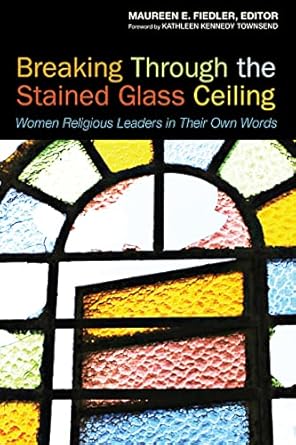
In a world where the sacred and the secular coexist, one might expect that the principles of equality, justice, and respect would take root across all domains, including religious institutions. Yet, the reality often presents a stark contradiction, as women ministers grapple with a systemic stained glass ceiling, holding fast to their search for equality and fulfillment. The battle for women’s rights within the church stands as a microcosm of the broader feminist movement, echoing the demands for egalitarianism that reverberate through society. This discourse isn’t simply about accessing a pulpit; it’s a clarion call for a radical transformation of values inherent in both modern feminism and religious environments.
As women ecclesiastical leaders continue to confront patriarchal structures, their narratives unfold layers of resilience, challenge, and hope. Such stories not only demand our attention but urge us to critically evaluate the theological frameworks that perpetuate inequality. The call to break the stained glass ceiling transcends spiritual boundaries; it ignites an urgent conversation about societal norms that have historically marginalized women. How can we foster an environment where women ministers not only exist in representation but thrive in authentic leadership? Let’s unearth the intricacies involved in this pivotal struggle.
Inheriting a Narrative of Inequality
The journey of women within spiritual domains often begins with a narrative steeped in the patriarchal lineage of religious traditions. Texts revered for their sanctity can also perpetuate messages of subservience, reinforcing the notion that male leadership is the divine template. Women ministers step into a complicated legacy, often forced to navigate these historical mazes filled with obstructions. Many confront scripts that disregard their theological prowess, urging them to conform to a dogma that prevents full agency and voice.
At its core, the stained glass ceiling symbolizes a dual struggle. On one side lies the insidious societal norms that dictate female roles, often relegating women to the ‘helpmeet’ status rather than acknowledging them as leaders. On the other, there exists an internalized misogyny, a lingering doubt sown by centuries of exclusion that challenges women’s credibility and confidence in their spiritual vocations. Therefore, it is not merely a matter of pursuing equality but upending an entire narrative that dismisses the spiritual authority of half the population.
When women ministers challenge the status quo, they wield truth as a weapon. By reclaiming the narratives surrounding their spirituality, they initiate a profound discourse that reframes the understanding of leadership within religious contexts. Such validation is not only transformative for the women involved but crucial for the congregations they serve, as it highlights a diverse array of perspectives that enrich spiritual dialogues.
The Fight for Recognition: Reshaping Leadership Paradigms
Every revolution begins with a challenge to existing paradigms. For women in ministry, reimagining leadership dynamics is critical for dismantling the stained glass ceiling. One poignant question looms: What qualities define a leader in a spiritual setting? Traditional attributes often center on authority, discipline, and patriarchal endorsement. However, women ministers recontextualize these metrics, showcasing collaboration, empathy, and transformative vision as essential traits of effective leadership.
The feminist perspective argues that true equality demands more than token representation; it requires a fundamental restructuring of how leadership is conceptualized in faith-based institutions. Churches should not merely appoint women into marginal roles while preserving male-dominated hierarchies; instead, they must confront and interrogate the structural barriers that inhibit genuine egalitarianism.
Embracing a multiplicity of voices leads to a richer understanding of faith. Women ministers challenge theological norms by injecting narratives that reflect the lived experiences of women. Their sermons, imbued with stories of struggle and triumph, offer alternative interpretations of scripture that resonate deeply with both men and women seeking solace and understanding in their faith journeys. This reshaping of leadership not only elevates women’s positions but also cultivates an environment where inclusivity and diversity flourish, inviting congregants to engage with spirituality in nuanced and textured ways.
Breaking Boundaries: The Role of Intersectionality
As we explore the stained glass ceiling’s ramifications, the urgency of embracing intersectionality becomes starkly apparent. Recognizing the interconnected nature of social categorizations such as race, class, and gender is imperative in understanding how women ministers experience their vocation. A white woman minister may have different struggles compared to a woman of color or a woman from a marginalized socio-economic background. This is an essential discussion for the feminist movement, emphasizing that the pursuit for equality must account for the diverse realities of women’s lives.
As women ministers break through the stained glass ceiling, they encounter different layers of oppression that have long gone unaddressed in theological discussions. Marginalized voices bring forth perspectives that insist upon the inclusion of race, ethnicity, and socio-economic status within spiritual dialogues. As women from various backgrounds assert their leadership and demand visibility, they also reclaim their narratives—scholarships, mentoring programs, and community initiatives provide avenues for promoting the leadership of marginalized women in religious spaces.
Furthermore, women are called to unite, advocating for one another in a movement that embraces solidarity across differences. This panfeminism transcends racial and social lines, asserting that liberation for one is liberation for all. Women’s voices—particularly in ministry—carry the power to dismantle oppressive religious structures while simultaneously uplifting marginalized communities. In essence, this collective call for justice catalyzes the transformation of both congregations and the broader society.
Theological Reimaginings: Feminist Theology as a Path Forward
A reinvention of theology may well be one of the most radical shifts demanded by women in ministry today. Feminist theology not only addresses the inequities present in traditional interpretations of sacred texts but also reconstructs them in ways that enhance female experience and spiritual fulfillment. This paradigm shift invites the faithful to interrogate long-held beliefs about divinity; it challenges monolithic interpretations that often ignore women’s contributions and experiences.
Imagining God as simultaneously masculine and feminine can yield transformative understandings that break down barriers and cultivate inclusivity. Such theological reimaginings compel congregants to see their own stories reflected in scripture, validating women’s experiences and fostering a sense of belonging. From this vantage point, female ministers become vital co-creators of a new faith tradition that embraces the full spectrum of human experience.
Yet, this journey is fraught with resistance. Theological revisionism often faces backlash from conservative factions deeply rooted in patriarchal interpretations. Women who dare to challenge these canonized traditions often find themselves in the crosshairs of hostility and disbelief. The embrace of feminist theology serves not as a means of division, but as an invitation for inclusiveness and expansiveness—one that encourages adherents to rethink their understanding of sacredness, ultimately fortifying communities through diverse spiritual expressions.
Conclusion: A Rallying Cry for Change
In the ever-evolving landscape of faith, the stained glass ceiling may present itself as an imposing barrier, yet women ministers deploy tenacity and courage to shatter its confines. Their fight for equality within religious institutions signifies a deeper desire for justice, authenticity, and transformative leadership. While the struggle is ongoing, women’s increasing visibility in ministry heralds a promise of progressive change.
As the dialogue surrounding feminism continues to weave through the fabric of religious institutions, let us remain vigilant. The stories of women in ministry remind us that the pursuit of equality stretches far beyond gender; it encompasses a kaleidoscope of experiences and identities deserving of recognition and respect. Breaking the stained glass ceiling requires a collective and enduring commitment to justice—a commitment that reverberates through the sacred and the secular. Let us join this rallying cry, amplifying the message that every woman—minister or not—has the right to ascend, lead, and inspire change beyond the stained glass confines of tradition.