

















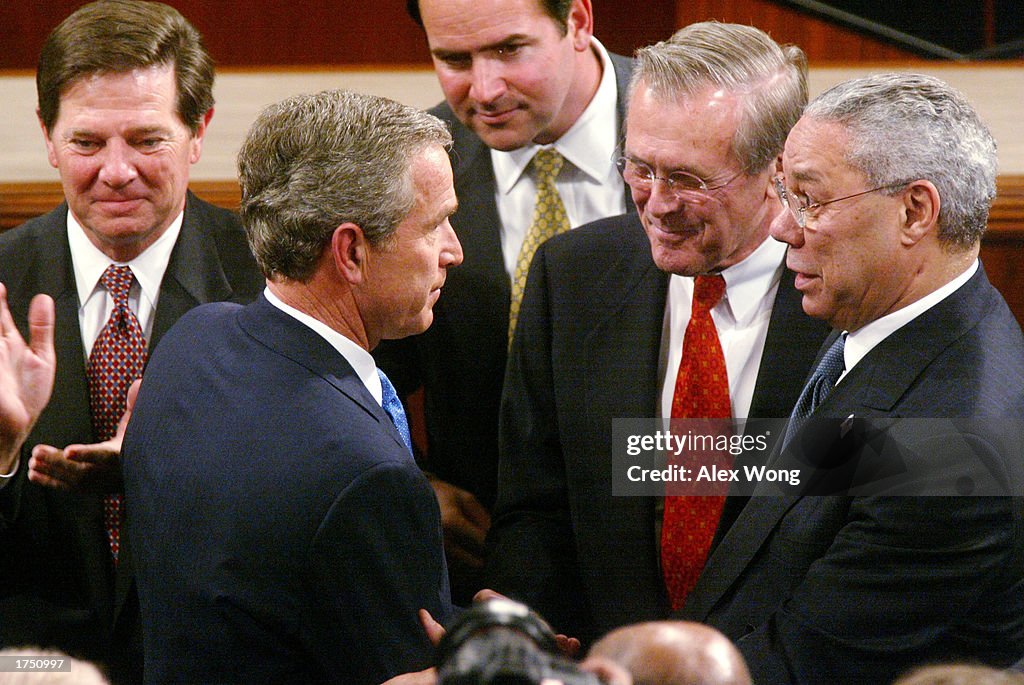
In the churning waters of political rhetoric, the words of a U.S. president can wield the power to shape policy, influence public perception, and set the stage for national discourse. George W. Bush’s State of the Union Address, delivered amidst the tumult of post-9/11 America, is a striking example of how language and ideology are interwoven. While his speeches are often scrutinized for their implications on national security, they also provoke critical examination from a feminist perspective, especially concerning the conservative agenda and war efforts that underpin his administration’s policies.
To understand the implications of Bush’s address through a feminist lens, it is paramount to dissect the layers of his rhetoric. The conservative agenda is not merely a political stance but a philosophy that seeks to uphold and, at times, reinstate traditional gender roles. Delving deeper, this article will explore themes of militarism, economic policies, and the implications for women’s rights. In doing so, we can unpack the ingrained patriarchal values that often permeate discussions of foreign policy and national security.
The Militarization of Women’s Roles: A Feminist Analysis
Foremost among the issues raised in Bush’s address is the narrative of militarization that intertwines with women’s roles in society. The insistence on empowering women in war-torn nations is a recurring theme, yet it often exists in a paradox. By portraying military intervention as a vehicle for liberating women, Bush crafts a comforting narrative that obscures the chaotic consequences of warfare.
This deliberate framing posits the military as a savior of women. Yet, the reality echoes a profound contradiction; the very conflicts initiated under the guise of liberation frequently exacerbate the struggles faced by women. The collateral damage of war is often gendered, doubling the burden placed on women, who bear the brunt of violence, displacement, and societal breakdown. In asserting a commitment to women’s rights in volatile regions, Bush simultaneously endorses continued militarization, leading to a broader question: is this liberation or exploitation?
Moreover, the militaristic rhetoric undercuts genuine feminist progress, promoting a narrative that prioritizes military solutions over diplomatic dialogues. By intertwining feminism with militarism, the president causes irreparable damage to the feminist movement, aligning it closely with a patriarchal system that thrives on war and domination. Feminism struggles to find its footing in an arena where military interventions masquerade as human rights campaigns, revealing the stark contradictions inherent in such affiliations.
Economic Policies: The Conservative Agenda’s Impact on Women
Bush’s conservative policies extended beyond military might; they also encompassed economic frameworks that persistently marginalized women. Underneath the surface of grandiloquent promises to improve safety and security lay an agenda aimed at reinforcing traditional family structures. This commitment to conservatism often translated into economic policies that failed to address the inequalities women face in the workforce.
The advocacy for tax cuts benefitting the wealthy and curtailing social programs disproportionately impacts women, particularly those from marginalized backgrounds. Economic security is inextricably linked to a woman’s autonomy and agency; yet, Bush’s administration glossed over the necessary reforms needed to bridge the gender wage gap or improve access to healthcare and child care. As a result, the feminist movement is further stymied by an economic system designed to perpetuate male dominance.
Moreover, the relentless push for family values during Bush’s presidency resonates deeply within conservative discourse, often relegating women to domestic spheres. Under the pretext of promoting family cohesion, women are encouraged to adopt roles centered around childcare and home-making, perpetuating stereotypes that limit women’s aspirations. The intertwining of economic and gender policies illustrates the significant challenge facing feminists: how to dismantle a system predicated on patriarchal values while simultaneously advocating for comprehensive women’s rights.
Women’s Rights: The Illusion of Empowerment
Each iteration of Bush’s addresses is steeped in the rhetoric of empowerment—yet, one must scrutinize whose empowerment is actually being prioritized. Although there are proclamations regarding the importance of women’s rights globally, the discourse often neglects to address the systemic injustices rooted within American borders. The women’s rights agenda becomes a convenient tool used to validate aggressive policies abroad while leaving the plight of domestic women largely unaddressed.
In the discourse of empowerment touted by Bush, one must question the authenticity of such claims. When feminist movements strive for autonomy, equality, and social justice, they confront an administration that uses women’s empowerment as justification for interventionist policies. The contradiction is glaring: are women genuinely being empowered, or are they being used as pawns in a broader geopolitical chess game?
Additionally, the disparity between the rhetoric of empowerment and the reality of women’s experiences cannot be overstated. While there is acknowledgment of issues concerning domestic violence, reproductive rights, or wage equality, the actions taken by the Bush administration often reinforced rather than dismantled oppressive structures. This hypocrisy highlights the necessity for vigilance and advocacy within feminist activism. It insists on holding leaders accountable beyond mere promises to uplift women and prioritizes actions that yield tangible improvements in women’s lives.
The Path Forward: Feminism in the Face of Conservative Ideology
As we reflect on Bush’s State of the Union Address, feminists are compelled to confront the implications of conservative policies. Engaging critically with the narratives underpinning political discourse is imperative. The empowerment of women should transcend performative gestures; it should manifest in tangible changes in policy, economic reform, and social recognition.
To navigate the complexities of this political landscape, intersectionality is vital. Feminist activism must amplify the voices of all women, particularly those who have historically been silenced. By considering race, class, and geopolitical context, feminists draw a fuller picture of what empowerment entails. The challenge lies not just in critiquing the rhetoric of leaders, but also in forging pathways for systemic change that prioritize equity above all.
In conclusion, Bush’s conservative agenda and his approach to war efforts necessitate a rigorous feminist critique. The intertwining of militarization, economic policy, and women’s rights runs the risk of undermining the very ideals of feminism. By confronting these issues head-on and advocating for comprehensive policy reforms, feminists pave the way for a more just future. Empowerment must not be an illusion shaped by the narrow confines of power; it must resonate within every woman’s lived experience, ensuring that the battle for justice continues unabated.