In recent times, the dialogue surrounding reproductive rights has intensified, spurred on by the Catholic Church’s vehement opposition to new policies mandating contraceptive coverage in the District of Columbia. This opposition is not simply a matter of religious doctrine but a broader reflection of societal attitudes towards women’s autonomy and healthcare. As feminist advocates, we must dissect the ramifications of such a stance, especially when it threatens to undermine women’s rights in a critical area of their lives—their reproductive choices.
The Catholic Church’s entrenched position against contraceptive coverage is predicated on its adherence to traditional views that prioritize procreation over personal choice. This doctrine, while rooted in centuries of cultural and religious history, fails to recognize the agency of women in modern society. The imposition of these archaic beliefs in contemporary policy must be scrutinized, particularly through the lens of feminism, which champions the idea that women should have the power to make decisions about their own bodies free from institutional interference.
Historically, the Catholic Church has wielded significant influence over societal norms regarding family planning and reproductive rights. The Church’s teaching that contraception is morally unacceptable is not merely a theological assertion; it is a reactionary stance against the burgeoning acceptance of women’s liberation. The latest developments in the D.C. policy arena epitomize a battleground where the Church’s struggle to retain control clashes with women’s pursuit of autonomy. As we dive deeper into this issue, it is crucial to investigate the implications of such policies on feminist perspectives.
Balancing Religious Freedom and Women’s Rights
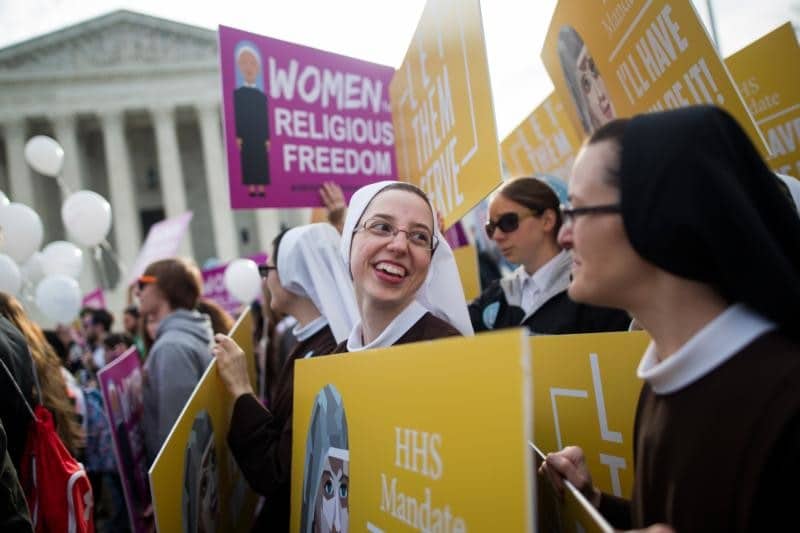
The nexus between religious freedom and women’s rights creates a complicity that is often manipulated by opponents of contraceptive coverage. At first glance, granting the Catholic Church the freedom to express its views and maintain its religious doctrines appears justifiable. However, the problem arises when these beliefs spill into public policy, effectively creating an environment where women’s health and reproductive choices are dictated by religious dogma rather than informed medical guidance.
This dynamic straddles the line between personal belief and public obligation—a portrait that feminists have long challenged. It is essential to recognize that while the Church protects its theological convictions, it inadvertently projects an oppressive framework onto society. The question looms: Should one entity’s religious beliefs dictate the well-being of an entire population? From a feminist standpoint, the overwhelming answer is a resounding no. Women’s access to comprehensive reproductive healthcare, including contraceptive coverage, is not merely a matter of choice; it is an essential facet of gender equality and autonomy.
The Birth Control Dichotomy: Autonomy vs. Control
At the heart of the debate surrounding contraceptive coverage is the stark dichotomy of autonomy versus control. The Catholic Church champions traditional family structures and natural procreation, embodying an overarching narrative that presumes to define women’s roles as primarily reproductive. This perspective is an affront to the feminist ethos, which celebrates the diversity of women’s identities beyond motherhood. When the Church champions policies that restrict contraceptive access, it systematically narrows the scope of women’s choices and potential. Feminism embraces the belief that a woman should have the ability to determine her reproductive life without being bombarded by societal pressures or institutional constraints.
Moreover, it is crucial to consider the socio-economic implications of limited contraceptive access. Studies have consistently demonstrated that when women are empowered to control their reproductive health—through contraceptive coverage—they achieve higher degrees of educational and economic success. This is not merely an abstract concept; it materializes in women being able to participate fully in society, contributing to both their families and communities. The resistance faced by mandates that promote contraceptive coverage adds an unfortunate layer to the socio-economic struggles that women already encounter. Constraining reproductive options is not only a matter of religious opposition; it is a direct attack on women’s empowerment and equitable access to healthcare.
The Inequality of Access
The consequences of the Catholic Church’s stance reach beyond the ecclesiastical walls into the very fabric of societal health and wellness. When policymakers bow to religious pressures, they perpetuate inequality in access to healthcare services. Many women rely solely on employer-sponsored healthcare plans, often influenced by the values of the institutions they work for. If these plans are devoid of contraceptive coverage because of religious ideologies, a gaping disparity is created within the healthcare system—disproportionately affecting low-income women and those from marginalized communities. Feminism advocates for a healthcare system that is inclusive and equitable, a far cry from a decision dictated by the doctrines of the Catholic Church.
Free Will and Body Autonomy
Refusing women the right to choose their contraceptive methods is an affront to bodily autonomy, a cornerstone of feminist thought. The Catholic Church’s insistence on promoting its moral vision over individual choice fundamentally undermines the principle of free will. Women are not mere vessels for procreation; they are complex beings entitled to make informed decisions about their lives and bodies. Mandating coverage for alternative contraceptive methods in lieu of blanket opposition reflects an accommodation of personal beliefs in a way that respects women’s agency—not as a favor, but as a fundamental right.
It is vital to assert that the resistance to reproductive healthcare policies by the Catholic Church is not merely about religious freedom—it is about power dynamics. Women, through their historical subjugation, have fought tooth and nail to reclaim control over their reproductive choices. To allow religious institutions to dictate policies that directly impact these choices diminishes that hard-fought progress and perpetuates the cycle of control.
A Call to Action: Embrace Feminism in the Face of Opposition
The struggle against religiously influenced policies that marginalize women’s rights is far from over. Feminists must mobilize to create a collective voice that counters the assertion of the Catholic Church in the political arena. Advocating for legislation that guarantees free access to contraceptive coverage is not just a matter of health; it is an assertion of power—a reclamation of the narrative that rightfully belongs to women themselves.
Furthermore, education campaigns must also be prioritized to illuminate the importance of contraceptive access, not just for individual women but for society at large. Engaging dialogues within communities, religious institutions included, are crucial for fostering understanding and challenging limiting beliefs. Feminists must leverage the current socio-political climate to advocate for policies that empower women and reframe the conversation surrounding reproductive rights.
In conclusion, the Catholic Church’s ongoing opposition to contraceptive coverage in the name of religious belief serves as a reminder of the persistent and insidious nature of control over women’s bodies. As society grapples with these issues, feminists must unite to challenge oppressive doctrines that seek to define women’s lives. The fight for reproductive rights remains intricately tied to the broader struggle for gender equality, and it entails our unwavering commitment to ensuring that women possess the rightful autonomy to make choices that resonate with their lives, unencumbered by the weight of outdated ideologies.