

















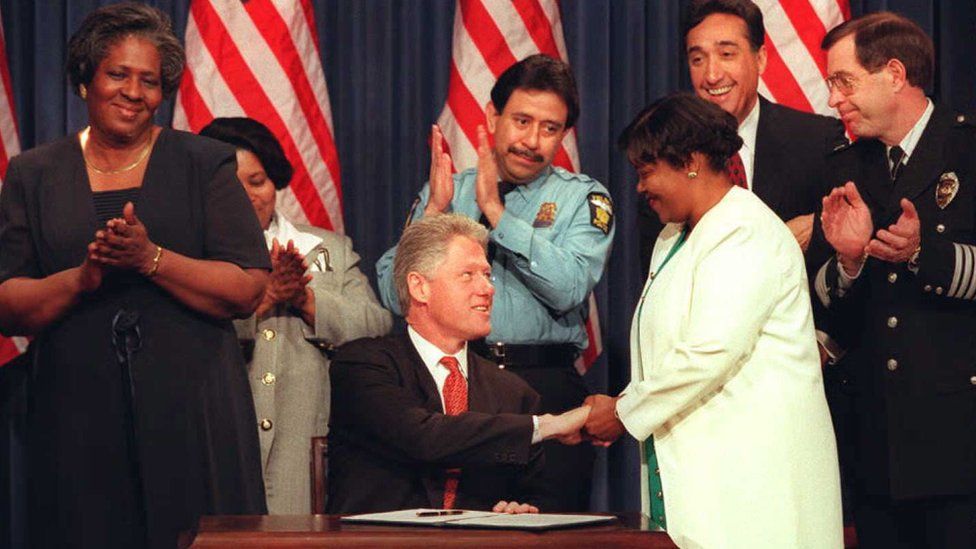
The signing of the treaty establishing the International Criminal Court (ICC) by President Bill Clinton in 1998 is often viewed through the lens of geopolitical necessity, international law, and justice for war crimes. However, the implications of this monumental moment reach deep into the fabric of feminism and the global fight for gender equality. With the rise of rampant misogyny across the globe, the ICC represents both an opportunity and a challenge for feminist activism. It complicates our understanding of justice and accountability for gender-based violence, serving as a harrowing reminder of the systemic issues that women face in conflict zones and beyond.
As the world grapples with the reverberations of Clinton’s legacy, it is essential to decode the multilayered interactions between international law, feminism, and the politics of accountability. This exploration illuminates how the creation of the ICC can either be a powerful tool for advocacy or a bureaucratic monster that does little to address the nuances of gender violence.
The Context: Understanding the Need for the ICC
At the turn of the millennium, the world was waking up to the horrors perpetrated in conflicts—from the Rwandan Genocide to the Balkan Wars. These atrocities illuminated the dire need for a global mechanism to hold individuals accountable for crimes against humanity. Yet amidst this urgent call for justice, a critical question arose: how do we ensure that the voices of marginalized groups, particularly women, are not lost in the cacophony of political maneuvering?
The ICC emerged not just as an institution designed to prosecute war criminals, but as a potential beacon of hope for those subjected to gender-based violence in wartime. Repeatedly, women’s bodies have been the battleground for power struggles, often becoming the pawns in conflict games. By institutionalizing accountability for such egregious violations, the ICC could theoretically provide a semblance of justice for survivors and lay the groundwork for a more equitable global society. But does it?
The Charge Against Impunity: Gender-Based Violence in Focus
From the outset, the ICC included gender-based violence as a war crime, recognizing the need to address sexual violence as a weapon of war explicitly. This was a historic nod to feminists who have resisted for decades the characterization of sexual violence as merely an unfortunate byproduct of conflict rather than a strategic, violent act deserving of legal scrutiny. Yet, as we delve deeper into the workings of the ICC, we must confront the stark realities of implementation and accessibility.
Women across various conflict zones—be it in Sudan, Syria, or the Democratic Republic of the Congo—continue to live in a world where their suffering is often underreported and overlooked. Victimhood remains stigmatized, and many are left feeling powerless when seeking justice. The ICC faces a monumental challenge in its judicial processes—how can it effectively prosecute cases of sexual violence when cultural stigmas, patriarchal legal systems, and inadequate protective measures deter victims from coming forward?
Advocating for women’s rights and gender justice through structures like the ICC requires more than symbolic representation. It calls for a radical rethinking of how international law interprets and implements justice. Feminist activists must push for comprehensive policies that prioritize survivors’ voices, embrace their narratives, and offer substantial support for those brave enough to step into the spotlight.
Navigating Bureaucratic Seas: The ICC’s Pitfalls
Despite its laudable goals, the ICC is often mired in bureaucratic inefficiency and political turmoil. Democratic structures and accountability mechanisms can be woefully inadequate. As a critical examination unfolds within feminist discourse, we find ourselves at a crossroads—should we invest our efforts in reforming this institution or seek alternatives that reflect a more radical and inclusive approach to justice?
By merely existing, the ICC can create a facade of justice that placates the global community without actually delivering for those who need it most. Is it enough for feminist activists to work within this flawed system when grassroots movements also demand radical change? The conundrum lies in finding a balance. Activists might see the ICC as an entry point into broader conversations about human rights, but it may also serve as a deterrent for groundbreaking feminist initiatives advocating for systemic transformation.
Moreover, the overwhelming representation of Western nations in decisions around war crimes further complicates the ICC’s legitimacy. As young feminists push for a more equitable world, it becomes crucial to assess who has the power to dictate whose crimes are worthy of trial. By challenging these hegemonic structures, modern activists can amplify voices from the Global South, reclaim narratives of accountability, and call for inclusive reforms.
Feminism, Intersectionality, and the Future of Justice
The evolution of the ICC necessitates an intersectional feminist approach that recognizes how race, class, and geography intersect with gender in shaping the experiences of violence and victimization. The feminist pursuit of justice cannot be divorced from the realities faced by women around the world, who exist at the intersection of multiple forms of marginalization.
Engaging young feminists in activism means cultivating a nuanced understanding of international law and its implications. This means not merely accepting the ICC as it stands but challenging its shortcomings while envisioning a multilateral approach to justice that respects diverse experiences.
As activism surges online, the potential for collective organizing is unparalleled. Future generations of feminists are already dismantling conventional paradigms and refusing to accept a world in which gendered violence is normalized. Through hashtags and social media, they create viral movements that hold powerful institutions accountable. This digital landscape provides an opportunity to highlight disenfranchised voices and mobilize support for those who feel powerless within existing frameworks like the ICC.
Ultimately, the signing of the treaty establishing the ICC is not simply a moment in history; it beckons us to interrogate its implications, celebrate progress, and challenge ongoing injustices. Feminism has the power to reshape this narrative, to breathe life into a judicial body that has so often failed to resonate with those it aims to protect.
Conclusion: Uniting for a Just Future
As we reflect on Clinton’s decision to initiate the ICC, the feminist lens sharpens our focus on the ongoing struggle for justice, especially regarding gender-based violence. Young activists today must recognize this historical milestone as both a potential ally and a demoralizing obstacle in their pursuit of equality. The ICC holds substantial promise, yet it bears an equally heavy responsibility.
The quest for feminist accountability transcends the boundaries of formal institutions. It implores us to question who wields the power of justice and why certain narratives are privileged over others. As young feminists rally for change, they must intertwine their strategies with advocacy for a more inclusive, equitable judicial system that truly represents the diverse experiences of women worldwide.
In doing so, the challenge is not merely to exist within the structures like the ICC but to redefine how justice is sought, how it is delivered, and how it can empower those rendered invisible by systemic oppression. The future of feminism depends on our ability to create spaces that honor all survivors and dismantle the barriers that have long sustained inequality.