

















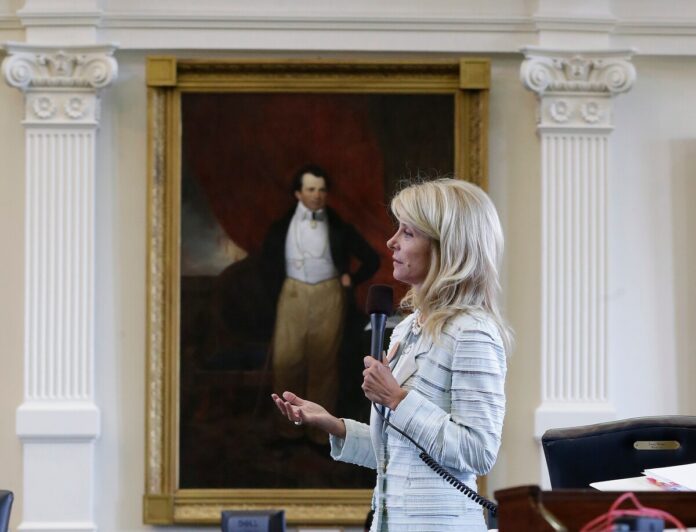
In a recent display of misogyny resurfacing in the political sphere, Wendy Davis, former Texas state senator and steadfast advocate for reproductive rights, was branded with the insidious label “Abortion Barbie” by a commentator. This derogatory epithet, laden with sexist connotations, not only endeavors to diminish the significance of her political activism but also seeks to undermine the very essence of the feminist movement aimed at liberating women’s rights. The sexualized and belittling nature of this phrase exemplifies the systemic sexism that permeates our culture and politics, resurrecting age-old stereotypes that compartmentalize women into trivial roles while stripping them of their agency and potency. This incident calls for a thorough analysis of the intersections between language and power and highlights the urgent need to mobilize against such insidious forms of sexism within public discourse.
Understanding the “Abortion Barbie” Label: A Study in Sexism
The term “Abortion Barbie” epitomizes a grotesque caricature of women who champion reproductive autonomy. It rests on the insidious assumption that women who advocate for abortion rights must be denigrated, reduced to simplistic, often hypersexualized figures. When the phrase was first flung as a weapon against Wendy Davis, it was an attempt not merely to defame her character but rather to dehumanize her—transforming a skilled politician and relentless activist into a mere object of derision.
Such labels are steeped in a historical context that finds its roots in the long-standing gendered language used to undermine women in political arenas. When a male commentator resorts to such pejorative terms, it illustrates an archaic paradigm where women were confined to the domestic sphere and their political and social aspirations deemed frivolous. Thus, to label a politician like Davis as “Abortion Barbie” is to reject her gravitas, her intelligence, and her inherent right to express opinions about reproductive health. This is not merely a personal insult; it is an assault on the legitimacy of women’s voices in political discourse.
The Reproductive Rights Conundrum: Why Terminology Matters
Language shapes perception, and terminology has immense power—especially in the context of reproductive rights. By trivializing Wendy Davis with the “Abortion Barbie” label, an implication arises: that women advocating for their rights can only be taken seriously if they adhere to certain norms that society considers appropriate. This dangerous rhetoric propagates the myth that reproductive rights are a privilege rather than a fundamental aspect of human dignity and self-determination.
Critics of Davis not only employ the label to discredit her—they wade into convoluted waters regarding women’s autonomy, often deflecting from substantive discussions about reproductive rights toward misogynistic narratives. This strategy of diverting the discourse serves to undermine genuine contention around healthcare, access, and governance while instead focusing on the personal characteristics of women who dare to speak up. Society must scrutinize the implications of such derogatory labels and recognize the broader ramifications of silencing women through derogation.
Empowerment Through Accountability: Why We Must Denounce Sexist Rhetoric
The response to the “Abortion Barbie” label must encompass more than just outrage; it must catalyze a broader reckoning with misogyny in public conversation. Activists and allies should turn this unjust labeling into a rallying cry for accountability, ensuring that such language becomes universally unacceptable. Choosing to publicly challenge sexist remarks not only holds individuals like the commentator accountable but also emboldens women who vary in their experiences yet share the same struggles. The solidarity forged through collective pushback can serve to raise awareness and encourage dialogue about the impact of language on female representation in politics.
The fight against derogatory naming conventions can also be seen as a feminist resurgence, echoing the essential demand for intersectional equity within all spheres of life. This incident transcends Wendy Davis; it calls upon every woman navigating both public and private spaces to demand dignity and respect. The fraught negotiations women make in their ascent—whether in business, politics, or activism—have left indelible scars borne of gender bias. Collective action against such misogyny serves as both a corrective measure and a clarion call for greater respect and recognition of women’s autonomy and contributions.
Unpacking the Cultural Implications: A Social Responsibility
So why does this all matter? One might argue it’s just a term; another might dismiss it as mere provocation. The insidious ramifications of language extend beyond the spoken word, shaping societal attitudes and reinforcing power dynamics that have historically marginalized women. The reaction to Wendy Davis’s incursion into the public sphere as a formidable advocate illustrates how, even in the 21st century, female empowerment is still policed by sneering derision aimed at dissuading women from taking bold public stances. This cultural backdrop compels society to reflect on its collective responsibility to engage in dialogues that dismantle sexism.
Reproductive rights should remain a cornerstone of the feminist movement—this is a truth that must be championed vigorously in both public forums and in our everyday interactions. To undermine advocates with reductive terminology is to align with a patriarchy that seeks to intercede wherever women attempt to secure their rights. Women like Wendy Davis are vital not just because of the battles they wage for abortion rights but because they symbolize broader struggles against gender inequalities and the right to exist forcefully and unapologetically in public life.
Navigating Beyond Labels: Building a Feminist Future
This episode must act as a springboard for substantive discussions about feminism and societal change. It is imperative for feminist activists and allies alike to forge alliances that prioritize collaboration over condemnation, creating spaces where women’s voices are not merely tolerated, but celebrated. The fight against verbal derision relies upon a steadfast commitment to cultivating empathy and understanding among divergent voices. By embracing the complexities of women’s experiences and listening to their stories without the interference of gendered insults, society better positions itself to dismantle entrenched biases and foster meaningful change.
To reclaim agency from derogatory labels like “Abortion Barbie” requires a unified, multifaceted approach, encompassing media literacy, strong advocacy efforts, and a reconfiguration of social perceptions surrounding reproductive rights. The journey is arduous, yet bold strides can be made towards a future wherein women are recognized for their contributions to societal progress, rather than caricatured with misogynistic overtones. Fostering a feminist culture that champions respect and amplifies women’s voices will lead to the eradication of harmful language and the realization of equity. The transformation begins with confronting sexism head-on—one disparaging remark at a time.