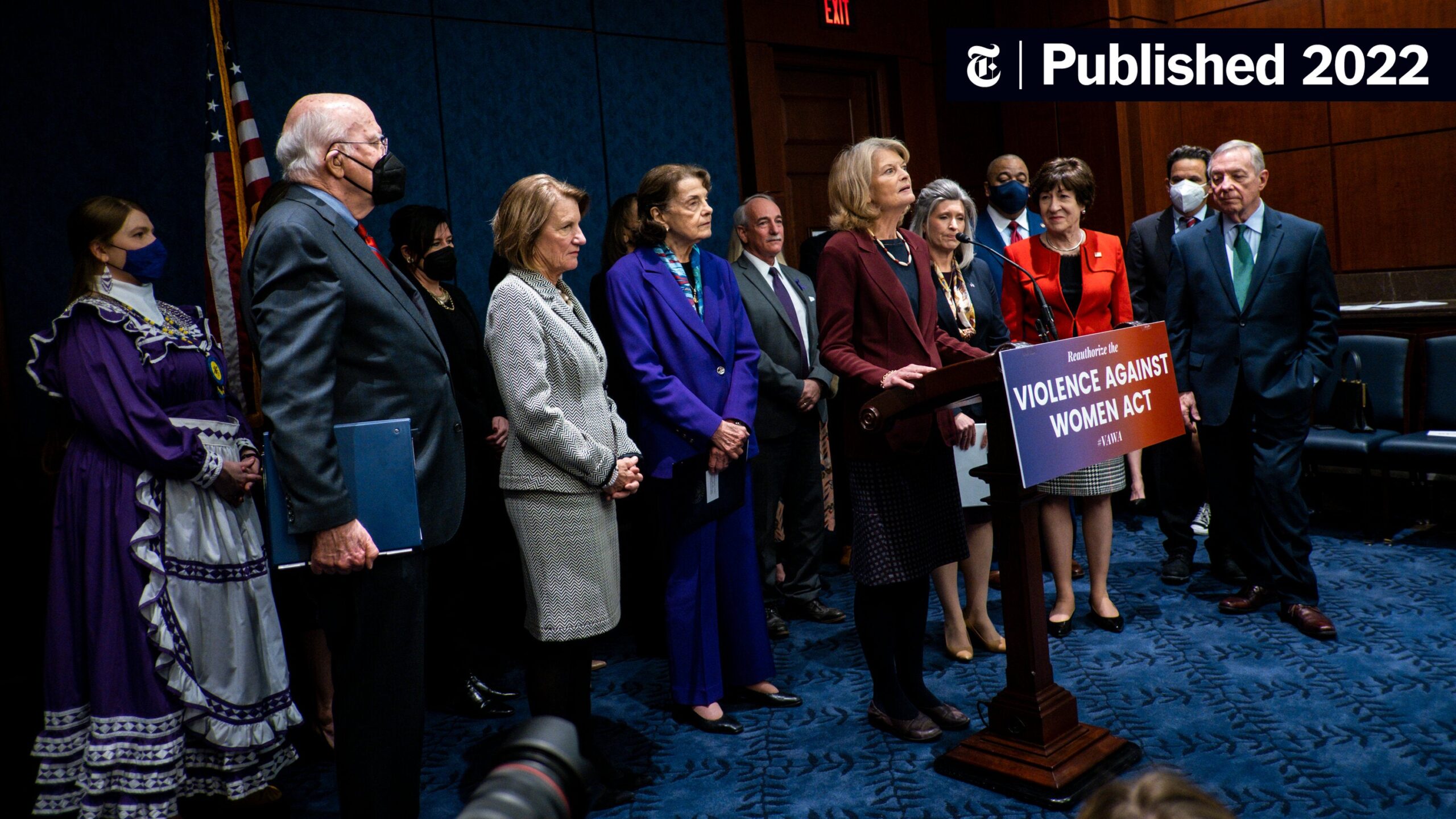
Political winds swirl around us, stoking the fire of societal transformation. As the Democrats rally to propel the Violence Against Women Act (VAWA) toward passage, a litany of questions arises. Is this merely a performative act by politicians to seize the feminist mantle? Or could this be the authentic response to an unrelenting crisis faced by women? A deeper dive reveals the intricacies of this legislation and its significance within the broader feminist movement, demonstrating both its potential benefits and limitations.
For decades, the Violence Against Women Act has served as a beacon of hope, a vital lifeline for countless women navigating an environment rife with violence and oppression. Yet, the notion of enhancing protections for women comes with its own set of complexities, invoking a spectrum of feminist ideologies. While the intentions behind VAWA are undeniably admirable, a critical lens must be applied to discern whether the measures within the act resonate with authentic feminist principles or simply cater to political expediency.
The act initially emerged as a revolutionary response to domestic violence, sexual assault, and stalking. It signified a fundamental shift in how society perceives violence against women; no longer an afterthought, it claimed center stage in public policy. However, the current iteration necessitates scrutiny. Are we, as a society, content with patchwork solutions, or should we demand a more radical reconstruction of the frameworks governing women’s rights?
The responses ignited by this reevaluation highlight a captivating intersection between feminism and policy-making, where ideals confront the realities of legislative procedure. As the Democrats assertively advance VAWA, should they merely grasp at fleeting victories to appease an understandably frustrated electorate, or can they wrestle with the deeper, systemic issues that perpetuate violence against women?
The implications of VAWA stretch far beyond the immediate protections it offers; they delve into foundational challenges deeply embedded in societal structures, such as race, class, and gender identity. Acknowledging this intersectionality is imperative if the act is to genuinely resonate with the diverse experiences of all women. The clamor for inclusivity must pervade every clause and stipulation of VAWA, ensuring it provides comprehensive support, especially to marginalized groups vulnerable to violence.
Equitable Protection: Demystifying ‘One-Size-Fits-All’ Solutions
Fundamentally, the push for a more authentic VAWA should instigate a long-overdue discourse regarding the exasperating tendency of legislative measures to adopt ‘one-size-fits-all’ solutions. Such approaches risk sidelining the complexities of individual experiences. The prevailing narrative surrounding violence against women has primarily centered on cisgender, white women, often eclipsing the stories and voices of women of color, LGBTQ+ individuals, and those from varying socioeconomic backgrounds.
This is not just a mere lapse in representation, but a profound disservice to feminism as a movement. Inclusive frameworks must not only acknowledge systemic oppressions but also actively dismantle them. Ensuring VAWA addresses the nuanced realities of all women—particularly those facing intersecting forms of discrimination—remains crucial. The pursuit of a holistic understanding of violence transcends mere statistics; it demands we explore the backgrounds, identities, and experiences uniquely shaping every survivor’s journey.
Accountability Mechanisms: The Necessary Foundation of Progress
At the heart of any meaningful legislative reform lies accountability. The efficacy of the Violence Against Women Act should not solely be measured by the funding allocated or the number of programs initiated but rather by the overarching commitment to ensuring that women are seen, heard, and believed. This commitment must manifest in rigorous monitoring and evaluation mechanisms, holding institutions responsible for their role in perpetuating cycles of violence.
Powers that be must recognize the insidious nature of violence, which often flows unchecked through societal veins. Legislators cannot simply pay homage to the merits of VAWA; they must scrutinize how these measures translate in practice—who benefits, who falls through the cracks, and, critically, who remains marginalized within the guise of protection. Meaningful reform mandates that women not only receive services, but that they do so in environments free from stigma, racism, and discrimination.
The role of advocacy organizations serves as a potent reminder that grassroots movements remain indispensable in holding lawmakers accountable. As the Democratic push for VAWA unfolds, the journalists, activists, and communities calling for justice must lend their voices to ensure that women’s collective narrative is not dictated solely by legislative action but intertwined with grassroots mobilization. After all, the essence of feminism lies in empowering women to reclaim their narratives, holding power structures to task in a relentless pursuit of justice.
Bridging the Divide: The Role of Allies in Legislative Advocacy
The current feminist discourse grapples not only with the passage of VAWA but with the need for cross-political alliances. It is crucial to engage men and non-binary allies in discussions about this act. The conversation has too long been overshadowed by a perception that feminism is inherently adversarial to men. Such a misconception detracts from the fact that many men genuinely wish to participate in dismantling systems of oppression surrounding gender-based violence. Strategically incorporating insight from those not directly affected by gendered violence can catalyze comprehensive change.
Engaging allies also means inviting those less frequently heard into the fold of this important dialogue. In building bridges rather than walls, feminists can develop a more nuanced understanding of violence against women, transcending the victimization narrative while also presenting male allies with the opportunity to reflect on their own roles in perpetuating or combatting these dynamics.
From a participatory lens, VAWA can transcend its status as a legal framework, morphing into a catalyst for societal transformation. Advocating against gender-based violence can flourish within cross-gender collaborations, infusing accountability, vulnerability, and shared responsibility into the conversation, thus honoring the solidarity that breeds authentic change.
Envisioning the Future: Beyond VAWA
While the push to pass an authentic version of the Violence Against Women Act is both timely and necessary, it must be acknowledged that the act is not the ultimate solution. It is a step within a larger journey toward systemic overhaul. Feminism must embrace this truth: the narrative surrounding violence against women is as multifaceted as the women behind it. Thus, the demand for authentic protections, inclusivity, and accountability must reverberate beyond VAWA.
Advocates must envision a future where this legislation serves as the foundation—both a toolkit for immediate support and a galvanizing force for dismantling the very systems that tolerate violence. The work of feminism lies in exposing uncomfortable truths, demanding equity, and charting a course toward enduring cultural transformation. Only through rigorous engagement with intersectional feminism can the legislative framework effectively safeguard the lives of the many women it aims to protect.
The passage of the revamped Violence Against Women Act offers an opportunity—a chance to renew the feminist commitment to redefining narratives around violence, ensuring the authentic voices of all marginalized individuals are amplified. As the Democrats push for this momentous bill, let us not lose sight of the complexities at hand, embracing the challenge to forge a future characterized by true equality and safety for all.